New material conducts heat three times better than copper
A new material moved heat about three times better than copper, a leap that could ease chip hot spots and cut cooling loads if it scales.
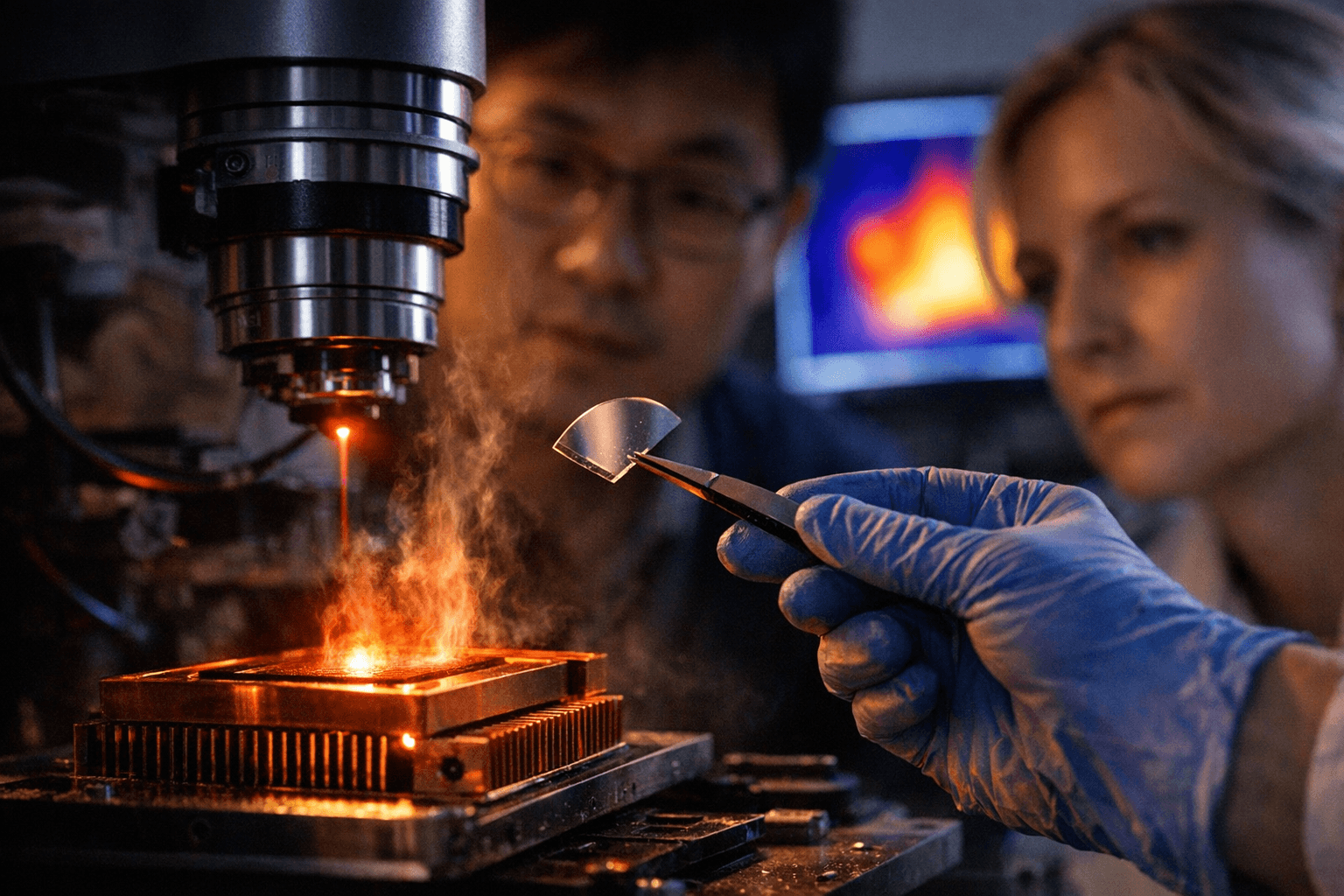
A newly described material moved heat about three times better than copper, a result that could matter anywhere shrinking hardware runs too hot, from AI chips and server racks to power electronics and industrial systems. If the performance holds up outside the lab, it could give engineers a new way to push more computing through less cooling.
The claim lands in a part of technology now constrained by heat. The International Energy Agency says data centres and data transmission networks each account for about 1% to 1.5% of global electricity use, and global internet traffic has expanded 25-fold since 2010. As chips get faster and server rows get denser, the problem is not only keeping hardware alive. It is keeping it efficient enough to be built at scale.
Copper has long been the workhorse for moving heat away from electronics, with a thermal conductivity commonly cited at about 401 W/m·K. Diamond has been treated as the benchmark for extreme heat conduction, with high-quality material typically reported around 2,000 to 2,200 W/m·K. A material that outperforms copper by a factor of three does not make copper obsolete, but it does suggest a new lane for thermal design, one that could lower cooling costs, reduce energy waste and improve the durability of components under heavy load.

The scientific significance goes beyond engineering. A result this strong raises basic questions about how heat moves through solids, which is why the finding was framed not just as a materials advance but as a challenge to fundamental physics. That matters because thermal bottlenecks increasingly shape what can be built in semiconductors, cloud infrastructure and energy systems. Better heat flow can mean fewer hot spots, steadier performance and longer component life, all of which translate into lower operating costs and less strain on power-hungry digital infrastructure.
There is still a long path from a striking measurement to a commercial material. Related research has already shown that unusual structures can beat copper in thin films and under special conditions, including a 2025 report on niobium phosphide films thinner than 5 nanometers and a 2025 report on boron arsenide crystals exceeding 2,100 W/mK at room temperature. Those findings reinforce the same point: heat transport can behave in unexpected ways, especially at small scales. The next tests will determine whether this new contender can be replicated, manufactured and integrated into real devices, where the market value will be measured not in headlines but in cooler chips, cleaner grids and less wasted electricity.
This article was produced by Prism’s automated news system from verified source data, official records, and press releases, then run through automated quality and moderation checks before publishing. The system is built and supervised by the people who set the standards it runs under. Read our full AI policy.
Did this article answer your question?


