New obesity guidelines suggest BMI misses millions of cases
BMI alone missed many adults in a 301,026-person study, where obesity prevalence jumped to 68.6% under a broader clinical definition.
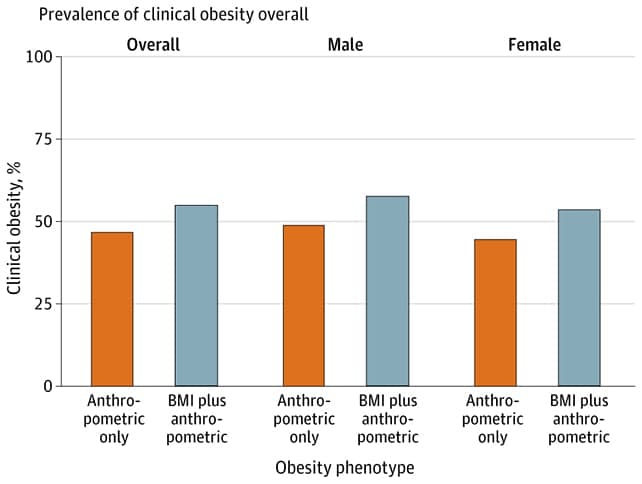
BMI, the standard clinic screen for obesity, missed a large share of adults in a 301,026-person All of Us analysis, where obesity prevalence rose from 42.9% under the traditional BMI definition to 68.6% under a newer framework. In that study, 36.1% of participants met criteria for clinical obesity, and the share with clinical obesity climbed with age.
The newer framework treats obesity as more than a height-and-weight calculation. It classifies people as having obesity if they have a high BMI plus at least one elevated anthropometric measure, or if they have a normal BMI but at least two elevated anthropometric measures. It also splits the condition into clinical and preclinical categories, depending on whether organ dysfunction or physical limitation is present. Mass General Brigham summarized the findings as a rise from about 40% to about 70% in the study sample, and said at least 76 organizations, including the American Heart Association and The Obesity Society, had endorsed the new guidelines.

A companion study from Keck Medicine of USC, published in Annals of Internal Medicine, showed how much BMI alone can miss. One quarter of people with a normal BMI met criteria for clinical obesity, and 50% of people classified as overweight by BMI would have been reclassified as obese under the broader standard. The study author warned that millions of Americans may already have obesity-related health impacts and could be missing interventions that might have changed the course of their disease.
The push to move beyond BMI has also drawn resistance. On April 2, 2026, The Endocrine Society warned that redefining obesity around factors beyond BMI could complicate diagnosis, delay treatment, and create barriers to insurance coverage for medications and surgery. That concern goes to the center of the policy fight: diagnostic definitions help decide who qualifies for care, who gets referred for treatment, and what insurers will pay for.

Further evidence came from Lund University and AstraZeneca, which analyzed 489,311 UK Biobank participants followed for a median of 13 years in eBioMedicine. By adding body fat percentage and waist circumference, the researchers captured disease risk missed by BMI alone, including risk groups tied to cardiovascular death, nonfatal myocardial infarction, nonfatal stroke, type 2 diabetes, and chronic kidney disease. During follow-up, the cohort recorded 24,778 cardiovascular events, 30,376 type 2 diabetes diagnoses, and 14,906 chronic kidney disease cases. The message from the new studies is clear: if the standard changes, clinics, insurers, and public-health policy will need to change with it.
This article was produced by Prism’s automated news system from verified source data, official records, and press releases, then run through automated quality and moderation checks before publishing. The system is built and supervised by the people who set the standards it runs under. Read our full AI policy.
Did this article answer your question?