New satellite model maps Pu'er coffee lands with nearly 95% accuracy
Researchers used Sentinel-2 imagery and machine learning to identify Pu'er coffee fields, estimating 53,000 hectares and offering a practical planning tool for farmers and policymakers.
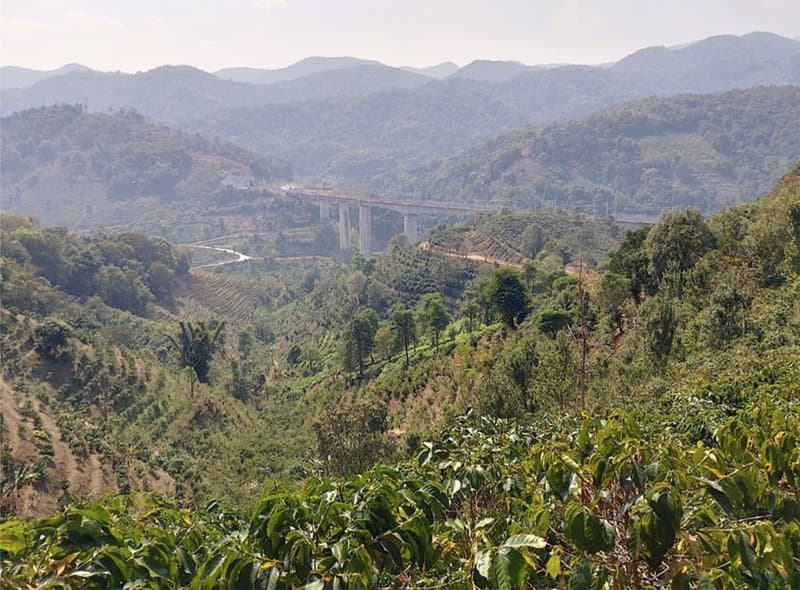
Researchers in China developed a machine learning template that uses satellite imagery to map coffee cultivation around Pu'er City in Yunnan, achieving about 95% accuracy in tests on known sites. The model blends year-round spectral changes with terrain and local administrative boundaries to separate coffee from other vegetation, and the team described the approach as lightweight and easy to implement.
Using imagery from the European Space Agency’s Sentinel-2 satellites, the project tracked phenology—the way crops change through the seasons—to distinguish coffee from surrounding forest, tea and shrub cover. In validation runs the best version of the model correctly classified land pixels as coffee or non-coffee nearly 95% of the time. When the researchers applied the model across Pu'er’s coffee-growing area, it produced an estimated 53,000 hectares, compared with the officially reported 45,266 hectares. The gap, the team noted, likely reflects misclassification of spectrally or structurally similar vegetation such as tea trees and shrubs, though mapped patterns matched field visits and online checks in many areas.

Led by scientists at Yunnan Land and Resources Vocational College with collaborators from multiple institutes of the Chinese Academy of Sciences, the work was funded by provincial and institutional programs aimed at developing Yunnan’s specialty coffee sector. The authors wrote, “This study highlights the potential of remote sensing technology in accurately mapping and monitoring coffee cultivation in complex agricultural landscapes.” They position the model as a practical tool for governments, traders and farmers planning sustainability measures and regional land management.
For producers and cooperatives, the study offers immediate practical value: Sentinel-2 data are freely available, so regional extension services or producer groups can pilot similar mapping without heavy investment in new sensors. Traders and certifiers can use mapped boundaries and phenology signals to improve farm-level traceability and monitor expansion into sensitive areas. At the same time, organizers and farm managers should treat maps as a starting point: ground truthing will be essential where tea and shrubs dominate, and higher-resolution data or on-the-ground surveys can reduce false positives.

The wider implication is that accessible, satellite-based tools can plug into local planning fast, helping balance specialty coffee growth with conservation goals. Expect follow-up work to refine classifications, integrate farmer-supplied field data, and scale the approach to other coffee regions where mixed cropping and shade systems complicate remote sensing.
Sources:
Know something we missed? Have a correction or additional information?
Submit a Tip