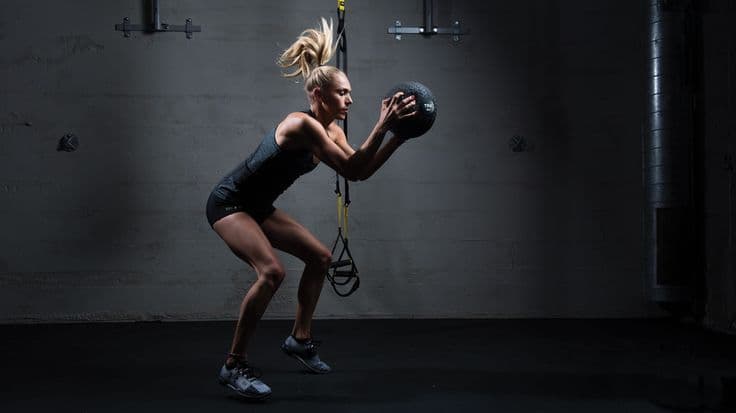
New slam‑ball medicine ball workout builds explosive power and conditioning
A new routine lays out supersets using a dead-bounce medicine ball to build explosive power and conditioning for Slamball players. It includes sets, starter weights, progressions, and safety cues.

A recently published slam‑ball workout gives players a ready-to-use plan to develop the explosive power and repeat conditioning that matters on the tramp courts. The routine centers on a dead‑bounce medicine ball and pairs power throws with movement progressions that transfer directly to takeoffs, rebounding, and in‑game sprints.
The program is structured around supersets and progressions. Core pairings include squat‑throw to sprint, scoop overhead throws, overhead slams, reverse lunge to chest pass, and single‑leg deadlift variations. Many of the power moves use low‑volume, high‑intent sets, the guide recommends around 3 sets of 5 for several of the primary power exercises, and then links those efforts to short accelerations or conditioning reps to simulate game bursts.
Practical programming details make this immediately useful for Slamball training. Beginner starting weights are suggested in the 14–16 lb range, while more advanced starters can begin around 20 lb or higher depending on strength and experience. Coaches and players are advised to scale load and volume to training age rather than chasing heavy numbers week to week.
Safety and technique receive explicit emphasis. Coaching cues focus on protecting the lower back and shoulders during repeated overhead slams: avoid hyperextending the lumbar spine, brace the core through impact, and keep the shoulder mechanics tight on overhead releases. The routine stresses letting the ball hit the ground rather than trying to catch it, and using appropriate flooring or mats when practicing repeated slams to reduce shock and preserve joints.

Why this matters to Slamballers: the dead‑bounce medicine ball mimics the explosive hip drive and trunk rotation used in takeoffs and contested rebounds, while the sprint linkages build the quick direction changes you need after landing. The superset design saves time while improving power endurance, which is especially useful for weekend leagues and pickup crews that balance limited practice windows with the need for high‑intensity gains.
Implementation tips are straightforward. Use the lighter weights to lock down form, run the 3x5 power sets with full recovery between efforts, and then add short sprints or conditioning reps to mimic court pacing. Protect shoulders by limiting overhead volume until technique is solid, and rotate heavier slam sessions with lower‑impact power work to manage fatigue.
Our two cents? Start conservative, focus on clean mechanics, and let the ball do the work, drop it, don’t catch it, then measure how your takeoffs and midair control improve over a few sessions. This routine gives you a compact, scalable way to bring real slam power to your training.
Know something we missed? Have a correction or additional information?
Submit a Tip