New York lawmaker seeks 100 percent tax on Trump payout fund
New York is moving to tax Trump payout checks at 100 percent, turning a federal settlement into a test of state tax power.

New York Assemblyman Alex Bores is trying to do by tax code what federal Democrats want to do in Washington: make sure no resident can keep money from Donald Trump’s planned Anti-Weaponization Fund. “If you storm the Capitol and you take from this slush fund, too bad, we’re taking it,” Bores said as he drafted an Anti-Insurrectionist Act that would impose a 100 percent New York state income tax on any payout a state resident receives from the federal fund.
The proposal landed as blue-state lawmakers converged on the same answer to Trump’s $1.776 billion settlement with the Internal Revenue Service. The Justice Department announced the Anti-Weaponization Fund on May 18 as part of Trump v. Internal Revenue Service, a case brought by Donald Trump, Donald Trump Jr., Eric Trump and the Trump Organization. The department said Trump and his family would receive a formal apology, but no monetary payment or damages. It also said any money left when the fund ends would revert to the federal government, and that claims must be processed no later than December 1, 2028.

Bores said the goal was to ensure that “money you got for attacking American democracy is fully taxable.” His plan tracks with broader Democratic efforts. House Democrats introduced the SLUSH FUND Act on May 20, and Senate Democrats Ron Wyden and Chuck Schumer followed with companion legislation on May 21. The Senate bill would impose a 100 percent excise tax on payments from the fund, add a 50 percent penalty for willful attempts to evade the tax, and require reporting to both Treasury and the recipient.
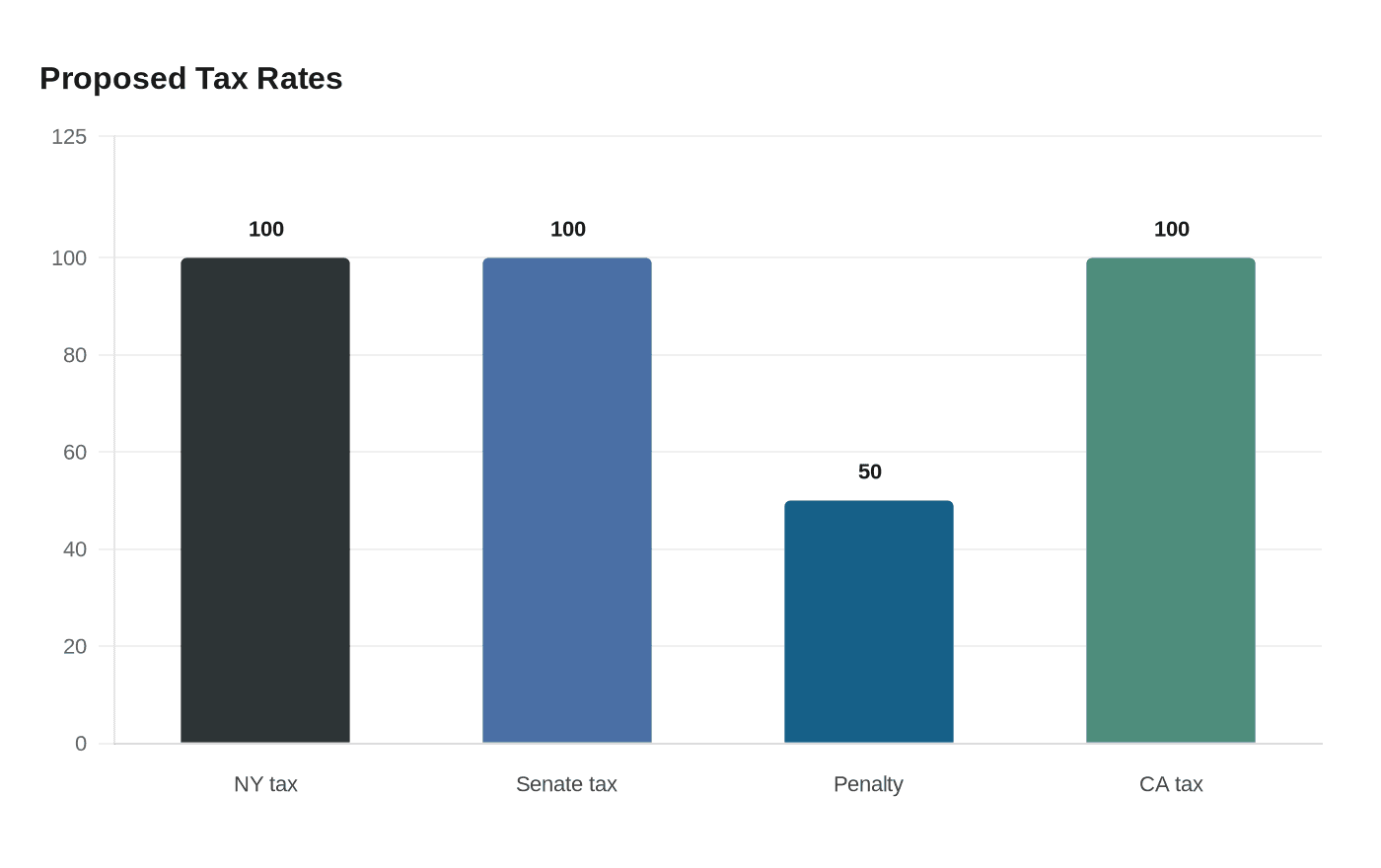
The political pressure has spread beyond New York. California Gov. Gavin Newsom said California would impose a 100 percent tax on recipients of the fund, and New York Gov. Kathy Hochul signaled she was open to a similar move. Similar proposals have surfaced in Illinois and New Jersey, underscoring how quickly the issue has become a state-federal clash over whether redress payments linked to Trump and Jan. 6 allies can be neutralized before they reach residents’ hands.
The legal fight may be the harder part. Tax-policy experts say courts usually defer to legislatures on tax questions, but a 100 percent levy could invite constitutional scrutiny if judges decide the state is effectively confiscating a federal payment rather than taxing income. The Justice Department has pointed to the Obama-era Keepseagle settlement, a $760 million fund for discrimination claims against the federal government, as precedent for creating a redress mechanism. That comparison may help justify the structure of the fund, but it does not settle whether states can try to wipe out the payout entirely.
This article was produced by Prism’s automated news system from verified source data, official records, and press releases, then run through automated quality and moderation checks before publishing. The system is built and supervised by the people who set the standards it runs under. Read our full AI policy.
Did this article answer your question?

