New York legalizes medical aid in dying, expanding a rare practice
New York will become the 14th U.S. jurisdiction to allow aid in dying, even as Oregon's data show how few patients actually use the law.

Medical aid in dying is expanding across the country, but the number of people who actually use it remains small. As of January 2024, 22% of Americans lived in states where the practice was legal, yet fewer than 1% of people who die in each authorized jurisdiction use the law annually. That gap now frames New York’s move to join a still-limited list of states and the District of Columbia that permit terminally ill patients to seek a prescription for medication to end life on their own terms.
New York’s Medical Aid in Dying Law is set to take effect on August 6, 2026, making it the 14th U.S. jurisdiction to authorize the practice. Gov. Kathy Hochul reached an agreement with the New York State Legislature to sign the measure, which adds a set of safeguards that supporters say are meant to balance access with oversight. Those protections include a five-day waiting period, an in-person initial evaluation by the prescribing physician, a required mental health evaluation by a psychologist or psychiatrist, and a recorded oral request by video or audio. Religiously oriented home hospice providers may opt out.
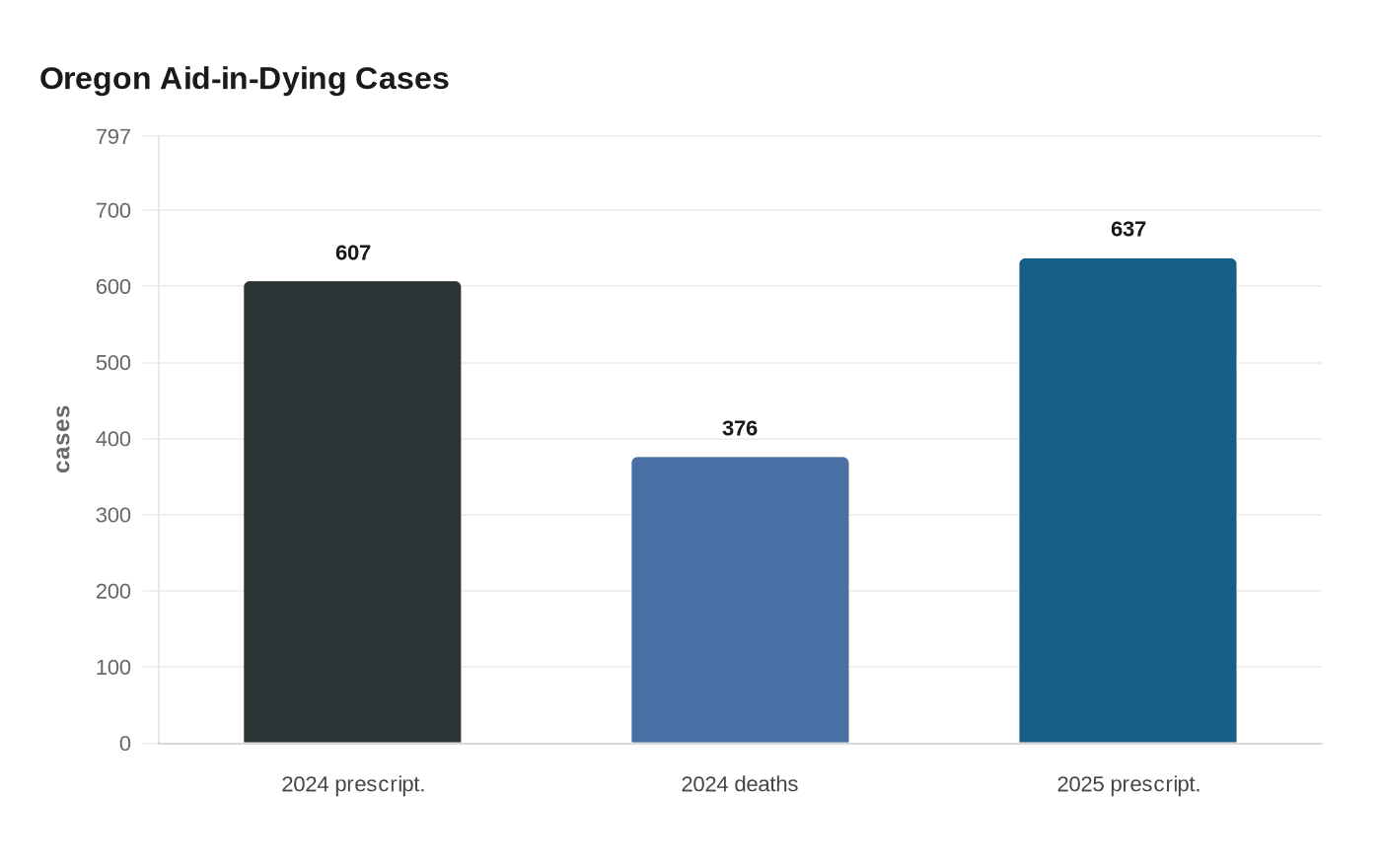
The law changes policy more dramatically than it may change bedside practice. Oregon, the first state to legalize medical aid in dying after voters approved the Death with Dignity Act in 1994, has shown how rare the practice remains even in a state with decades of experience. The Oregon Health Authority reported 607 prescriptions under the law in 2024, and 376 deaths from ingesting the prescribed medications, including 43 people who had received prescriptions in earlier years. In 2025, Oregon reported 637 prescriptions, underscoring that the number of people who request medication can rise while the number who die from using it stays comparatively low.
Compassion & Choices said 9,122 people had used medical aid in dying to date, a figure that captures both the growth of the movement and its limited reach. Supporters argue that legalization can strengthen patient autonomy and improve hospice, palliative care, and pain and symptom management by making end-of-life decisions more transparent and deliberate. Opponents continue to warn about coercion, abuse, disability rights concerns, and religious objections, arguments that have shaped every state debate from Oregon to New York.
The fight over physician-assisted death has remained state-driven since the U.S. Supreme Court left the question to the states in 1997. That leaves access dependent on geography, legislative coalitions, and the details of each law, even as campaigns and bills continue in places such as Massachusetts, New Jersey, North Carolina, Pennsylvania, Minnesota, Virginia, and Washington. New York’s entry widens the map, but the broader political dispute over who may choose this option, and under what safeguards, is far from settled.
This article was produced by Prism’s automated news system from verified source data, official records, and press releases, then run through automated quality and moderation checks before publishing. The system is built and supervised by the people who set the standards it runs under. Read our full AI policy.
Did this article answer your question?