New York passes ban on personalized pricing based on personal data
New York moved to block stores from using browsing history, income and location to set different prices, a test that could shape rules far beyond Albany.
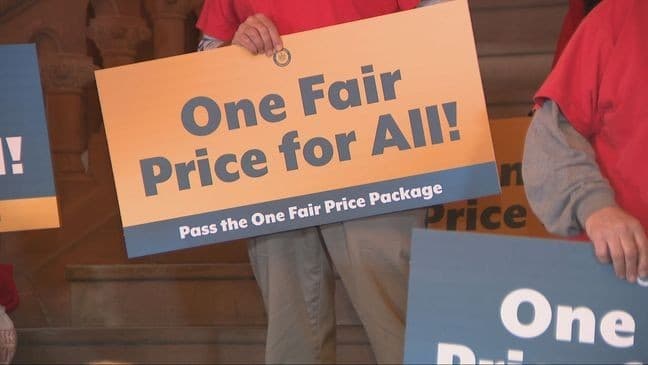
Shoppers in New York could soon get a clearer answer to a nagging question: why one customer sees one price and another sees a higher one for the same item. State lawmakers passed a ban on businesses using personal data to set individualized prices, a move aimed at stopping algorithmic systems from quietly squeezing more money out of some consumers than others.
The One Fair Price Act, sponsored by Senator Rachel May and Assemblymember Emérita Torres, would prohibit personalized algorithmic pricing based on data tied to a person or device, including browsing history, income and real-time location. It would still allow long-standing discounts for seniors, teachers and other specific groups, along with loyalty-program pricing and promotions. The bill also would require clear and conspicuous disclosure when automated pricing systems are used, and the Senate text says it identifies categories of non-personal data inputs that can influence pricing decisions.
The legislation passed both chambers on June 5 after amendments on May 6 and again on May 27. It now goes to Governor Kathy Hochul, who has not signed it yet and has until the end of the year to act. Letitia James backed the bill publicly, arguing that surveillance pricing lets companies use New Yorkers’ personal data, including browsing habits, income and life circumstances, to charge some shoppers more for the same product. Her office said the measure is supported by a coalition that includes AFL-CIO, RWDSU, UFCW and AARP.
Advocates have spent months making the case that the threat is not theoretical. In December, Consumer Reports, Groundwork Collaborative and More Perfect Union said their experiment involved 437 shoppers in live tests across four cities and found that 74 percent of grocery items were offered at multiple price points on Instacart. One shopper paid $4.99 for a box of Cheerios while another paid $6.12 for the same item at the same store. Consumer Reports later said some grocery prices differed by as much as 23 percent per item from one customer to the next.
The New York vote also arrived amid a broader crackdown on surveillance pricing in the state. James and May rallied in Syracuse on May 5 with local officials, labor unions, advocates and community members behind the One Fair Price Package. That package also includes a separate bill targeting electronic shelf labels in grocery stores and pharmacies, carried by Deputy Majority Leader Michael Gianaris and Assemblymember Michaelle Solages. New York City Council leaders Julie Menin and Shaun Abreu introduced related local legislation on May 14.
If Hochul signs the bill, New York would become the third state to prohibit the practice, following Maryland and Connecticut. Maryland’s law, signed by Governor Wes Moore on April 28, takes effect October 1 and is narrower, covering large food retailers and third-party delivery services while still allowing discounts, loyalty programs and promotional pricing. Supporters say New York’s broader approach could become a template for states left to regulate an industry that has grown faster than any federal rule.
This article was produced by Prism’s automated news system from verified source data, official records, and press releases, then run through automated quality and moderation checks before publishing. The system is built and supervised by the people who set the standards it runs under. Read our full AI policy.
Did this article answer your question?