Newsom urges Congress to close wealthy tax loophole as California ballot fight grows
Newsom wants Congress to target the wealthy’s “tax-free lifestyle loan” as California’s billionaire-tax fight lands on the November ballot.
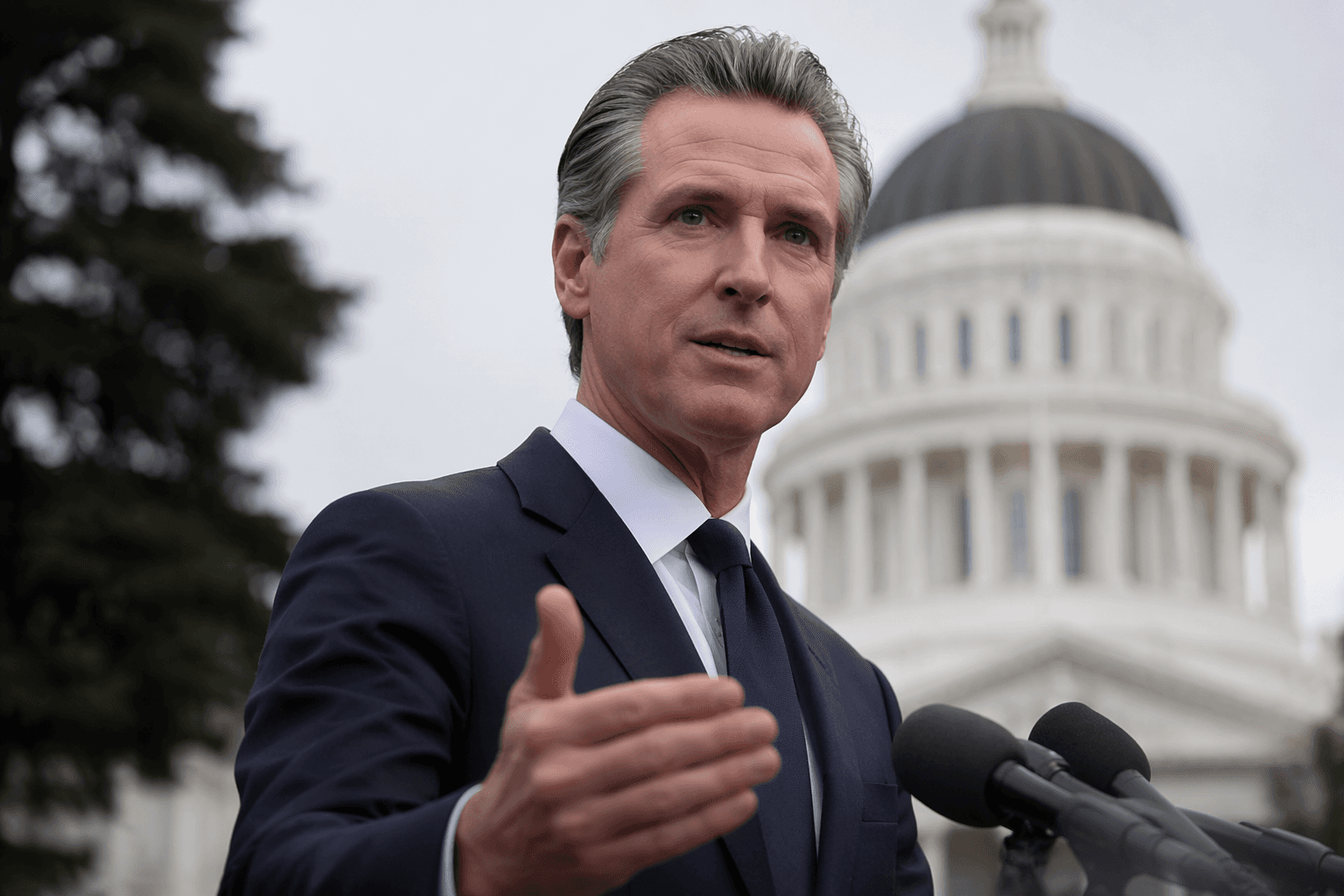
Gavin Newsom on June 26 urged Congress to close what he called a “tax-free lifestyle loan,” pressing a federal answer to the buy, borrow, die strategy as California’s billionaire-tax fight moved toward the November 2026 ballot.
The tactic works in three steps. Wealthy people buy assets that tend to rise in value, such as stocks, real estate or art. Instead of selling those holdings and triggering capital gains tax, they borrow against them. Then, when the owner dies, heirs can often receive a stepped-up basis, which can reset the asset’s tax value to the date of death and wipe out much of the built-in gain that accumulated during the owner’s lifetime. Under IRS rules, basis is the amount invested in property for tax purposes, and inherited property generally uses the date-of-death value rather than the original purchase price.
Newsom’s push comes as California’s billionaire-tax debate has sharpened. A proposed one-time 5% wealth tax on California billionaires qualified for the November 2026 ballot after Newsom failed to reach a withdrawal deal with the union behind the measure by the June deadline. He opposes that state ballot proposal even as he calls for a broader national minimum tax on billionaires, a posture that puts him inside the larger Democratic fight over how far Washington should go in taxing unrealized gains and inherited wealth.
In a June 2026 analysis, the Tax Policy Center put the top 1%’s annual borrowing at roughly 1% to 2% of their economic income, while unrealized gains were 20 to 40 times larger. The Yale Budget Lab says current law favors borrowing over selling appreciated assets and has outlined reform options to reduce that advantage.
Adam Michel of the Cato Institute said the claim that billionaires broadly exploit buy, borrow, die is not well supported, arguing that the ultra-rich generally consume less than their taxable income and therefore may not need to borrow heavily against gains.
This article was produced by Prism’s automated news system from verified source data, official records, and press releases, then run through automated quality and moderation checks before publishing. The system is built and supervised by the people who set the standards it runs under. Read our full AI policy.
Did this article answer your question?

