NFL Annual Meeting Tackles Replacement Officials, Kickoffs, and AI Initiatives
NFL owners in Arizona weighed a contingency plan born from the 2012 'Fail Mary,' while AI debuted on the official league agenda as an operational matter.

The ghost of the "Fail Mary" haunted the NFL's annual meeting in Arizona, where team owners, executives and coaches confronted the prospect of another officiating crisis by debating a proposal that could fundamentally reshape how games are called if a labor disruption forces the league to use replacement referees.
The competition committee circulated a plan to allow the NFL's centralized replay center in New York to advise on-field officials in real time during any such disruption, specifically targeting missed roughing-the-passer calls, intentional grounding violations and ejection-level infractions. The measure is a direct response to the operational breakdown of the 2012 season, when replacement officials handed the Seattle Seahawks a disputed touchdown on a Hail Mary that most observers believed should have been ruled an interception, igniting an immediate public backlash and accelerating the resolution of that year's officiating labor standoff.
NFL executive Jeff Miller acknowledged that negotiations with the referees' union have not moved as quickly as the league had hoped, framing the contingency proposal as a prudent rather than alarmist measure. Owners who approve the mechanism would give the league substantially more centralized oversight during any officiating disruption, a step that could draw fresh scrutiny from the referees' union as contract talks continue.
The dynamic kickoff, entering its third season, drew its own extended discussion. Competition committee chair Rich McKay pointed to dramatic statistical shifts in returns and return yards from the rule's second year compared to 2024 as evidence that continued calibration is warranted. The proposals on the table targeted minor tweaks aimed at reducing high-speed collisions without dismantling the strategic dimension of special teams; a wholesale overhaul of the format was not on the table.
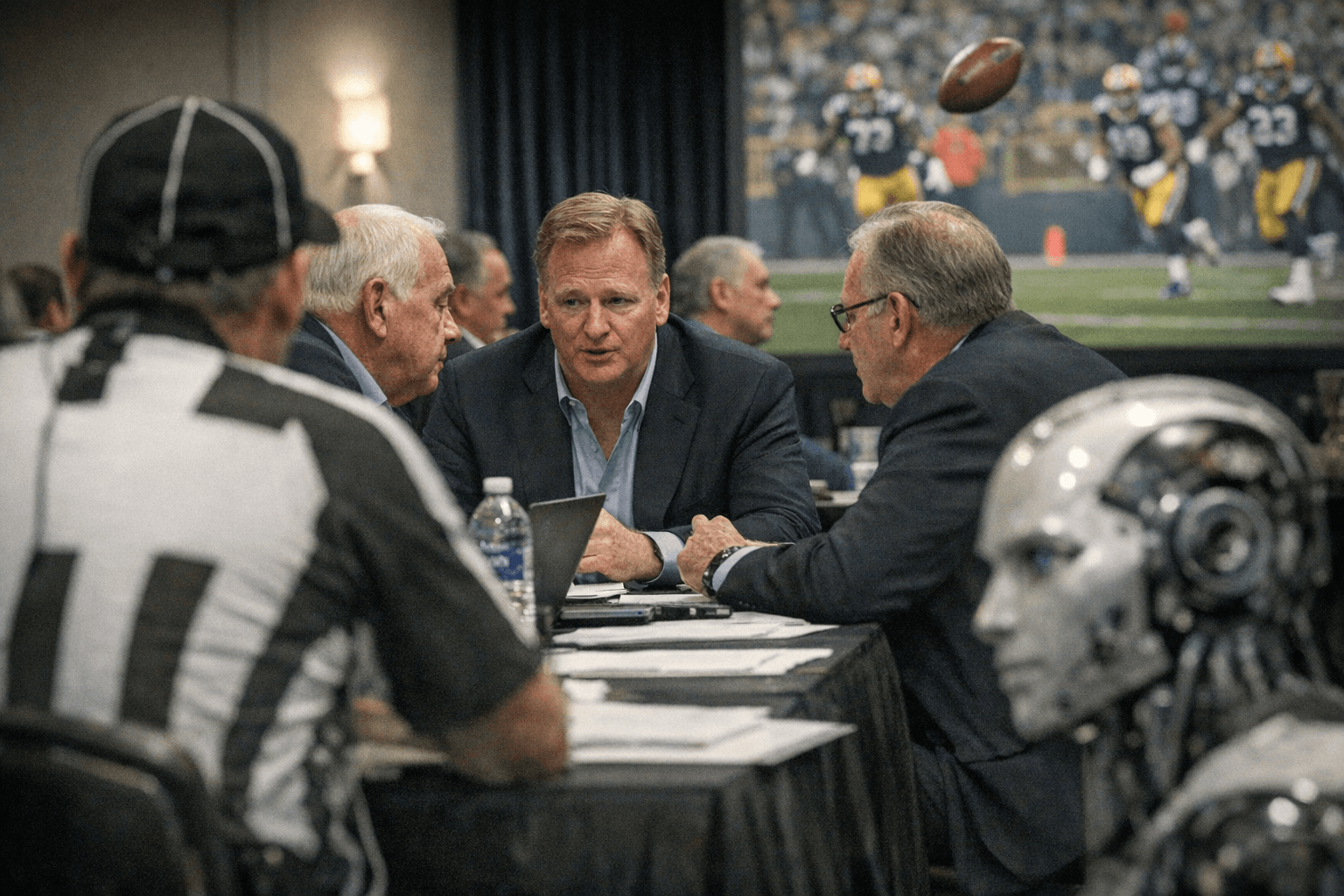
Artificial intelligence landed on the agenda in an explicit and expanded way that distinguished this meeting from prior years. Rather than treating AI as a fan-facing novelty, the league framed it as an operational concern touching officiating support tools, scouting analytics, broadcast enhancements and content personalization. The institutional attention signals the NFL's intent to establish guardrails for these tools while capturing their commercial potential, with implications reaching into future broadcast rights negotiations and player evaluation practices.
Health and safety updates, including advances in concussion research and revisions to practice protocols, rounded out the agenda alongside talks on international market development, stadium investments and the continued build-out of flag football as both a participation pipeline and a revenue vehicle.
Taken together, the agenda revealed a league managing simultaneous pressures: a potential rupture with its officiating workforce, an unsettled special teams rulebook now in its third iteration, and the competing demands of technological ambition and long-term player protection.
This article was produced by Prism’s automated news system from verified source data, official records, and press releases, then run through automated quality and moderation checks before publishing. The system is built and supervised by the people who set the standards it runs under. Read our full AI policy.
Did this article answer your question?
.jpg&w=1920&q=75)