NFL Defends Broadcast TV Strategy as FCC Reviews Sports Migration
The NFL said 87% of its games still aired on broadcast TV as the FCC weighed whether sports are slipping behind paywalls that raise costs for fans.
The country’s most watched sport is becoming a test case for who gets to watch television’s biggest live events without paying extra. As the Federal Communications Commission reviewed the migration of sports rights from free broadcast networks to subscription platforms, the NFL moved to reassure regulators that its games remain broadly available, even as marquee matchups increasingly split across streaming services and pay TV.
The league told FCC officials that 87% of its games still air on broadcast television networks and that all local market games are carried on local over-the-air stations. That message was meant to show that football still reaches mass audiences, but the FCC’s public notice asked a sharper question: whether the growing fragmentation of sports media rights helps consumers or makes access harder, while also weakening local stations’ ability to meet public-interest obligations such as local news and public safety information.

The agency’s inquiry, released February 25, pointed to a sports landscape that looks very different from the era when viewers could simply turn on a set and find a game free over the air. It said live sports on television dates back to NBC’s 1939 World’s Fair telecast of a Princeton-Columbia baseball game, but now noted a surge of games behind streaming paywalls. The filing also said 2025 NFL games aired across 10 different services, including 20 regular-season games and one playoff game that were nationally exclusive to Amazon Prime Video, YouTube, Peacock and Netflix.
The NFL’s presentation to the FCC was delivered by Hans Schroeder, the league’s top media executive, and included two advisers to FCC Chairman Brendan Carr. The league defended its antitrust exemption under the Sports Broadcasting Act of 1961, arguing that if the 32 clubs had to negotiate separately, costs and confusion would rise in an already fractured market. It also said its media strategy was good for fans, local broadcasters, the game and teams in every market.
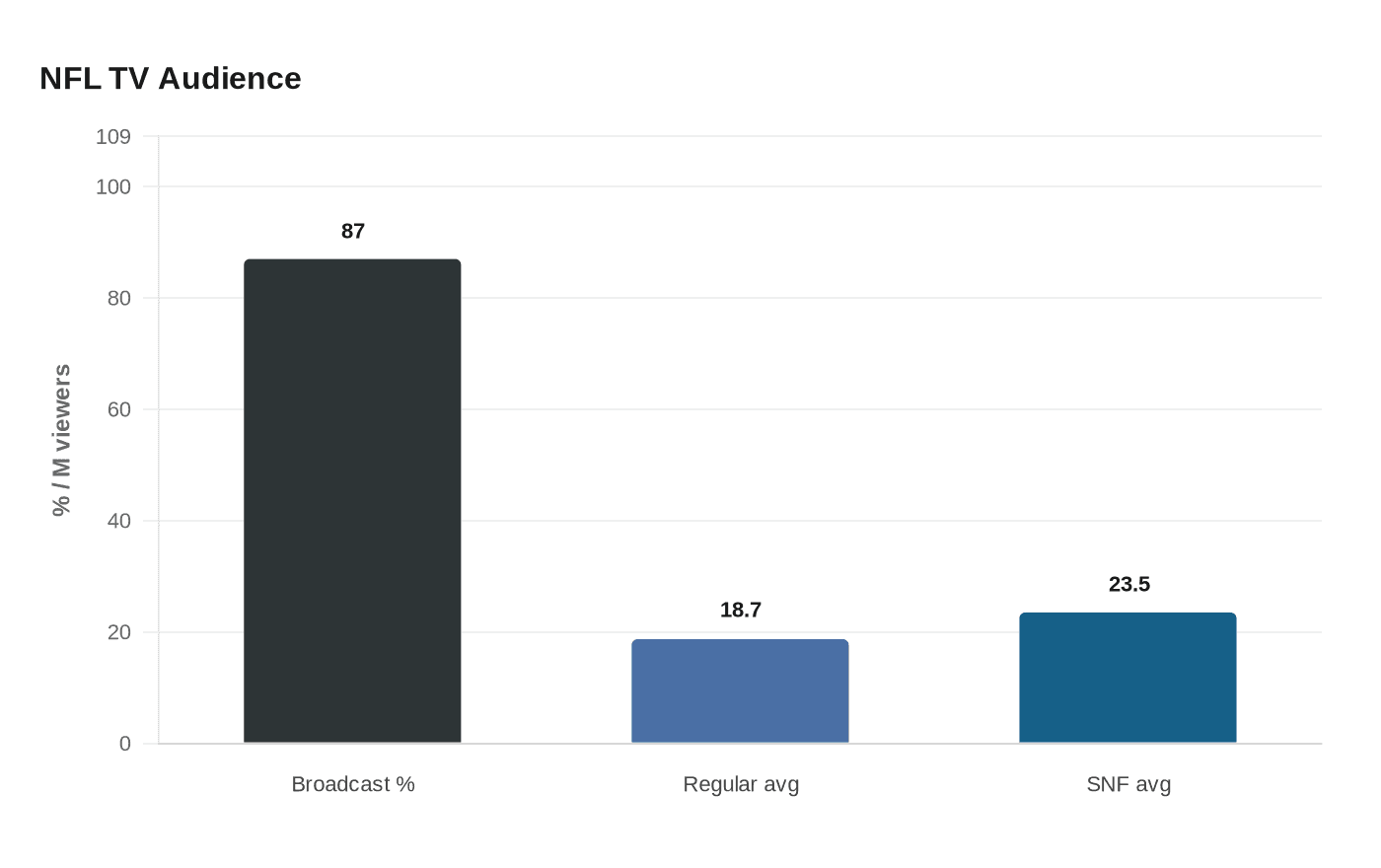
The numbers help explain why the fight matters. The NFL said the 2025 season was its most viewed since 1989, and its regular-season audience averaged 18.7 million viewers per telecast window, the best mark in decades. NBCUniversal said Sunday Night Football was pacing for its 15th consecutive year as primetime’s No. 1 show and averaged 23.5 million viewers in the 2025 season. Those ratings show that broadcast still matters, but they also show why networks and streamers keep chasing premium sports rights, and why regulators are asking whether the price of access is being pushed higher for everyone else.
This article was produced by Prism’s automated news system from verified source data, official records, and press releases, then run through automated quality and moderation checks before publishing. The system is built and supervised by the people who set the standards it runs under. Read our full AI policy.
Did this article answer your question?
.jpg&w=1920&q=75)