NHS data reveals 2,900 patients a day in corridor care spaces
NHS England's first monthly count found 2,910 patients a day in corridor-care spaces, exposing how hallway treatment has become routine across England.
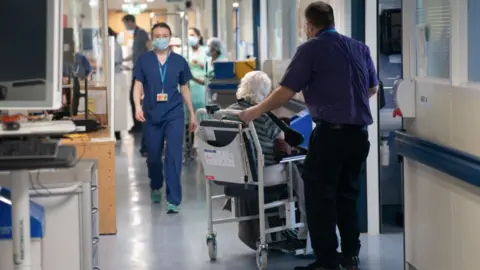
Patients are being treated in hallways, storage spaces and other makeshift corners of hospitals at a scale that can no longer be described as anecdotal. NHS England’s first monthly corridor-care count recorded an average of 2,910 people a day in non-designated clinical space in May 2026, including 2,241 in emergency departments and another 669 elsewhere in hospital. The figures turn corridor care into a national baseline just as hospitals head toward the next pressure season.
NHS England said the new experimental publication is meant to give consistent national visibility to patients cared for outside proper cubicles or wards and to track the effect of interventions. It also warned that the data is still immature, based on daily returns from acute trusts, and is likely to change as validation improves. Future monthly releases may be revised as reporting matures.

The scale matters because corridor care is not treated as a harmless workaround. NHS England defines it as care delivered in non-designated clinical space, where privacy is weakened and safe, dignified care is harder to provide. The organisation said in December 2025 that the practice is unacceptable, creates an exceptionally poor experience for patients, particularly older people, and their loved ones, and damages morale among staff and public confidence in the NHS. It has already issued guidance aimed at virtually eliminating corridor care and has told trusts that care outside normal cubicles or wards should not be normalised.

Warnings from the profession have been building for more than a year. The Royal College of Nursing’s corridor-care report, published on 3 June 2024, described the practice as unsafe, undignified and unacceptable. By September 2024, the college said clear reporting should be mandatory rather than optional. The Royal College of Physicians followed with a stark warning in October 2025, saying corridor care is unsafe and unacceptable, after surveys found 78% of doctors had provided care in a temporary environment in the previous month in February 2025, and 59% had done so again over the summer.

Emergency medicine leaders have linked the problem to deeper capacity failures. The Royal College of Emergency Medicine said in November 2025 that 19% of patients in its sample were being treated on trolleys or chairs in corridor settings, 34.5% of respondents had patients cared for in ambulances outside departments, and 78% believed patients were coming to harm because of current conditions. RCEM said the crisis is driven by shortages of staffed beds and discharge delays tied to gaps in community and social care. The Independent also reported that 20 trusts accounted for more than half of emergency-department corridor-care cases in the first published data, with hallways, cafes, cupboards and waiting rooms among the unsuitable places being used. Whether the new monthly series captures the full scale of overcrowding or only a partial measure, it points to a system already relying on spaces never designed for patient care.
This article was produced by Prism’s automated news system from verified source data, official records, and press releases, then run through automated quality and moderation checks before publishing. The system is built and supervised by the people who set the standards it runs under. Read our full AI policy.
Did this article answer your question?