Nick Saban urges Congress to bring order to college sports
Congress heard Nick Saban demand order in college sports, but the toughest fights over NIL, antitrust protection and federal control stayed unresolved.
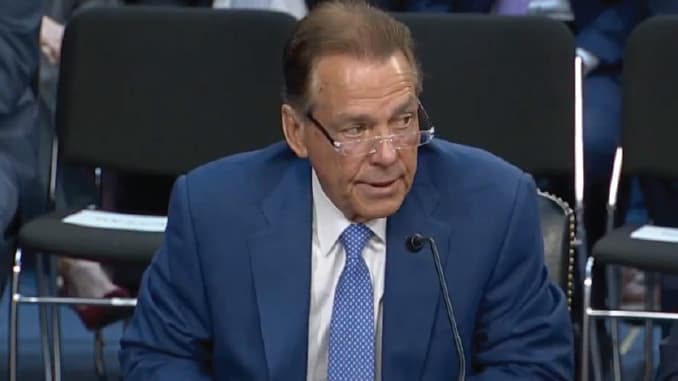
Bipartisan branding did little to hide the stalemate. Senators heard Nick Saban, Pete Bevacqua, Teresa Gould, Gordon Gee and Lance Holtzclaw as Congress weighed the Protect College Sports Act of 2026, but the core disputes over athlete pay, antitrust protection and federal oversight remained unsettled, and the bill still faces the 60 votes needed to advance.
The proposal was announced on May 27 by Ted Cruz of Texas, Maria Cantwell of Washington state, Chris Coons of Delaware and Eric Schmitt of Missouri. Cruz and Cantwell cast it as a response to chaos in college athletics, saying it was meant to restore order and stability while preserving rivalry games, traditions and competition. Cantwell said thousands of roster slots and about a hundred athletic programs were being cut as schools reacted to the current system.
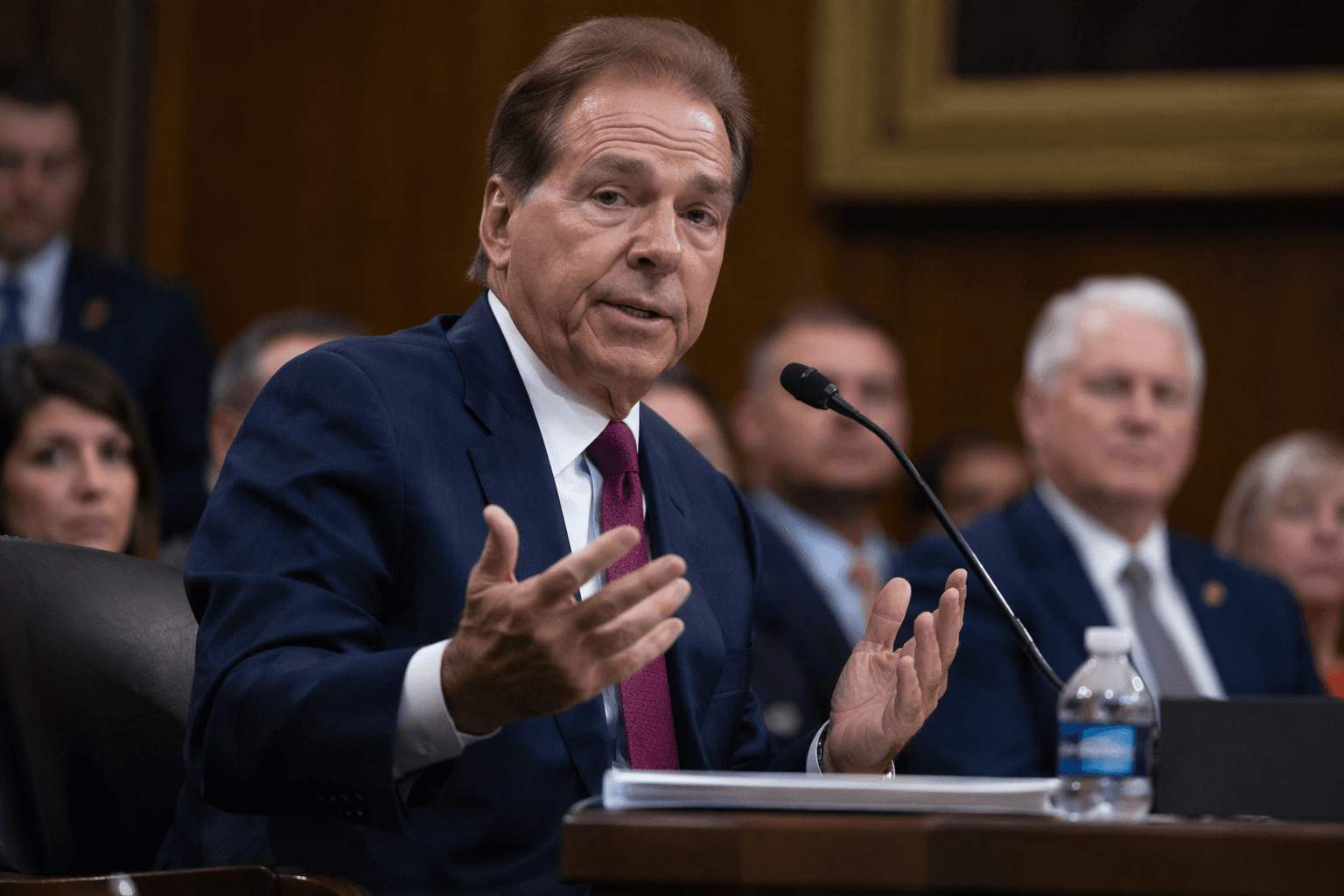
Saban, the former Alabama coach who appeared before the Senate Commerce, Science, and Transportation Committee on June 3, told senators Congress should create a national framework and not micromanage college athletics. He backed the bill while calling it not perfect, and said NIL should remain available but not turn into thinly disguised pay-for-play and limitless free agency. He also warned that if lawmakers wait until every lawsuit is finished, there may not be much of the old college sports model left to protect.
The legislation would give the NCAA an antitrust exemption to enforce certain rules, while limiting athletes to one penalty-free transfer, capping eligibility at five years, barring former professional players from college competition and restricting in-season coach poaching through the so-called Lane Kiffin rule. It would also allow schools and conferences to pool media rights, a provision that points to the money at the center of the fight over how college sports should be governed.
But the biggest power brokers have already drawn a line. The Big Ten Conference and the Southeastern Conference said on June 2 that they do not support the bill in its current form, even as they said they want a sustainable national framework. Their objections leave lawmakers confronting the same impasse that has defined the debate for months: how to give schools legal protection without giving the NCAA too much power, and how to regulate athlete movement and compensation without hardening a system many critics say has already become a pro-style business.
This article was produced by Prism’s automated news system from verified source data, official records, and press releases, then run through automated quality and moderation checks before publishing. The system is built and supervised by the people who set the standards it runs under. Read our full AI policy.
Did this article answer your question?
.jpg&w=1920&q=75)