Nissan forecasts $1.27 billion profit, sees modest Iran war hit
Nissan expects only a 15 billion yen war hit as it targets 200 billion yen in operating profit. The company is leaning on rerouted shipments, cost cuts and plant fixes to blunt wider geopolitical damage.

Nissan said it expects the Iran war to trim only a limited amount from earnings, even as global automakers face a more expensive and less predictable operating environment.
The Japanese carmaker projected operating profit of 200 billion yen, about $1.27 billion, for the current fiscal year and said the conflict-related hit would be less than 15 billion yen, limited to the first half. Chief executive Ivan Espinosa said Nissan can still move a meaningful amount of product into the Middle East because it has found alternative routes around transport bottlenecks. The forecast assumes the disruption stays contained, and that Nissan can keep shipping, sourcing and production costs under control.
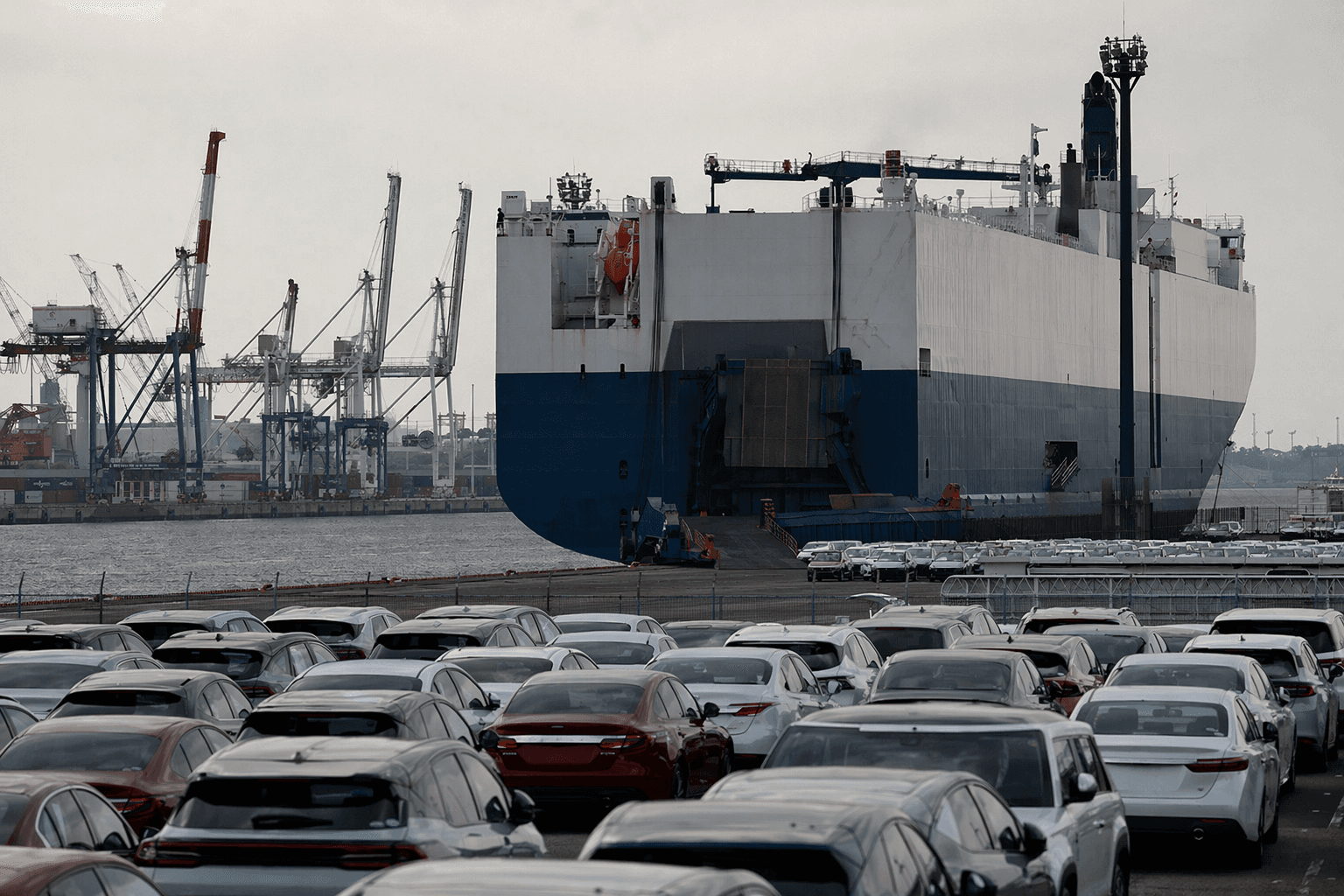
That is a cautious bet in a business now being squeezed from several directions at once. Nissan expects sales to fall by about 19,000 vehicles in the first half because of the conflict, but it said purchasing cost cuts and manufacturing improvements should more than offset part of the pressure from raw-material prices. Wider risks remain in the background: shipping delays, energy costs, tariff volatility and fierce competition from Chinese electric-vehicle makers in Europe and other markets.
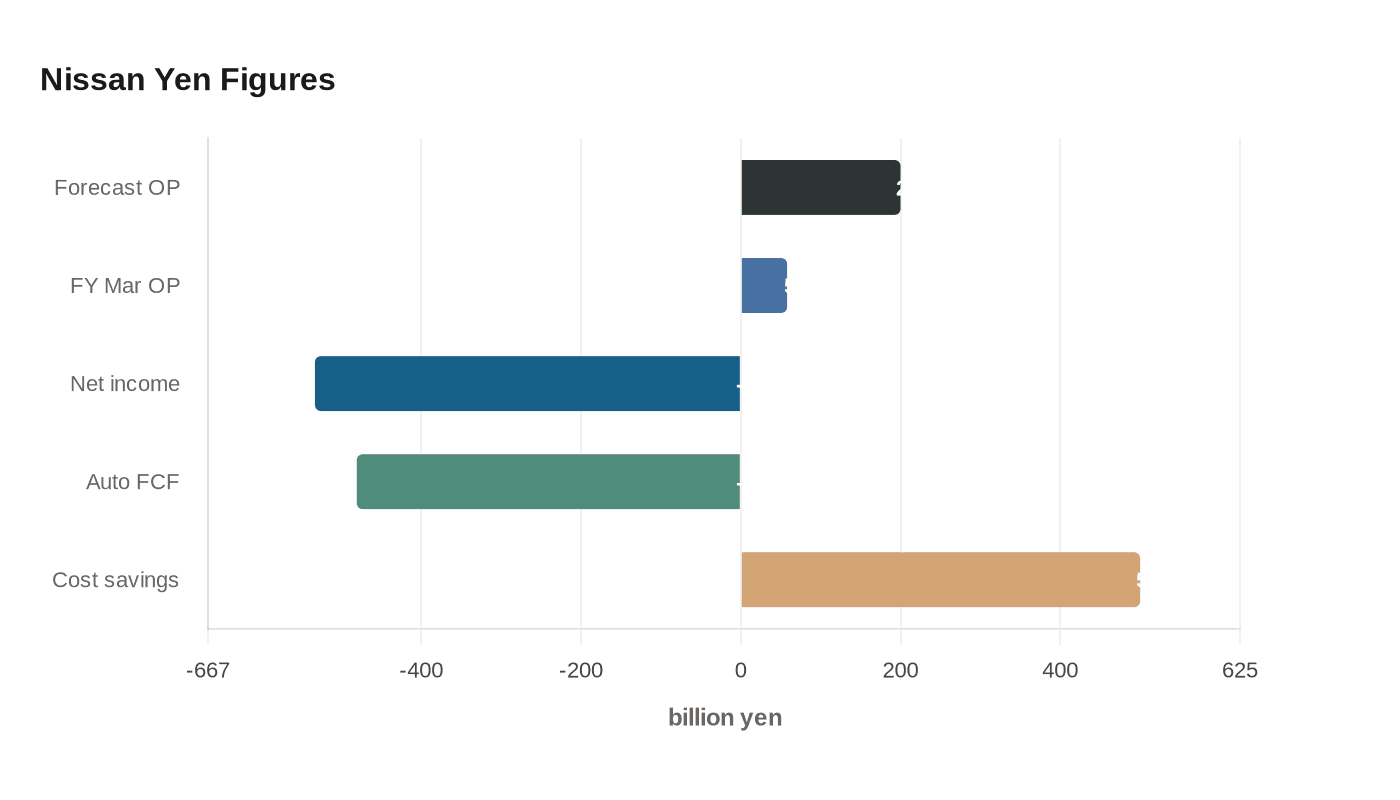
The profit outlook comes after a difficult year. Nissan reported operating profit of 58.0 billion yen for the year ended in March, just ahead of a revised forecast, on revenue of 12.0 trillion yen and global sales of 3.15 million units. Net income remained deeply negative at 533.1 billion yen. Automotive free cash flow was negative 480.8 billion yen for the year, though it turned positive by 112 billion yen in the second half. Nissan said it had 3.6 trillion yen in total liquidity, including 2.2 trillion yen in automotive cash and cash equivalents and 1.4 trillion yen in loans to sales finance companies.
The company is trying to turn that financial breathing room into a cleaner recovery. Nissan reiterated its goal of reaching positive automotive operating profit and free cash flow by the end of fiscal 2026, excluding tariffs, under its Re:Nissan turnaround plan. That program, announced on May 13, 2025, targets 500 billion yen in fixed and variable cost savings versus fiscal 2024, alongside 20,000 job cuts and a reduction in plants from 17 to 10 by fiscal 2027.
Toyota has taken a far harsher view of the same conflict, saying on May 8 that the Iran war could cost it about $4.3 billion this fiscal year. The gap suggests Japanese automakers are pricing geopolitical risk very differently, and it also raises the possibility that Nissan’s optimism rests on assumptions about trade routes, fuel markets and regional demand that could prove too neat if the disruption spreads beyond the Middle East.
This article was produced by Prism’s automated news system from verified source data, official records, and press releases, then run through automated quality and moderation checks before publishing. The system is built and supervised by the people who set the standards it runs under. Read our full AI policy.
Did this article answer your question?