Nissan narrows annual loss, but tariffs and competition keep pressure on
Nissan cut its annual loss to 533.1 billion yen, but a 4.9% sales drop and negative auto cash flow show how fragile the recovery is.
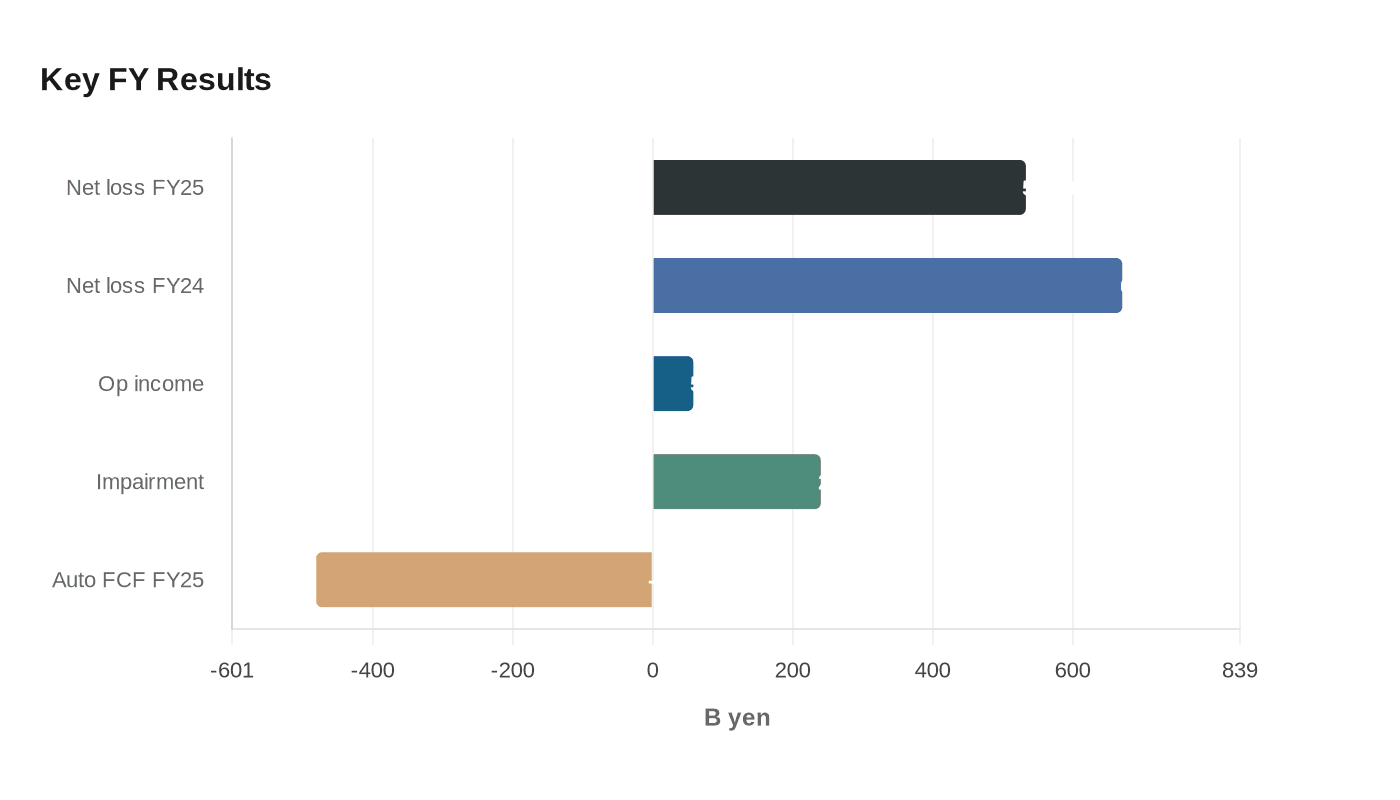
Tariffs, inflation and intense global competition still had Nissan Motor Co. under pressure even after the Japanese automaker narrowed its annual loss and swung to a better-than-expected operating profit. The company said net loss for the fiscal year ended March 31 came to 533.095 billion yen, or about $3.4 billion, smaller than the 670.898 billion yen loss a year earlier, but the business remained deep in the red.
Net sales fell 4.9% to 12.007888 trillion yen, while global sales totaled 3.15 million vehicles. Operating income came to 58.005 billion yen, well above the 60 billion yen operating loss median forecast from analysts surveyed by LSEG, helped by a one-off boost tied to U.S. emissions regulations and stronger cost performance. Nissan also recorded 240.122 billion yen in impairment losses on business assets as an extraordinary loss, underscoring how much strain still sits beneath the improved headline figures.

The cash picture was better, but not yet clean enough to declare victory. Automotive free cash flow for the full year was negative 480.8 billion yen, though it turned positive by 112 billion yen in the second half. Nissan said automotive net cash stood at 1.17 trillion yen at fiscal year-end, with 2.2 trillion yen in automotive cash and cash equivalents and 1.4 trillion yen in loans to sales finance companies, giving the group 3.6 trillion yen in total liquidity.
The latest numbers follow a brutal prior year in which Nissan posted a 670.9 billion yen net loss and, in May 2025, announced plans to close seven factories and cut 20,000 jobs. On April 27, 2026, the company had already raised its fiscal 2025 operating profit forecast to 50 billion yen, signaling that the final results were trending ahead of the earlier outlook.
Ivan Espinosa, who is leading the turnaround as president and chief executive, still faces the harder task ahead. Nissan said the business environment in fiscal 2026 would remain challenging because of competition, foreign exchange swings, inflation and geopolitical uncertainty, yet it still expects to return to positive automotive operating profit and free cash flow by the end of fiscal 2026, excluding the impact of tariffs. The company set its annual shareholders’ meeting for June 23, 2026, and plans to file its annual securities report on June 22, 2026.
This article was produced by Prism’s automated news system from verified source data, official records, and press releases, then run through automated quality and moderation checks before publishing. The system is built and supervised by the people who set the standards it runs under. Read our full AI policy.
Did this article answer your question?
%3Amax_bytes(150000)%3Astrip_icc()%2FCertificate-of-deposit-2301f2164ceb4e91b100cb92aa6f868a.jpg&w=1920&q=75)