Nissan recalls about 643,000 Rogue SUVs over engine and throttle risks
Nissan is recalling 642,698 Rogue SUVs in the U.S. for broken throttle-body gears and damaged engine bearings; dealers will inspect and repair vehicles free of charge.

Nissan disclosed two separate U.S. safety recalls covering 642,698 Rogue SUVs after federal regulators flagged defects that can cause loss of drive power and, in one case, raise the risk of an engine fire. The action affects two distinct failure modes and spans model years linked to the automaker's 1.5-liter three‑cylinder variable‑compression turbo (VC‑Turbo) engine.
The recalls break down into 318,781 Rogues for faulty throttle‑body gears that may wear or break over time and 323,917 Rogues for potential engine bearing damage. Regulators say broken throttle‑body gears could reduce engine performance or precipitate a sudden loss of propulsion. Damaged engine bearings could allow hot oil to discharge, increasing the risk of an engine fire and also causing loss of drive power.
NHTSA records list the combined total as 642,698 vehicles; many public notices round that number to about 643,000. The throttle‑body action principally covers 2024–2025 Rogues equipped with the VC‑Turbo engine, while the engine‑bearing recall covers 2023–2025 Rogues with the same powerplant. Nissan plans to mail notification letters to affected owners on March 27, 2026. Dealers will inspect vehicles and perform repairs at no cost to owners, including reprogramming engine‑control software and replacing affected components when required. Owners can check VINs through NHTSA or Nissan recall‑lookup tools to confirm coverage.
The two recalls come as an expansion of a prior June recall that covered more than 480,000 Rogue, Infiniti and Altima vehicles for related engine‑loss issues. That earlier action and the current pair underscore continuing regulatory scrutiny of the VC‑Turbo architecture and related systems after reports of in‑service failures prompted NHTSA review.
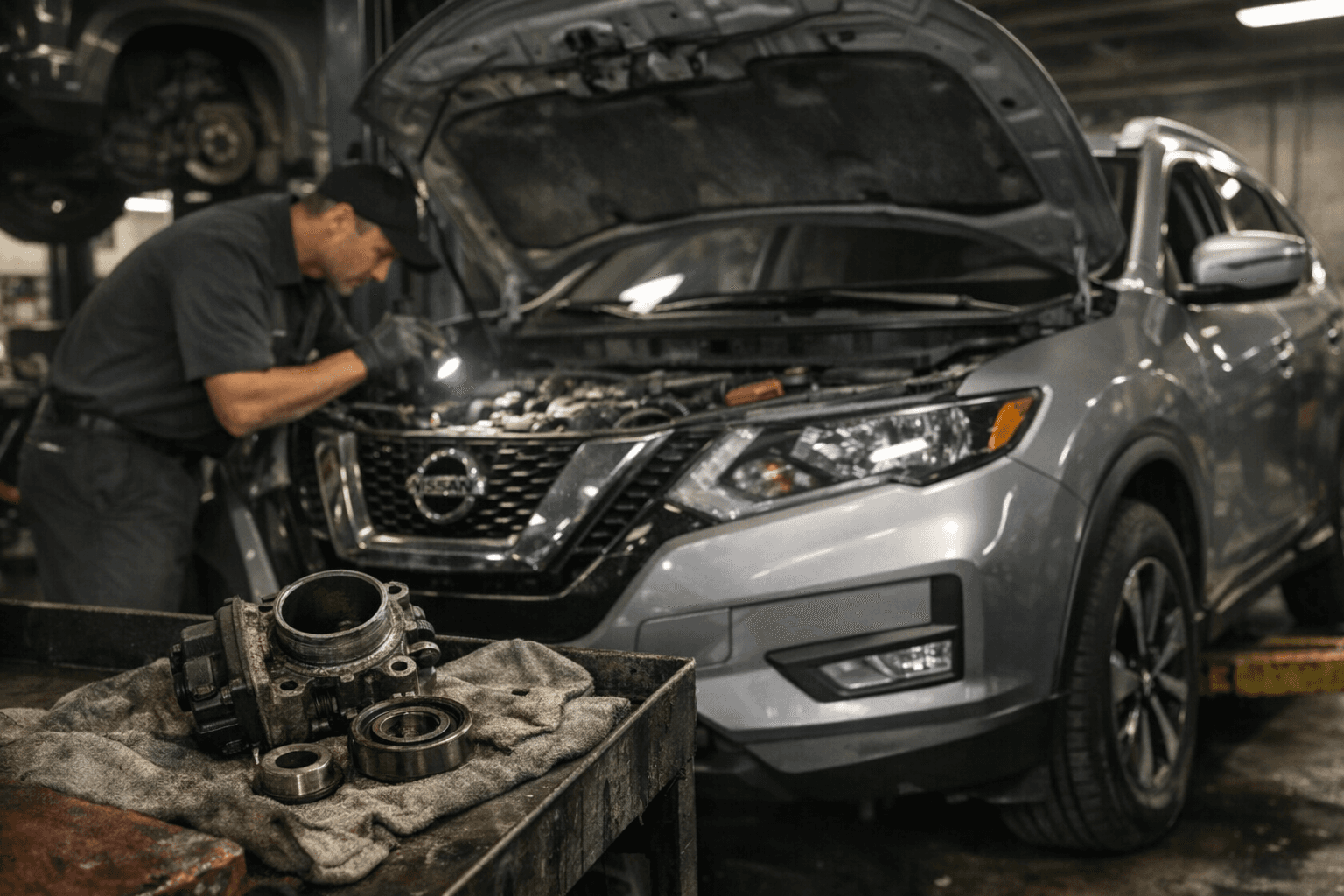
For owners the immediate implication is practical: affected drivers should verify coverage and schedule service, since both defects carry safety consequences, from sudden loss of propulsion on highways to, in a subset of cases, elevated fire risk. Repairs are free, but the scale of the recalls, nearly 0.65 million vehicles in the U.S. alone, could strain dealer service capacity and create scheduling delays in the coming weeks.
Economically, the recalls will have measurable costs for Nissan beyond warranty expenses. Large-scale campaigns typically include parts, labor and administrative outlays, and can depress demand for specific models in the used‑car market until vehicles are repaired and verified. Regulators’ broader enforcement activity can also pressure manufacturers to simplify designs or adjust quality controls, with long‑term implications for investment in complex, fuel‑saving technologies such as variable‑compression turbochargers.
Policy implications include heightened NHTSA focus on how automakers track and remedy systemic manufacturing defects and whether recall timing and owner notifications are sufficiently prompt. For consumers, the key steps are simple: check VIN status, follow dealer instructions, and expect a mailed notice from Nissan on March 27, 2026. Automakers and regulators will likely monitor repair throughput closely to ensure the two defects are corrected without undue delay.
This article was produced by Prism’s automated news system from verified source data, official records, and press releases, then run through automated quality and moderation checks before publishing. The system is built and supervised by the people who set the standards it runs under. Read our full AI policy.
Did this article answer your question?
%3Amax_bytes(150000)%3Astrip_icc()%2FCertificate-of-deposit-2301f2164ceb4e91b100cb92aa6f868a.jpg&w=1920&q=75)