NLRB Issues Guidance on Employee Organizing Rights, Resources for Pizza Hut Staff
The NLRB and federal agencies have published plain-language guidance on NLRA rights, steps to organize and where Pizza Hut staff can get help and file complaints.
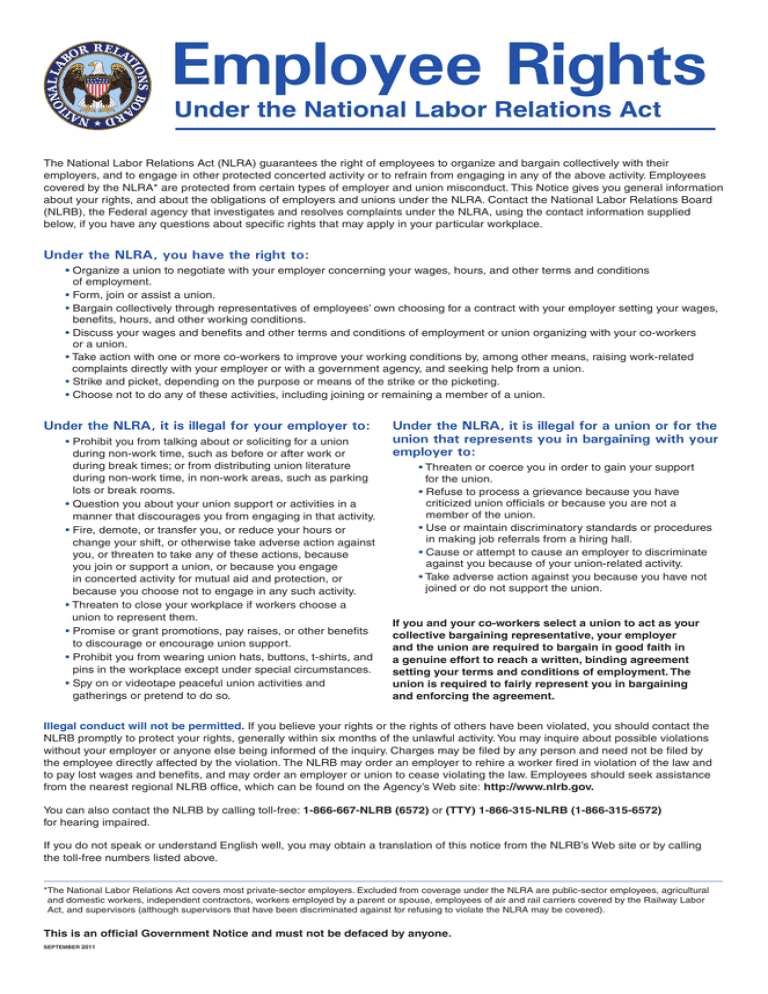
The National Labor Relations Board and related federal agencies have laid out clear, practical resources explaining private-sector employees’ rights under the National Labor Relations Act, guidance that applies to Pizza Hut crew, shift leads, managers and delivery staff. The materials summarize what actions are protected, how workers can pursue representation, and what employers may not do in response.
“The NLRA is a federal law giving most private sector employees the right to form or join unions; engage in protected, concerted activities to address or improve working conditions (like protesting low pay, unsafe working conditions, or discrimination); and refrain from engaging in these activities,” one Department of Labor summary states, while the NLRB’s outreach materials list brochures, fact sheets, an employee rights poster and step-by-step filings as practical tools for workers and employers.
The agencies emphasize several concrete limits on employer conduct. NLRB guidance warns employers not to take adverse actions in response to organizing. The Workcenter guidance says an employer cannot “Fire or demote employees,” “Impose new paperwork requirements to maintain employment,” “Transfer employees to another location,” “Contact law enforcement, including ICE,” or “Reduce pay, hours, or benefits.” It also warns employers not to make work more difficult or less desirable and not to “Threaten to do any of these things.” Federal materials add that immigrant workers retain protection from retaliation regardless of immigration status.
For workers who collect signed authorization cards, the NLRB materials describe two main paths to formal representation. Under the majority-signup or voluntary-recognition path, the steps are clear: “A majority of employees in the bargaining unit sign cards/petitions seeking union representation,” then workers “ask their employer to recognize the union voluntarily.” If the employer recognizes the union, it becomes the workers’ legal representative and the parties begin bargaining. If the employer refuses, workers may file a petition for an election with the NLRB. The Workcenter outlines the election pathway up to filing: organizers must “Have at least 30% of coworkers sign union authorization cards/petitions” and then “File a petition for a union election with the NLRB”; the published text supplied to reporters stops short of completing the final line describing the election outcome.

Practical supports and processes are highlighted. The DOL advises employers to inform staff of their rights: “Make sure your employees are aware of their rights to organize and bargain collectively – for example, by circulating the poster developed under E.O. 13496.” The NLRB can be contacted confidentially: “If you believe your rights have been violated, you should contact the National Labor Relations Board (NLRB) as soon as possible. Your employer will not be told about your inquiry. The NLRB can be reached at 1-844-762-NLRB (1-844-762-6572). Spanish assistance is available.” The board enforces the NLRA through regional offices and investigative processes that can include hearings before an Administrative Law Judge.
Employer-side advisers urge prevention and legal compliance. “Maintain Open Communication With Employees: In an environment of uncertainty, clear and regular communication helps prevent misunderstandings or union-related escalation. Reinforce any open-door policies, encourage feedback, and foster a positive workplace culture to reduce the appeal of organizing efforts,” and employers should “Evaluate Positive Employee Relations and Bargaining Strategies” to stay within the law.
For Pizza Hut staff, the guidance means you have documented options and federal contacts if you want to raise pay, safety or scheduling issues collectively. Circulating the employee rights poster, contacting the NLRB confidentially, and understanding the two procedural paths to representation are immediate steps. Expect continued outreach from federal agencies and the possibility of mediation support from the Federal Mediation and Conciliation Service if a bargaining relationship is established.
Know something we missed? Have a correction or additional information?
Submit a Tip