NLRB know-your-rights materials give Taco Bell workers clear protections
NLRB posters and know-your-rights cards outline protections for Taco Bell employees, explain concerted activity rules, and show how to file charges when managers interfere.
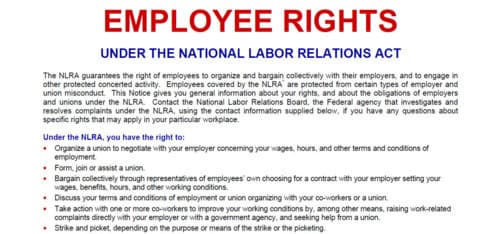
The National Labor Relations Board publishes a suite of employee-rights materials that Taco Bell workers can use to understand protections under the National Labor Relations Act. The resources include downloadable one-page and two-page Employee Rights posters, multi-language know-your-rights cards, and guidance on topics from Weingarten rights to immigrant worker protections and discussing pay or workplace equity.
These materials spell out the scope of protected concerted activity, including talking about wages and working conditions, joining coworkers to raise concerns, and organizing. They also lay out the process for filing charges when an employer interferes with those rights and point to regional offices that can provide help. The NLRB provides language variations and direct instructions for filing, making the resources accessible to a diverse crew and multilingual workforces common at Taco Bell locations.
For frontline workers, the immediate value is clarity. A crew member wondering whether a conversation about schedules or tip-sharing is protected can consult the one-page poster or the pocket-sized cards that explain basic rights in plain language. Shift leads and crew who feel targeted after raising safety or scheduling concerns can use the materials to document what protections apply and learn how to pursue a charge if needed. For immigrant workers, the multi-language cards and immigrant worker materials reduce confusion about whether fear of immigration enforcement affects workplace rights.
The materials matter for management and franchise owners as well. They serve as a baseline for lawful conduct in non-union and union organizing contexts and are widely cited by advocacy groups and worker organizers. Employers who review the posters can better avoid actions that could be construed as unlawful interference with employees' rights. That includes coaching managers on lawful responses to employee discussions about pay and working conditions and on the limits of discipline related to protected concerted activity.
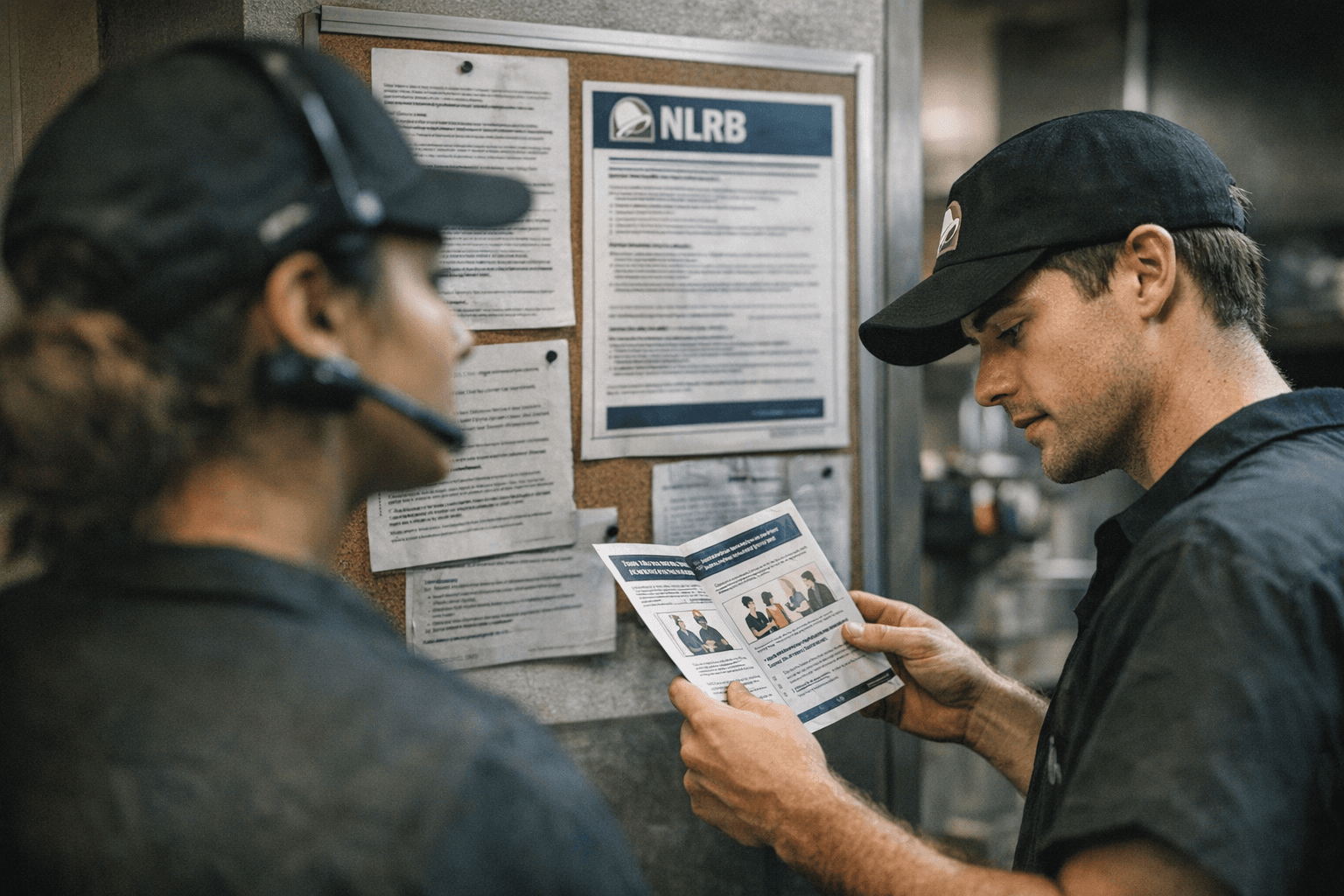
Knowing these resources does not replace legal advice, but it equips workers with concrete steps. Copies of the posters and cards can be downloaded and printed for break rooms, carried in wallets, or shared digitally among coworkers. Workers who believe their rights have been violated can preserve records of the incident, note witnesses, and follow the posted instructions to contact the appropriate regional office or file a charge.
For Taco Bell employees, the presence of official, multi-language materials means more accessible information about core workplace rights and a clearer path for addressing retaliation or interference. The next practical step for workers and managers alike is to review the posters, share them in the workplace, and let those rights guide everyday conversations about pay, safety, and organizing.
Know something we missed? Have a correction or additional information?
Submit a Tip