N.M. Regulators Seek $16M, Issue Compliance Orders Over Los Alamos Cleanup Delays
N.M. regulators seek up to $16M and demand proof within 30 days that DOE can defer Area C cleanup at Los Alamos.
The New Mexico Environment Department has issued three compliance orders against the U.S. Department of Energy and is seeking up to $16 million in penalties for long-delayed cleanup at Los Alamos National Laboratory, while also initiating a modification to the Waste Isolation Pilot Plant state permit. One of the compliance orders directs the Department of Energy to produce proof that its July deferral of Material Disposal Area C is needed within 30 days, the Santa Fe New Mexican reported after the state’s mid‑February announcement.
NMED’s enforcement actions target several central disputes: the speed and priority of legacy cleanup at LANL, shipments of defense-related transuranic waste to WIPP near Carlsbad, and alleged violations of groundwater safety standards. The department says it will fine DOE for exceeding groundwater standards near the lab and characterized the situation sharply: “The continued presence of a large volume of unremedied hazardous and radioactive waste demonstrates a longstanding lack of urgency by the U.S. Department of Energy,” and it “elevates the risk of waste storage failures” at the lab.
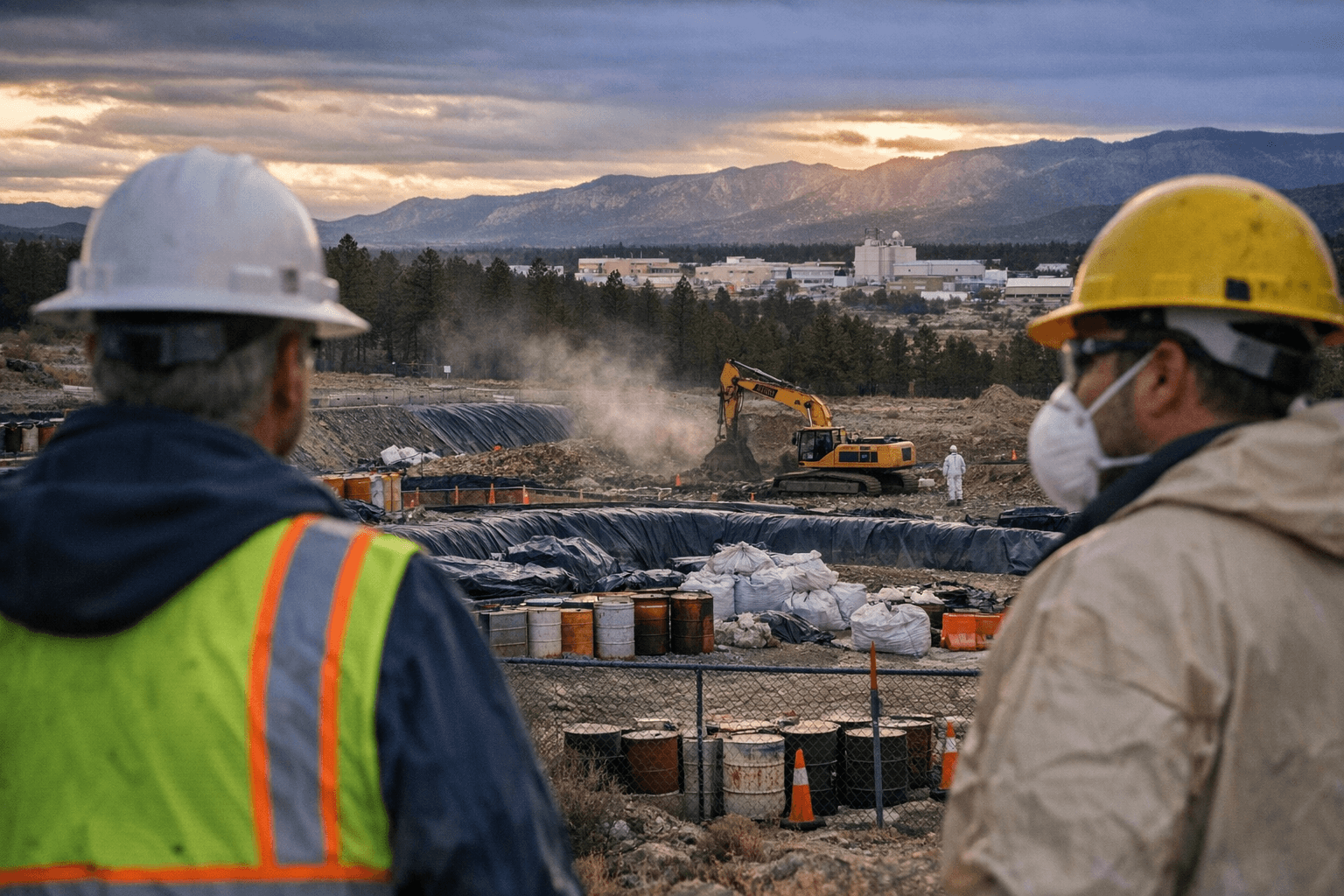
Material Disposal Area C - a roughly 12-acre landfill used from 1948 to 1974 to dispose of radioactive materials and heavy metals - sits at the center of the fight. NMED officials say DOE proposed keeping the landfill open and in place rather than fully removing wastes, that some waste sits in unlined pits near the regional drinking water aquifer, and that DOE in July deferred cleanup citing proximity to active plutonium operations and congestion. The February compliance order notes: “NMED is aware that national pit production is occurring proximate to the MDA-C location,” the February compliance order reads. “However, that production has been ongoing since the 1990s, and Respondents have not indicated how MDA-C is associated with this ‘active facility operation’ other than providing speculative information about how corrective action at MDA-C could impede work for the national pit production mission or may jeopardize the timeline for the pit production if NMED’s intended remedy selection for MDA-C is selected.”
New Mexico Environment Secretary James Kenney framed the enforcement as a rebuke of long-standing federal inaction: “It’s a legacy of failed legacy waste cleanups,” he said, and added that “New Mexicans have stepped up to help solve the nation’s cleanup problem in a way that residents of no other state have.” Kenney further urged DOE to “prioritize their health and welfare by expediting cleanup at Los Alamos National Laboratory and ensuring there’s space for New Mexico’s legacy waste at the Waste Isolation Pilot Plant.”
Advocates amplified the concern about proximity to plutonium work. Jay Coghlan of Nuclear Watch New Mexico said the landfill is “within a few hundred yards of the lab’s main facility for plutonium ‘pit’ bomb core production,” and accused LANL of prioritizing pit production over cleanup and nonproliferation programs, saying DOE’s and NNSA’s deferment “in effect means that it will never be cleaned up.”
DOE’s Environmental Management field office in Los Alamos did not immediately comment on the enforcement orders, and a DOE representative told the New York Times the agency was reviewing the orders and remained “committed to public safety, efficiency, and transparency.” Ms. Kunkle, quoted in December, said the site is in a “safe and stable configuration.”
The regulatory action lands as Los Alamos continues plutonium pit production and as national debate over weapons modernization intensifies; news accounts describe LANL as central to a $1.7 trillion federal modernization effort and note the recent expiration of the last U.S.-Russia arms control treaty. For now, NMED has set short deadlines, begun a WIPP permit modification, and placed a roughly $16 million enforcement exposure on the table while requiring DOE to justify, within 30 days, why Area C cleanup should remain deferred.
Sources:
Know something we missed? Have a correction or additional information?
Submit a Tip