NOAA forecasts hotter-than-normal summer 2026 across all 50 states
NOAA sees hotter-than-normal conditions in every state this summer, with extreme heat already flagged in parts of the Southwest and Southeast.
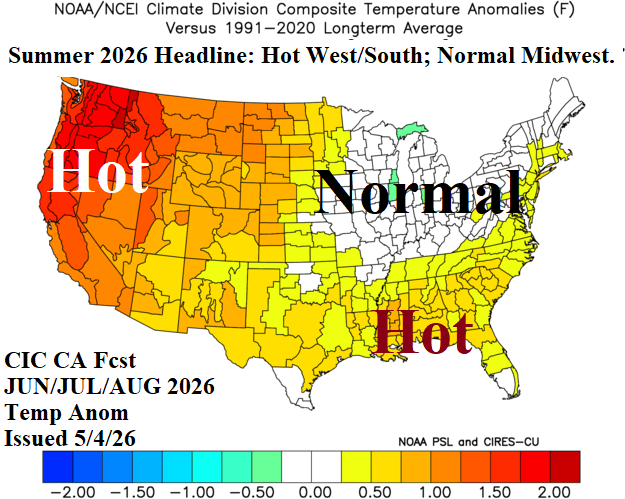
NOAA is warning that summer 2026 is likely to run hotter than normal across all 50 states, a coast-to-coast signal that could push up electric bills, strain grids and force earlier planning for heat emergencies. The Climate Prediction Center’s seasonal outlooks are the official 90-day forecasts, issued about once a month near mid-month at 8:30 a.m. Eastern Time, and they are probabilistic maps that show the odds of above-, near- and below-normal conditions rather than day-by-day weather.
The broad warmth lines up with NOAA’s June 18 long-lead discussion, which said El Niño conditions had recently developed and were expected to strengthen through the boreal summer and autumn of 2026. NOAA also said there was greater than a 40% chance the El Niño event would become strong by the July-August-September 2026 season. In the same set of outlooks, NOAA said the JAS temperature map favored above-normal temperatures across most of Alaska, excluding parts of the northeastern mainland, underscoring how little of the country is left outside the warm signal.

That matters because the forecast is not just a climatology note; it is an operational warning. NOAA’s June 19 hazards outlook said extreme heat was possible in parts of the California Valley into the lower Four Corners and across the Florida Peninsula into the Southern and Middle Atlantic regions. If that pattern persists, utilities may have to prepare for heavier air-conditioning demand and longer periods of stress on transmission and generation, while emergency managers may need to open cooling centers sooner and keep them open longer.
The health risks are immediate. The Centers for Disease Control and Prevention says older adults, young children and people with chronic medical conditions are at high risk for heat-related illness and death, and it says more than 700 people die from extreme heat every year in the United States. The National Weather Service warns that older adults and people with chronic conditions are especially vulnerable during extreme heat, a concern that extends to outdoor workers, pregnant women and households without reliable cooling.

The backdrop is already hot. NOAA said summer 2024 was the fourth-hottest summer on record for the contiguous United States, and 2024 was the warmest year on record for the contiguous United States. NOAA’s HeatRisk product, which is separate from official watches, warnings and advisories, is meant to help decision-makers and heat-sensitive populations gauge potential impacts before the worst heat arrives. For agriculture, travel, construction schedules, school activities and summer sports, the message is the same: if this outlook holds, heat may become a constant planning problem rather than a short-lived hazard.
This article was produced by Prism’s automated news system from verified source data, official records, and press releases, then run through automated quality and moderation checks before publishing. The system is built and supervised by the people who set the standards it runs under. Read our full AI policy.
Know something we missed? Have a correction or additional information?
Submit a Tip