North Korea rewrites constitution to erase reunification, claim South border
North Korea has written separation into its constitution, naming South Korea as a border and elevating Kim Jong Un’s nuclear command.
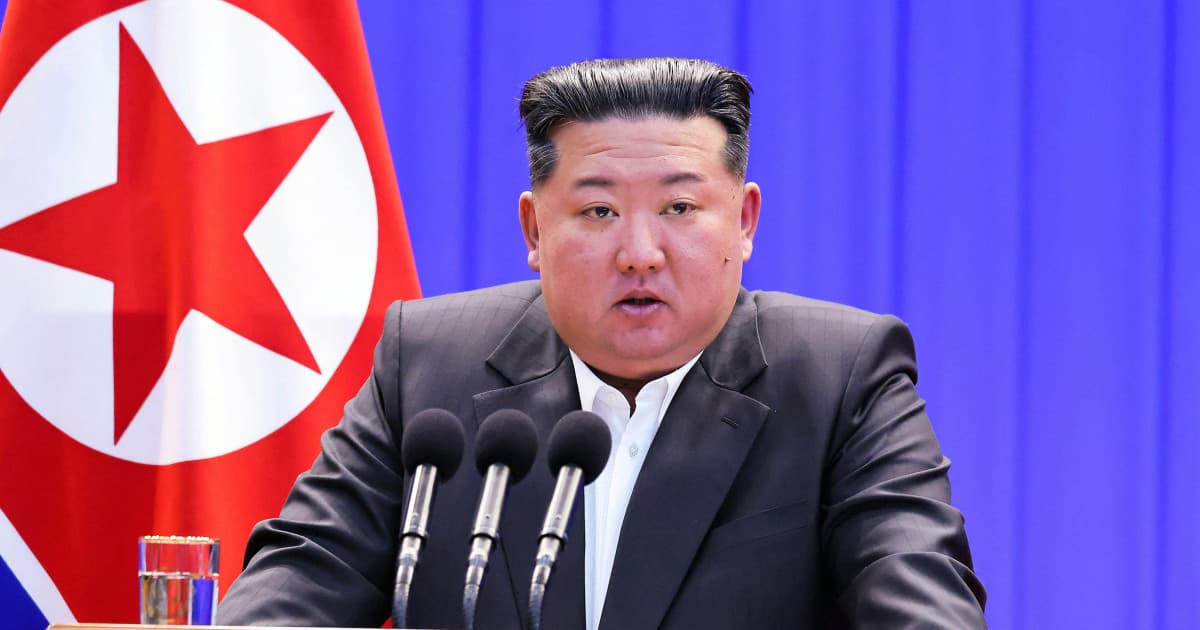
North Korea has turned its break with South Korea into constitutional doctrine, removing reunification language and declaring that its territory borders the South. The change does more than update old rhetoric: it locks in Kim Jong Un’s shift from a future of one Korea to a state that treats the peninsula’s division as permanent and potentially militarized.
The revised constitution, believed to have been adopted at a March meeting of the Supreme People’s Assembly, says North Korea’s territory includes land bordering China and Russia to the north and the Republic of Korea to the south, along with territorial waters and airspace. It also says the country will never tolerate any infringement of its territory. A Seoul National University professor told South Korea’s Unification Ministry that this was the first time North Korea had added a territorial clause to its constitution.

The language stops short of naming the exact border with South Korea or directly identifying disputed waters such as the Northern Limit Line in the Yellow Sea. That omission may help Pyongyang avoid immediate friction over a hard legal claim, but the broader message is unmistakable: the North is embedding the two-hostile-states doctrine in law and erasing reunification from its official state project. For military planners in Seoul and Washington, that raises the risk that future border incidents, naval standoffs or artillery exchanges could be framed by Pyongyang not as inter-Korean disputes, but as sovereign-defense actions.
The constitution also strengthens Kim’s formal authority. It describes him as chairman of the State Affairs Commission, the head of state, and explicitly assigns that post command over North Korea’s nuclear forces. Another clause calls North Korea a responsible nuclear weapons state that will keep advancing nuclear arms development to protect its survival, deter war, and preserve regional and global peace and stability. In practice, that gives the regime a legal framework for tying its conventional border claims directly to its nuclear posture.

The rewrite follows Kim’s January 15, 2024 declaration that reunification with the South was no longer possible, when he called South Korea the North’s “primary foe and invariable principal enemy.” In the days after that speech, satellite imagery suggested the demolition of the Arch of Reunification in Pyongyang, a 30-meter monument built after the 2000 inter-Korean summit, and North Korea shut down government bodies devoted to reunification. The constitutional change now cements that reversal, making hostility with South Korea not just policy, but law.
This article was produced by Prism’s automated news system from verified source data, official records, and press releases, then run through automated quality and moderation checks before publishing. The system is built and supervised by the people who set the standards it runs under. Read our full AI policy.
Did this article answer your question?