Northwest Houston Security Guard Accused of Breaking Into Apartment, Tasing Resident
An on-site security guard is accused of forcing into an apartment, deploying a Taser, handcuffing and assaulting a resident - the case raises questions about private security authority and tenant safety.

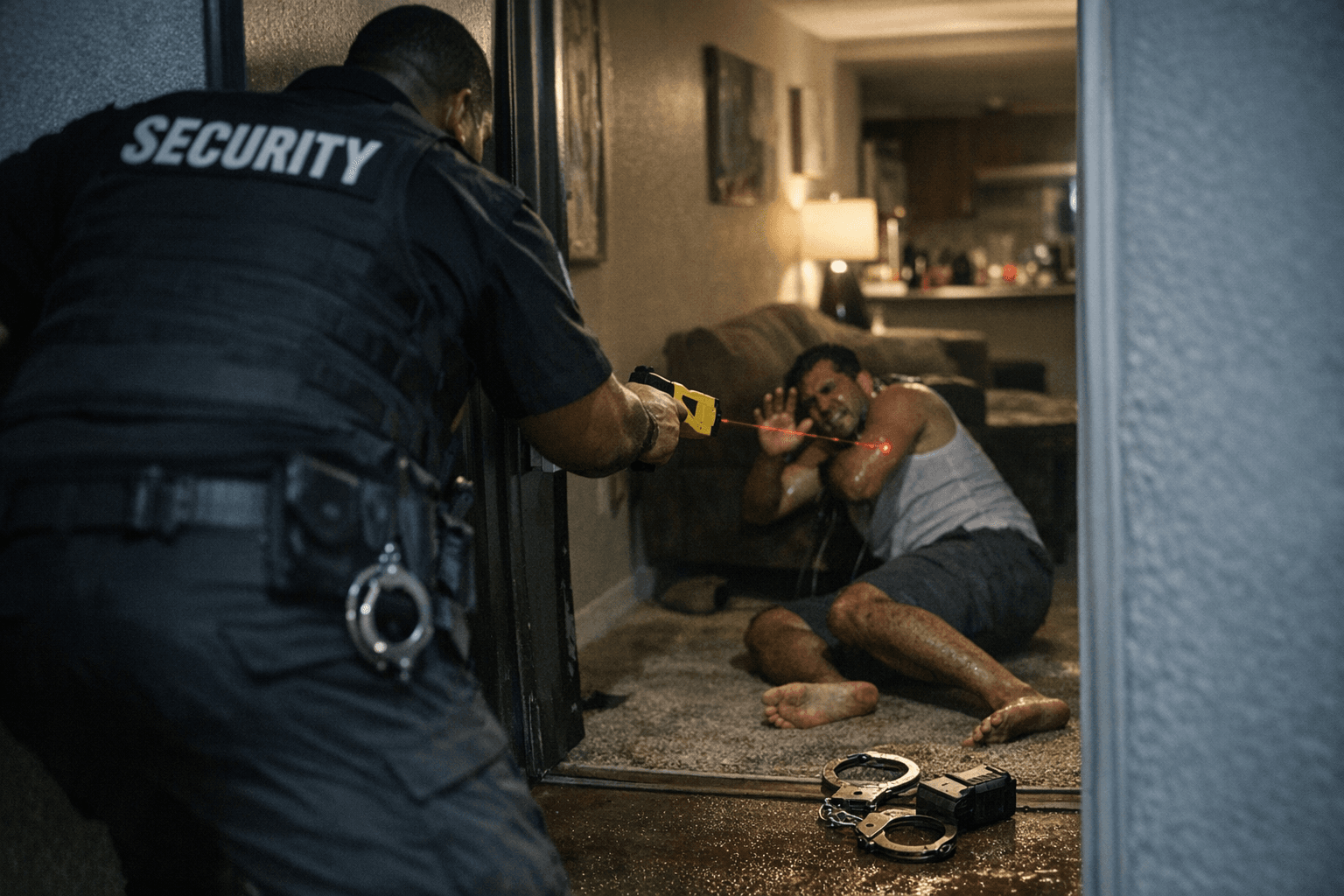
Jordan Dickerson, an on-site security guard at an apartment complex in northwest Houston near West Gulf Bank Road and Veterans Memorial Drive, faces two charges, including burglary with intent to commit a felony, after residents say he forced his way into a unit during an early-morning dispute and used a Taser on a tenant.
Neighbors described a scene that began after a casual game of Uno. Resident Katricia Charles said she stepped outside to coax a neighbor to stay and watched as Dickerson allegedly entered her apartment. “He just went in,” Charles said. Charles’s daughter then reported seeing a struggle in the living room between Dickerson and resident Larenzo Smith, who is Charles’s boyfriend. Smith said the guard “beat on the door, and I opened the door,” and that after a verbal exchange Dickerson “deployed the Taser and told me get on the ground, and I looked at him like, for real? But I complied. I put my hands behind my back.”
Smith says Dickerson handcuffed him, escorted him downstairs and pushed him face down onto the parking lot. Smith suffered scratches to his face and shoulder, according to residents, and Charles said she immediately called 911. The incident has left neighbors shaken and asking whether private security staff have clear limits on entering residents’ homes and using force.
Another on-site security guard, Lorenzo Thrash, publicly questioned whether Dickerson should face criminal charges, asking, “You don't think he should be charged?” The initial public reports state Dickerson faces two charges, one of which is burglary with intent to commit a felony. Those accounts do not list the second charge or provide full arrest and booking details.
The allegations underscore governance gaps around private security in residential complexes. Texas requires certain licensing and training for private security, but enforcement and transparency vary. For tenants in Harris County, the episode raises immediate concerns about how security firms are vetted, how incidents are documented, and what recourse tenants have when force is used inside private homes. Residents and tenant advocates say prompt access to police reports, body camera or surveillance footage and company policies is essential for accountability.
Local officials and the apartment complex management were not identified in the initial accounts provided to residents, and public charging documents have not been published in those accounts. The legal process for Dickerson will clarify the exact charges, the arresting agency and whether prosecutors plan additional filings. Court records and any statements from the security company or complex management will also help determine whether disciplinary action or policy changes follow.
For readers, this case signals two practical things: expect scrutiny of private security operations in multi-family housing, and watch for public records that will spell out the official sequence of events. The next steps include confirmation of formal charges in court, statements from law enforcement and the employer, and potential community discussions about tenants’ rights and safety at apartment complexes.
Know something we missed? Have a correction or additional information?
Submit a Tip