NPCA Demands Interior Halt NPS Non-Resident Surcharge, Separate Annual Pass Pricing
The NPCA demanded the Interior halt new NPS non-resident surcharges and separate non-resident annual pass pricing, saying the rollout has caused chaos and will hurt parks and local economies.

The National Parks Conservation Association has formally demanded that Secretary of the Interior Doug Burgum stop the National Park Service rollout of a new non-resident surcharge and separate non-resident annual pass pricing, saying the policy has produced "weeks of chaos and confusion" at park entrances and gateway communities. NPCA delivered the demand to Interior leadership in a Feb. 10, 2026 press release and asked that implementation be paused while operational and visitor impacts are addressed.
The policy changes, announced by the Department of the Interior in November 2025 and implemented Jan. 1, 2026, require residency verification for resident rates and impose what multiple groups characterize as a roughly $100 surcharge on non-U.S. residents at some parks. Secretary Burgum framed the overhaul as a modernization and defense of taxpayer access, saying, “These policies ensure that U.S. taxpayers, who already support the National Park System, continue to enjoy affordable access, while international visitors contribute their fair share to maintaining and improving our parks for future generations.”
NPCA Deputy Vice President for Government Affairs Emily Douce said the operational fallout is severe. “After weeks of chaos and confusion, it’s painfully obvious that the new non-resident fee policy needs to be put on hold until the challenges facing park staff and visitors are addressed,” Douce wrote. NPCA’s social messaging added, “This is an absolute mess and was entirely predictable given the lack of transparency, public input and analysis of real-world impacts."
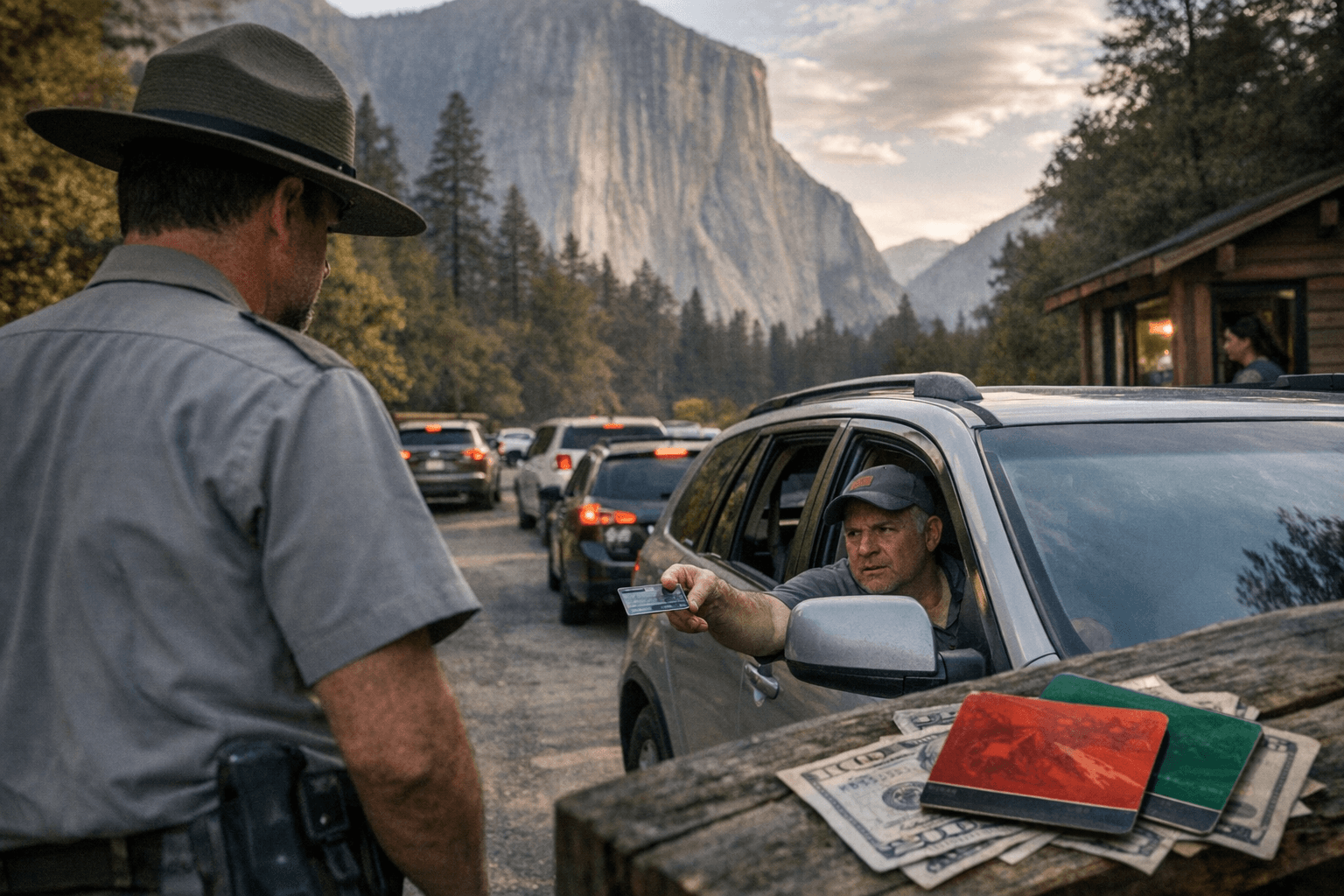
Park staff and visitors have reported long entry lines, passport and residency checks at gates, and some tourists turning away rather than pay the surcharge. Eleven high-traffic parks are specifically named as subject to the new surcharges: Acadia, Bryce Canyon, Everglades, Glacier, Grand Canyon, Grand Teton, Rocky Mountain, Sequoia and Kings Canyon, Yellowstone, Yosemite and Zion. Lawmakers and park partners are warning that those delays will intensify as spring and summer visitation rises.
The International Inbound Travel Association warned of immediate economic consequences for multi-park group tours sold well in advance. “Tour operators cannot absorb a $100 per-person, per-park surcharge, which would add tens of thousands of dollars in unplanned costs to a single tour,” Lisa Simon, IITA CEO and Executive Director, said. “Without adjustments, this could result in cancellations, financial losses, and decreased revenue to the national parks and surrounding communities,” Simon added. Congressional correspondence to NPS noted the agency workforce is under strain, citing a 24% decline in staffing from the previous year and urging a pause while guidance and resources are sorted.
Environmental groups have moved to the courts. Kieran Suckling, executive director of the Center for Biological Diversity, contends the policy is unlawful and damaging to park reputation. “What they’ve done is illegal and will discourage people from coming to America’s national parks, which are revered around the world. Instead, people will come here and talk about being ripped off and how cheap and xenophobic the government is,” Suckling said.
What this means for readers: if you plan an international or multi-park itinerary this year, expect possible delays at gates, extra charges for non-U.S. residents at specified parks, and last-minute changes to tour pricing. NPCA and travel groups have asked for agency updates by mid-February, and legal and congressional challenges are underway. Park visitors, tour operators and local businesses will be watching whether Interior pauses the policy, clarifies residency verification procedures, or adjusts fee mechanics before peak season.
Know something we missed? Have a correction or additional information?
Submit a Tip