NPR lands $113 million in donations after federal funding cuts
NPR got $113 million in gifts, but the real test is whether private money can replace federal support without weakening local stations, rural alerts, and public accountability.
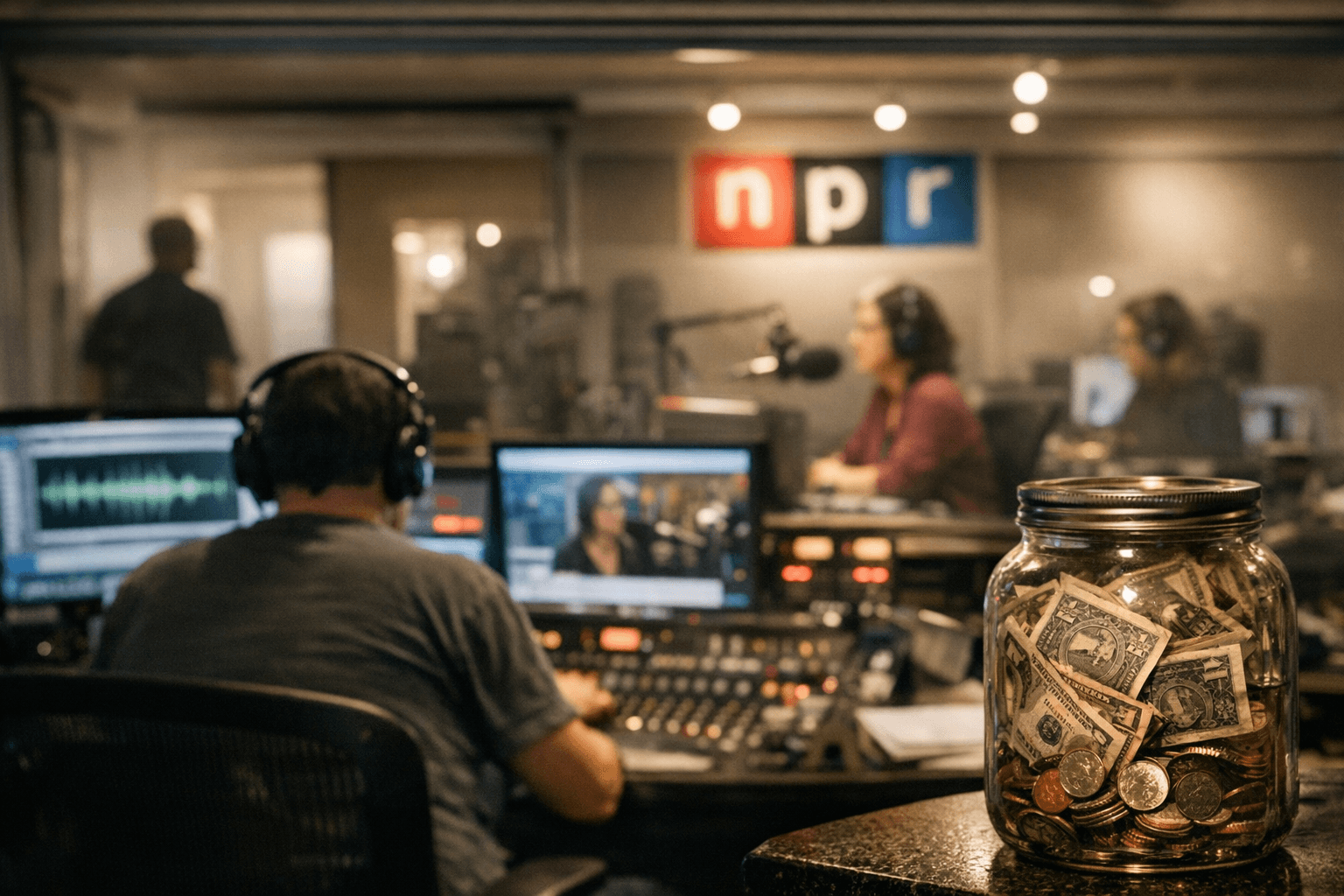
The money is substantial, but the survival question is sharper: can $113 million from mega-donors replace federal support without changing who NPR answers to, and without leaving local stations to absorb the damage?
NPR said Thursday, April 16, 2026, that it had received $113 million in philanthropic gifts, led by an $80 million contribution from Connie Ballmer and a separate $33 million gift from an anonymous donor. NPR said the money will go toward digital innovation, shared tools, technology and services for the NPR Network, and to strengthen the sustainability of member stations nationwide. The Ballmer gift is the largest ever made to NPR by a living donor.
The new money arrives after Congress voted in July 2025 to revoke about $1.1 billion in previously approved public broadcasting funds. The rescission package was part of a $9 billion request from President Donald Trump to claw back money already appropriated by Congress for foreign aid and public media. The Senate passed the amended bill 51-48, with Susan Collins of Maine and Lisa Murkowski of Alaska breaking with most Republicans to oppose it.
The Corporation for Public Broadcasting said on August 1, 2025, that it would begin winding down operations, laying off most of its staff by the end of September and closing all operations by the end of January 2026. NPR said the loss of federal support has created significant financial pressure across public media, even as the new gifts are intended to speed up digital work and help stations share technology and services.
That pressure is heaviest where public media is not a luxury, but a lifeline. Federal funding makes up roughly 1% of NPR’s headquarters budget, yet for some local stations it is a much larger share of revenue, including more than 90% at some Alaska public radio outlets. Public media advocates have warned that the cuts threaten emergency alerts, local city-hall coverage, children’s programming, and other services in communities where internet, cable, or cell service can be unreliable.
NPR and PBS won a court ruling earlier in 2026 against a Trump administration executive order targeting public broadcasters, but the decision did not restore the congressional cuts. Katherine Maher, NPR’s chief executive, said the new gifts would help the network meet changing audience needs and build a more sustainable digital infrastructure. Connie Ballmer said she backed NPR because an informed public is the bedrock of society and said she hoped the gift would give the organization stability and momentum. The donation will help NPR adapt, but it does not answer the larger policy question left behind by Congress: whether public media can keep serving rural listeners and local communities when the federal floor disappears.
This article was produced by Prism’s automated news system from verified source data, official records, and press releases, then run through automated quality and moderation checks before publishing. The system is built and supervised by the people who set the standards it runs under. Read our full AI policy.
Did this article answer your question?