NPS Warns of Quicksand, Harmful Algal Blooms at Lake Powell
NPS warns quicksand pockets may lurk along Lake Powell shorelines and drainages, and cyanotoxin levels in parts of the reservoir are reported at the high end of safe exposure.

The National Park Service has warned visitors that quicksand may be present near the shoreline and in drainages throughout Glen Canyon National Recreation Area, prompting a travel impact for boaters, hikers, and explorers at Lake Powell: “Quicksand may be present near the shoreline and in drainages throughout the park. It can appear dry and firm on the surface but may suddenly give way,” the agency advised. The alert also coincides with reports of harmful algal blooms, with cyanotoxins detected in multiple areas of Lake Powell at concentrations described as being at the high end of safe exposure levels, leading officials to urge avoiding unnecessary contact with reservoir water.
Park geologic conditions and the mechanics of quicksand help explain the warning: “Quicksand forms when sand mixes with water or air, creating a surface that may look stable but can quickly collapse when weight is applied,” a description reproduced in coverage of the NPS alert. The NPS listed specific indicators for visitors to watch for, including unusually smooth ground, water slowly seeping upward in isolated spots, ground that moves or ripples when stepped near, dry-looking surfaces that feel spongy, saturated drainages or low spots, and any fine sediment mixed with water. The alert bluntly advised visitors to “Recognize unstable, shifting, or unusually soft ground, and use caution when entering through these areas.”
Photographic documentation and first-person reporting underscore the risk. St. George News reporter Alysha Lundgren, working at Lake Powell, “experienced just how dangerous quicksand is when she fell into quicksand while working at Lake Powell. She was shocked at how quickly her world was swallowed in mud and sand,” the outlet reported; photo captions dated March 25–26, 2024 show a log marking where the reporter sank and a caption noting Jack Stauss testing the ground and finding quicksand on March 25, 2024. Outsideonline’s coverage included a credited image of the Golden Cathedral in the Utah section of the recreation area, photographed by Sierralara/Getty Images, illustrating the same stretch of shoreline terrain.
Beyond quicksand, public-health risks from cyanobacteria are part of the advisory. Coverage cites that blooms can produce potent toxins: “These blooms can produce harmful toxins that can kill fish, mammals and birds and may cause illness or even death in humans, per the National Ocean and Atmospheric Administration.” Newsy and other outlets note cyanobacteria often appear as blue, green, or brown scum on the water’s surface, reinforcing the guidance to avoid unnecessary water exposure.
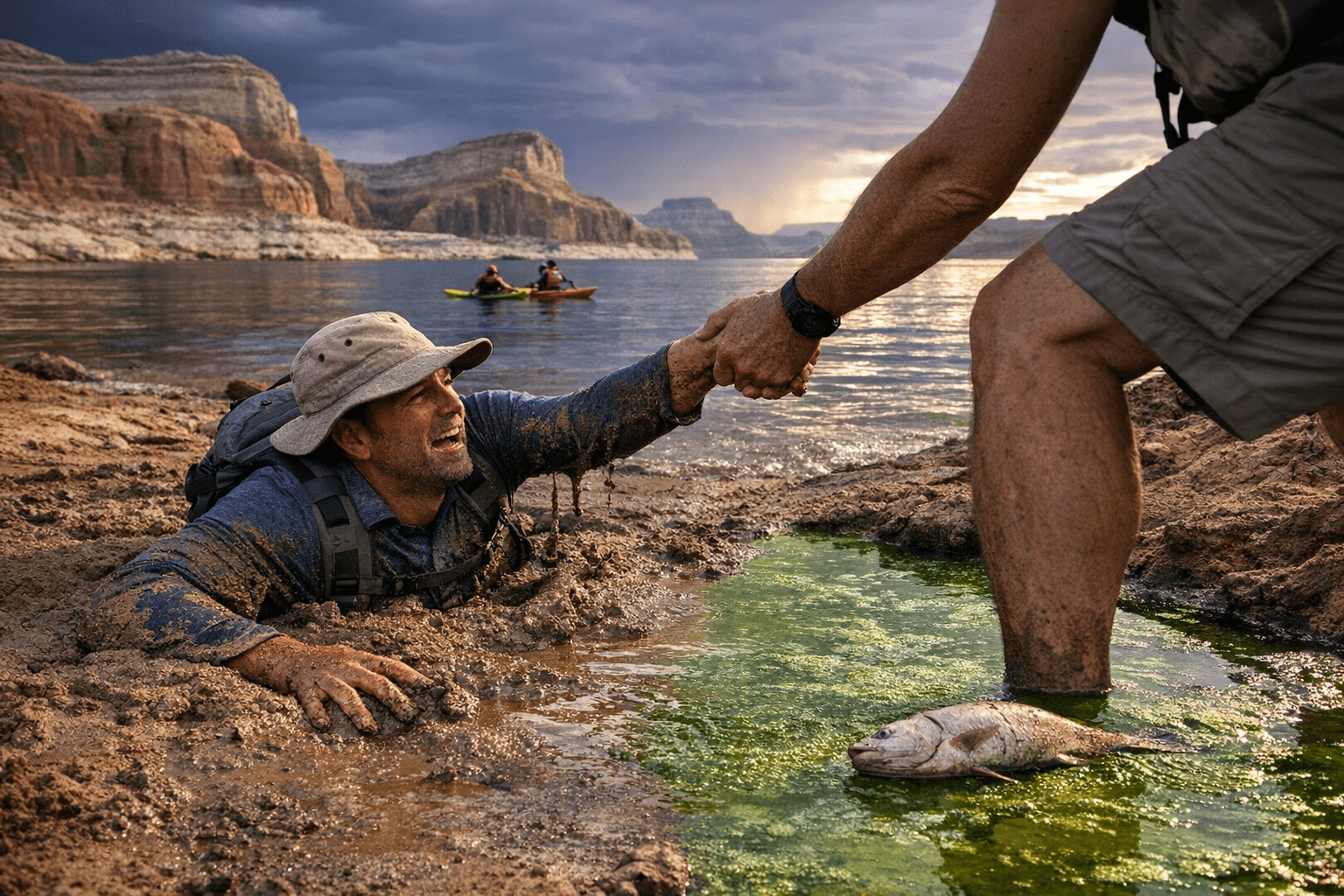
If a visitor becomes trapped, the NPS recommended calm, measured movements: “Stay calm rather than panicking. Sudden movements can cause the body to sink deeper into the unstable sand,” and follow the agency’s self-rescue steps, including leaning backward to distribute weight and to “Move one leg at a time, gently and gradually, to allow water to flow into the space around the limb. This loosens the suction effect.” The agency and multiple outlets also reminded travelers to check the park’s alerts and conditions page before a trip.
Glen Canyon National Recreation Area covers more than 1.25 million acres across parts of northern Arizona and southern Utah, providing access to Lake Powell and the Grand Canyon. The park’s layered hazards this season include quicksand, cyanotoxins, and lower water levels that increase the risk of submerged rocks: “As water levels drop, boaters are more likely to damage their watercraft on rock formations or other obstacles below the surface,” a St. George News photo caption noted. The NPS alert leaves a clear instruction for anyone planning a Lake Powell visit: watch your step, avoid unnecessary contact with reservoir water, and consult park conditions before heading out.
Know something we missed? Have a correction or additional information?
Submit a Tip