NTSB: cracked bearing-race linked to fatal UPS MD-11 crash
NTSB finds a bearing-race with extensive fatigue tied to the UPS MD-11 crash. Investigators question whether Boeing’s 2011 advisory and operator inspections were adequate.

Investigators for the National Transportation Safety Board disclosed that a cracked spherical bearing race recovered from UPS Flight 2976 showed extensive pre-existing metal fatigue, reviving questions about industry guidance issued more than a decade earlier and the maintenance of aging cargo fleets. The NTSB’s factual update, published in mid-January, describes a roughly 3-inch metal housing from the left engine-to-wing mount that split into two pieces at the accident site, with the securing lugs also fractured.
Detailed laboratory examination found fatigue cracking “originating around the entire circumference at the edge of the design recess groove,” with fatigue accounting for about 75 percent of the fracture surface and the remainder consistent with overstress. Investigators said fatigue and overstress were present across much of the bearing race and identified the larger assembly as a problem early in the probe. The update stopped short of a final probable cause, instead presenting the bearing race condition and related structural cracks as factual evidence for the continuing investigation.
The part in question matches the original design referenced in a Boeing Service Letter dated Feb. 7, 2011. Boeing notified operators then that it had seen four prior bearing race failures on three MD-11 airplanes, including parts splitting and moving out of place, and recommended visual inspections at normal five-year intervals. Boeing’s materials reportedly concluded that its review “would not result in a safety of flight condition.” The NTSB said investigators are examining how that 2011 guidance was incorporated into airline maintenance programs and whether operators adopted the recommended inspections.
Maintenance records show the last close examination of the engine-mount parts on the UPS MD-11F took place in October 2021, and the aircraft reportedly was not scheduled for another detailed inspection for roughly 7,000 additional takeoffs and landings. That inspection timeline is now central to inquiries about whether the guidance and inspection cadence were sufficient to detect progressive fatigue on older airframes.
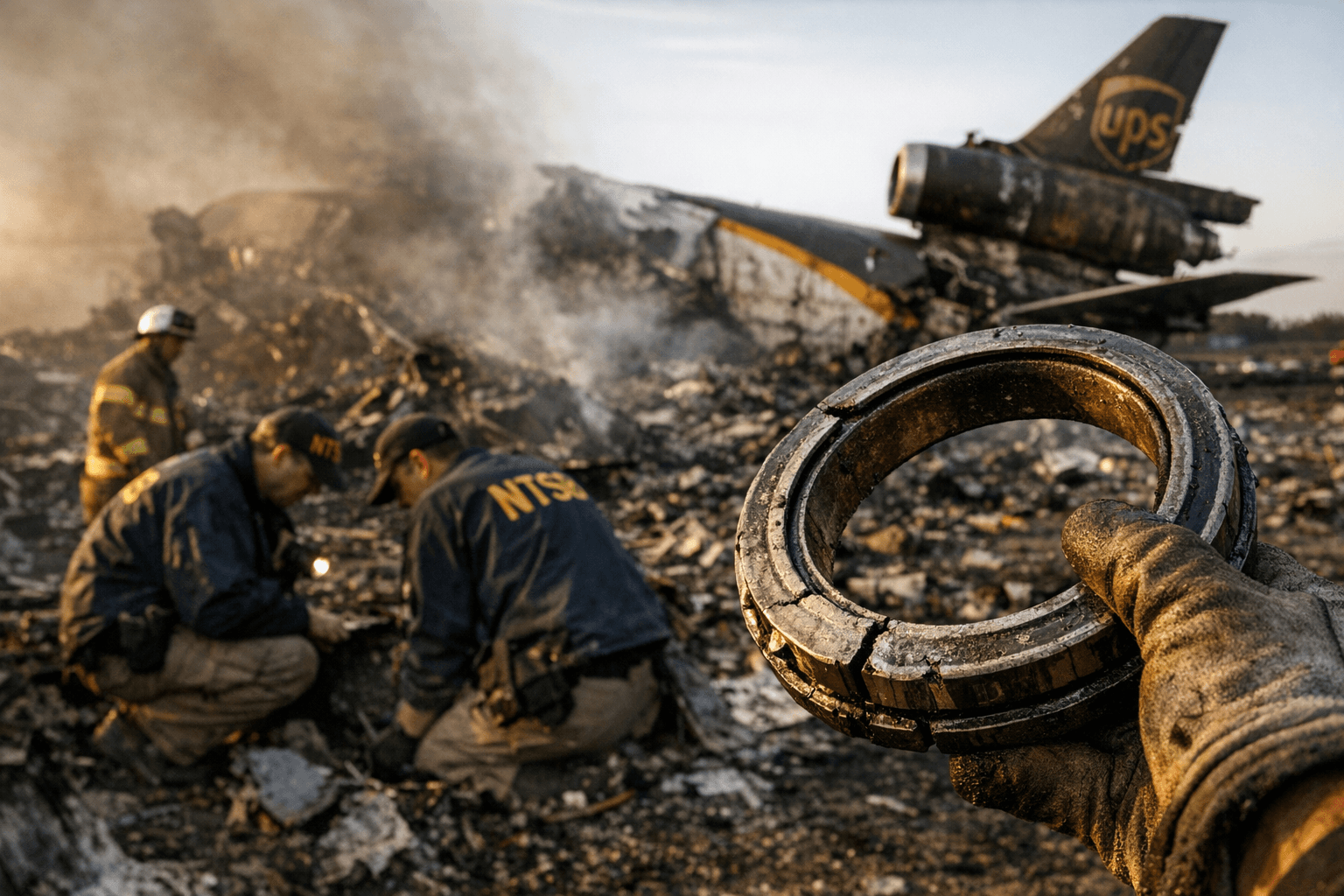
On Nov. 4, 2025, UPS Flight 2976 departed Louisville en route to Honolulu when the left engine caught fire and separated, a sequence captured in photographs that show the engine detaching, clearing a blast fence at about 30 feet, and the airplane then striking structures and igniting a large fire. The crash produced roughly a half-mile debris field across a petroleum recycling facility and a UPS warehouse. Fifteen people ultimately died, including three crewmembers and 12 people on the ground; about 22 others were reported injured. Following the accident, the Federal Aviation Administration temporarily grounded MD-11 aircraft.
The NTSB’s update arrives amid heightened scrutiny of aging widebody freighters and the way legacy design issues are managed by manufacturers, regulators, and operators. For cargo carriers and insurers, the findings could translate into near-term financial and operational costs: accelerated inspections and potential mandatory directives would reduce fleet availability and increase maintenance spending, while insurers may reassess risk exposures for older types. For Boeing and regulators, the episode raises policy questions about the sufficiency of advisory guidance versus enforceable airworthiness directives when recurring failures are identified.
Investigators are continuing metallurgical, structural and maintenance-record examinations. The NTSB said further analysis will determine whether the 2011 Boeing service letter and subsequent operator practices adequately addressed a known problem before officials draw conclusions about causal responsibility and recommendations.
This article was produced by Prism’s automated news system from verified source data, official records, and press releases, then run through automated quality and moderation checks before publishing. The system is built and supervised by the people who set the standards it runs under. Read our full AI policy.
Did this article answer your question?

