NTSB faults FAA route design and safety failures in deadly DCA midair crash
The NTSB found flawed airspace design and systemic safety-management failures led to the Jan. 29, 2025 collision that killed 67 people, urging sweeping FAA and military changes.
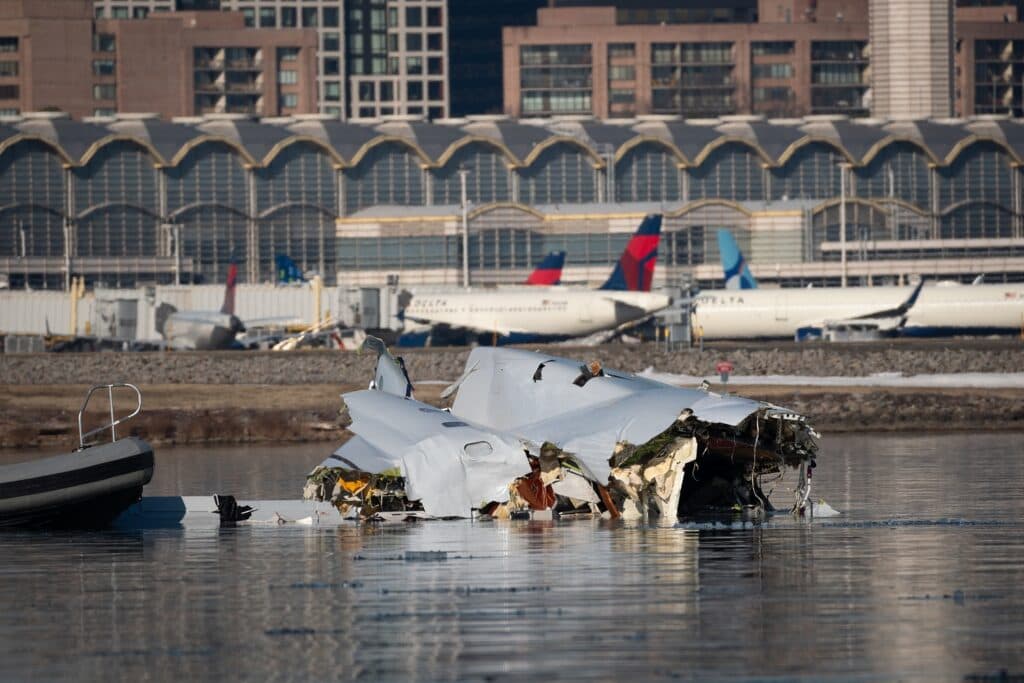
A nearly 400-page final report by the National Transportation Safety Board concludes that flawed airspace design and systemic safety-management failures at the Federal Aviation Administration and military operations were central to the midair collision near Ronald Reagan Washington National Airport that killed all 67 people aboard a U.S. Army Black Hawk and American Airlines Flight 5342 on Jan. 29, 2025.
The collision, which occurred just before 9 p.m. and sent both aircraft into the Potomac River about a half-mile from the airport, involved a Sikorsky UH-60 Black Hawk and a Bombardier CRJ700 operating as American Airlines Flight 5342 for PSA Airlines. The NTSB identified the proximate geometry of a helicopter route and the airport’s Runway 33 final approach as a primary hazard, saying the event was caused by "flawed airspace design and systemic safety management failures."
In its probable-cause language the board cited what it described as the FAA’s placement of Helicopter Route 4: "FAA’s placement of a helicopter route in close proximity to a runway approach path; their failure to regularly review and evaluate helicopter routes and available data, and their failure to act on recommendations to mitigate the risk of a midair collision." The report says those design and oversight errors created a predictable collision risk that was not adequately addressed before the disaster.
Investigators documented a chain of operational and technical breakdowns that compounded the design flaw. Air Traffic Organization staffing and procedures left tower controllers managing combined positions and an "unsustainable traffic load which regularly strained the DCA air traffic control tower workforce and degraded safety over time," the report states. The NTSB found an overreliance on pilot-applied visual separation in a terminal area where traffic density and nighttime conditions made such separation unreliable.
The board also pointed to flight-crew performance and training gaps on the Army side. The helicopter crew operated above published route altitudes and investigators determined that "Army pilots were found not to be properly trained on the effects of allowable error tolerances." Degraded radio reception prevented the helicopter crew from receiving information about Flight 5342’s approach, and both aircraft were hampered by limitations in collision-avoidance equipment, including the Black Hawk’s lack of an integrated traffic-alerting system.
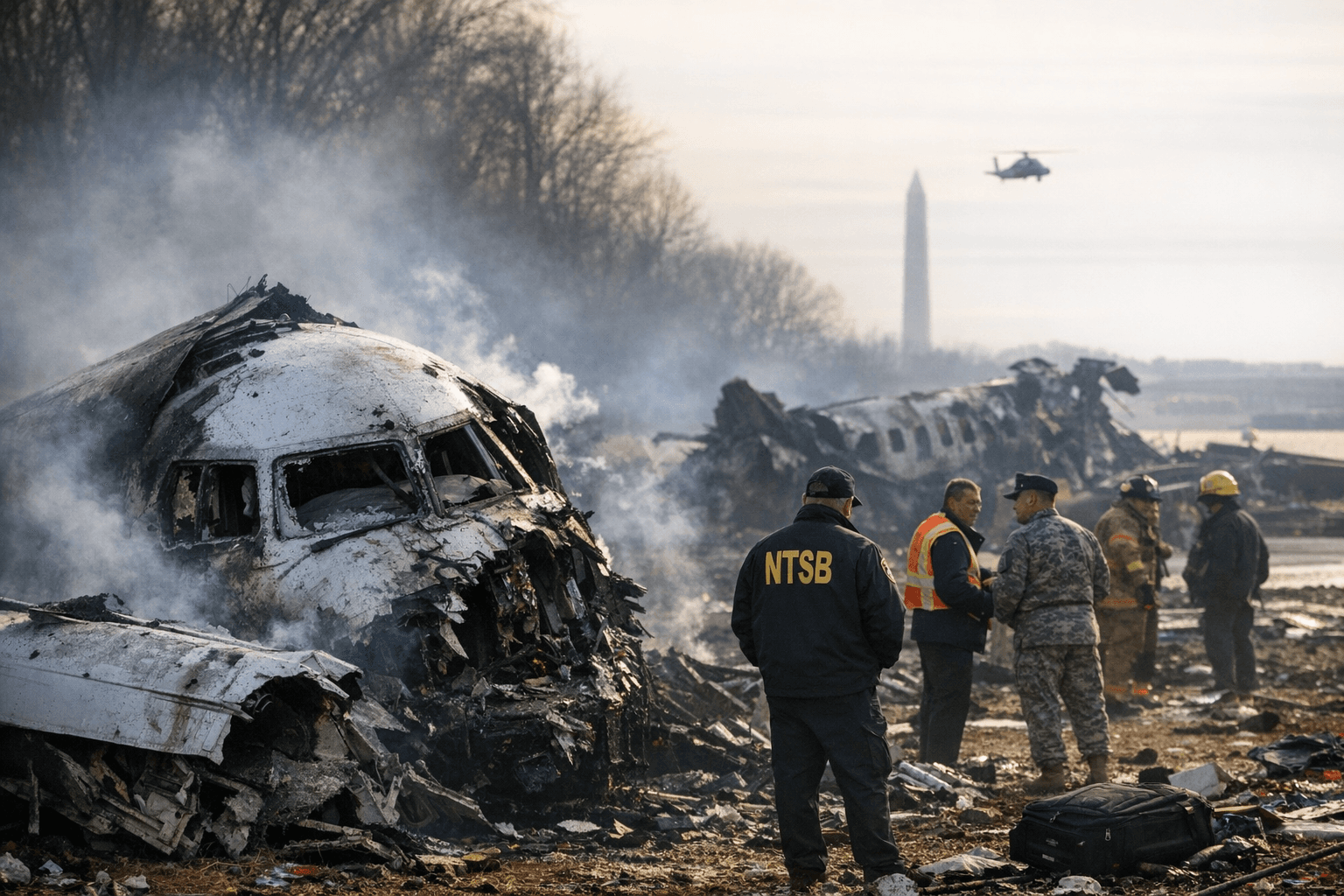
To prevent a recurrence, the NTSB issued a broad set of recommendations aimed at the FAA, the Department of Defense and aviation manufacturers. The board formally made dozens of safety recommendations, including changes to helicopter route design criteria, improvements to collision-avoidance technology, time limitations for air traffic control supervisors, strengthened controller training and consideration of limits on some commercial operations at the nation’s busiest airports. The report urged prompt FAA action to redesign Helicopter Route 4 and to establish routine reevaluation of terminal-area routes and data trends.
The Potomac crash, described in the report as the deadliest commercial aviation accident in the United States in more than 20 years, is likely to prompt near-term regulatory and operational reviews in Washington and at other congested airports. Redesigning route geometry and equipping helicopters with better traffic-alerting systems could require funding, interagency coordination and operational changes that affect military training and airline scheduling at DCA and similar facilities.
Families of the victims and regional officials have called for swift implementation of the recommendations. The NTSB said its findings document how incremental design and managerial failures accumulated into a catastrophic outcome, leaving regulators and the military with a narrow window to translate dozens of technical fixes into safer skies.
This article was produced by Prism’s automated news system from verified source data, official records, and press releases, then run through automated quality and moderation checks before publishing. The system is built and supervised by the people who set the standards it runs under. Read our full AI policy.
Did this article answer your question?

