Nvidia returns to Windows laptops, challenging Intel and AMD
Nvidia’s RTX Spark promises 1 petaflop AI and all-day battery life, but its real test is whether Windows apps and peripherals run cleanly on Arm.
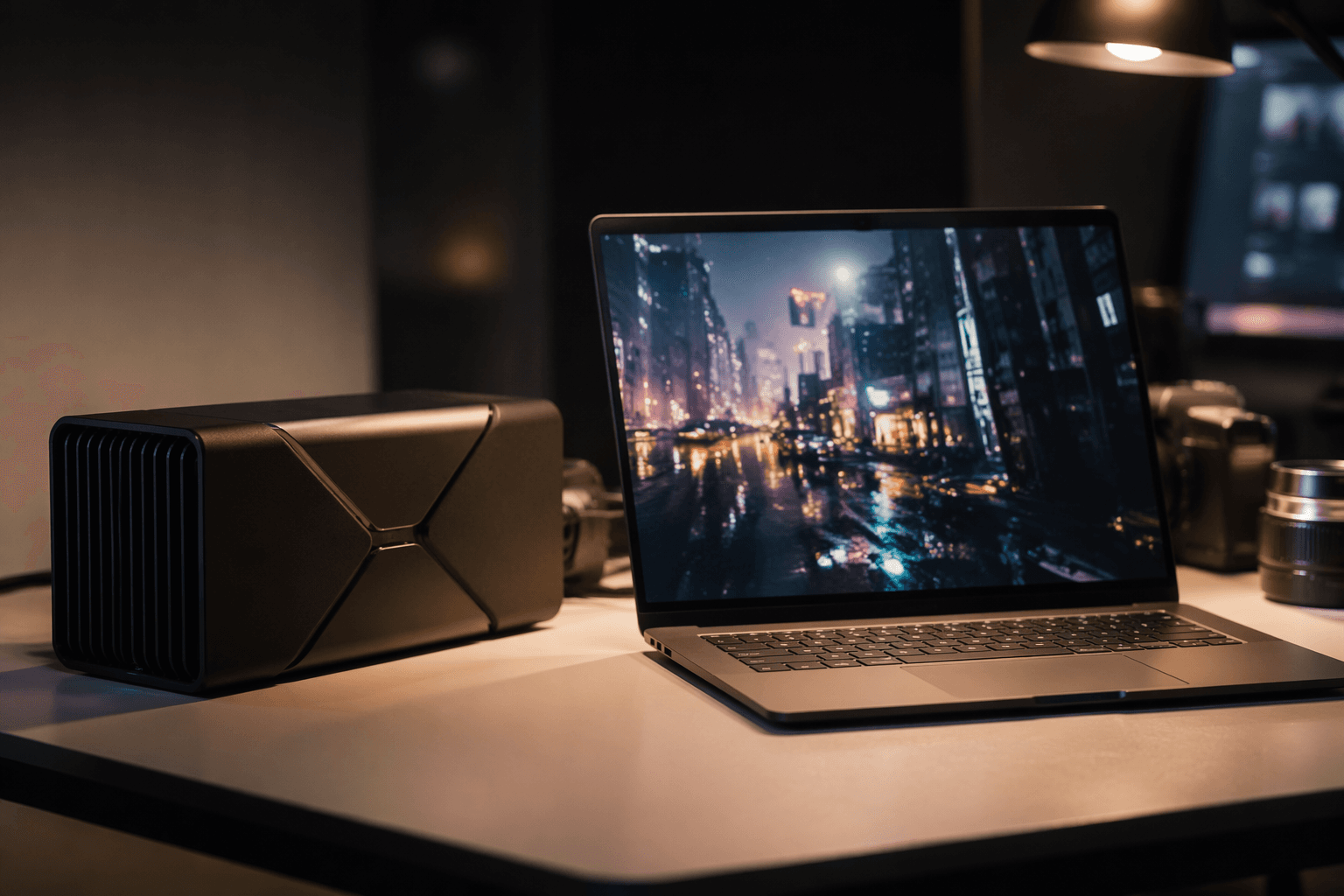
Nvidia is taking a fresh swing at Windows laptops with RTX Spark, a new superchip it says is built for the era of personal AI agents and designed to power slim notebooks and compact desktops this fall. The pitch is ambitious: up to 1 petaflop of AI performance, up to 128GB of unified memory, a Blackwell RTX GPU with 6,144 CUDA cores, and a 20-core Grace CPU, with systems from ASUS, Dell, HP, Lenovo, Microsoft Surface and MSI first in line.
Battery life is the first battleground, and Nvidia is leaning hard on it. Microsoft says Arm-based Windows PCs offer longer battery life and power-efficient performance than traditional PCs, while Nvidia says RTX Spark brings all-day battery life and industry-leading performance-per-watt to thin Windows laptops. That claim matters because battery life is one of the few advantages consumers can feel immediately, but it will only stick if shipping systems deliver real endurance without sacrificing the performance buyers expect from premium PCs.

The sharper argument is on-device AI performance. Nvidia is not selling RTX Spark as a generic laptop chip, but as a local AI workstation that can run agents securely on the primary device, handle 120 billion-parameter models with up to 1 million tokens of context, and support demanding creative tasks such as 12K video editing and 4K AI video generation. Adobe’s decision to rearchitect Photoshop and Premiere for RTX Spark, with Nvidia saying that could deliver 2x faster AI and graphics performance, gives the launch a software anchor that many chip announcements lack.
Software compatibility is where Nvidia still has to prove this is more than a showcase. Microsoft says most x86 Win32 apps run smoothly on Arm-based Windows 11 PCs, x64 emulation is generally available, and native Arm64 app support keeps growing. But Microsoft also warns that some peripherals, including printers, may not install if the manufacturer’s software does not support Arm. For Nvidia, that means the real test is not the keynote, but whether everyday users can run their business apps, peripherals and creator tools without thinking about the processor under the hood.
That makes RTX Spark a credible challenge in premium, AI-first Windows laptops, not yet a full-scale verdict on Intel and AMD. If Nvidia can translate its data-center reputation into broad OEM volume, reliable battery life and near-frictionless compatibility, it will force a new competitive map in client computing. If it cannot, the launch will still be technically impressive, but confined to a narrow slice of the PC market.
This article was produced by Prism’s automated news system from verified source data, official records, and press releases, then run through automated quality and moderation checks before publishing. The system is built and supervised by the people who set the standards it runs under. Read our full AI policy.
Know something we missed? Have a correction or additional information?
Submit a Tip