NVIDIA Unveils Rubin: Six-Chip Rack-Scale AI Supercomputer Platform
At CES in Las Vegas, NVIDIA introduced Rubin, a rack-scale AI supercomputer built from six co‑designed chips that the company says will cut training time and inference costs while enabling more agentic artificial intelligence. The release signals a new wave of infrastructure aimed at tying together CPUs, GPUs, DPUs and networking to tackle data movement bottlenecks for large models and robotic applications.
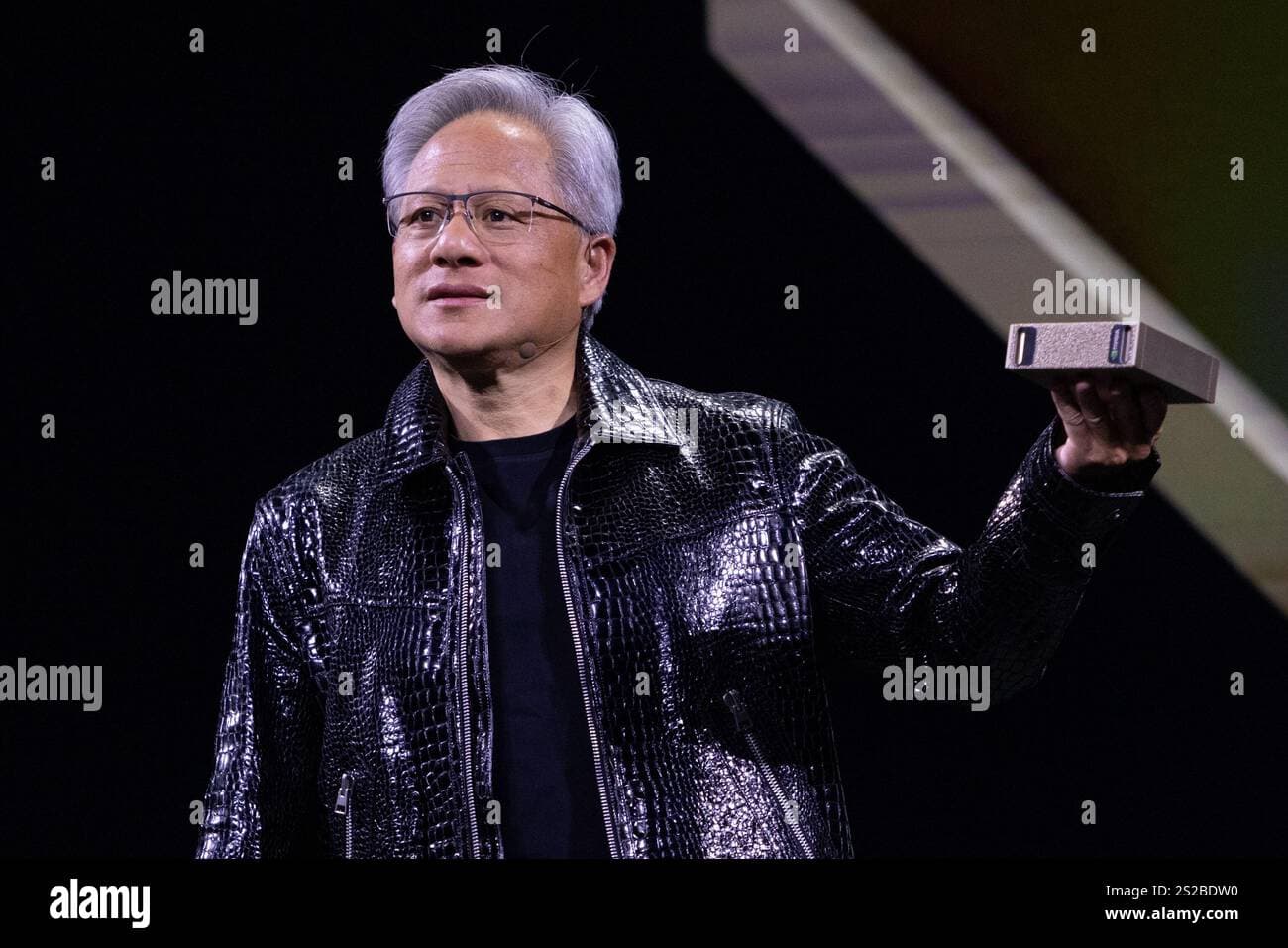
NVIDIA on January 5 unveiled Rubin, a next‑generation, rack‑scale AI supercomputer platform that the company positions as the successor to its Blackwell generation. Presented at the company’s CES keynote, Rubin combines six co‑designed chips into a unified architecture intended to accelerate both model training and real‑time inference while reducing the cost of running large AI systems.
NVIDIA’s materials list the six components that define the platform: the Vera CPU, the Rubin GPU, the NVLink 6 Switch, the ConnectX‑9 SuperNIC, the BlueField‑4 data processing unit, and the Spectrum‑6 Ethernet switch. NVIDIA described the set as a single, integrated system engineered to eliminate data‑movement bottlenecks that increasingly limit the scale and efficiency of modern AI workloads.
The company emphasized tight hardware and software integration across the six parts to optimize throughput for large‑scale training and for transformer‑style inference tasks, including mixture‑of‑experts model types. The Vera CPU was presented as targeted toward what NVIDIA called agentic reasoning workloads, operations that require systems to plan, remember context and act over extended periods. Rubin GPUs and the platform’s transformer‑oriented technologies were framed as the compute engines for large models, while the BlueField‑4 DPU and the upgraded NVLink interconnect were billed as the plumbing that moves large volumes of memory and data at low latency.
NVIDIA also highlighted new networking and offload capabilities. The NVLink 6 Switch and the Spectrum‑6 Ethernet switch are designed to reduce communication bottlenecks across large clusters, and the ConnectX‑9 SuperNIC provides high‑performance connectivity and software‑defined networking capabilities. In its January 5 materials, NVIDIA said Rubin “sets a new standard for building, deploying and securing the world’s largest and most advanced AI systems at the lowest cost to accelerate mainstream AI adoption.” The company further told CES audiences that Rubin had “entered full production” and that deployments would scale in the second half of 2026.

Alongside the hardware, NVIDIA showcased a software and model ecosystem intended to demonstrate Rubin’s potential. New generative models were announced, including agent‑building models in the Nemotron family and World Foundation Models in the Cosmos suite, aimed at humanoid robotics, physical AI applications and synthetic data generation. NVIDIA framed this software stack as central to enabling next‑generation agentic AI and advanced reasoning beyond raw GPU performance.
NVIDIA said cloud and enterprise partners are already lined up to deploy Rubin. Named customers and cloud providers planning adoption include Anthropic, OpenAI and Amazon Web Services, and the company said the platform was moving into production use. The market reacted with measured investor interest; NVIDIA shares closed at $188.12, down 0.39 percent, on January 5.
Rubin represents an industry push to fuse compute, networking and storage into purpose‑built systems for large models. If NVIDIA’s performance and cost claims hold in independent benchmarks, Rubin could shift where and how the largest AI applications are built. The platform also magnifies policy and safety questions, because enabling more powerful, persistent agentic systems will raise new demands for testing, governance and energy accountability as AI moves deeper into the physical and decision‑making world.
This article was produced by Prism’s automated news system from verified source data, official records, and press releases, then run through automated quality and moderation checks before publishing. The system is built and supervised by the people who set the standards it runs under. Read our full AI policy.
Did this article answer your question?


