Odermatt wins Super G at Copper Mountain, Austria challenged in tight finish
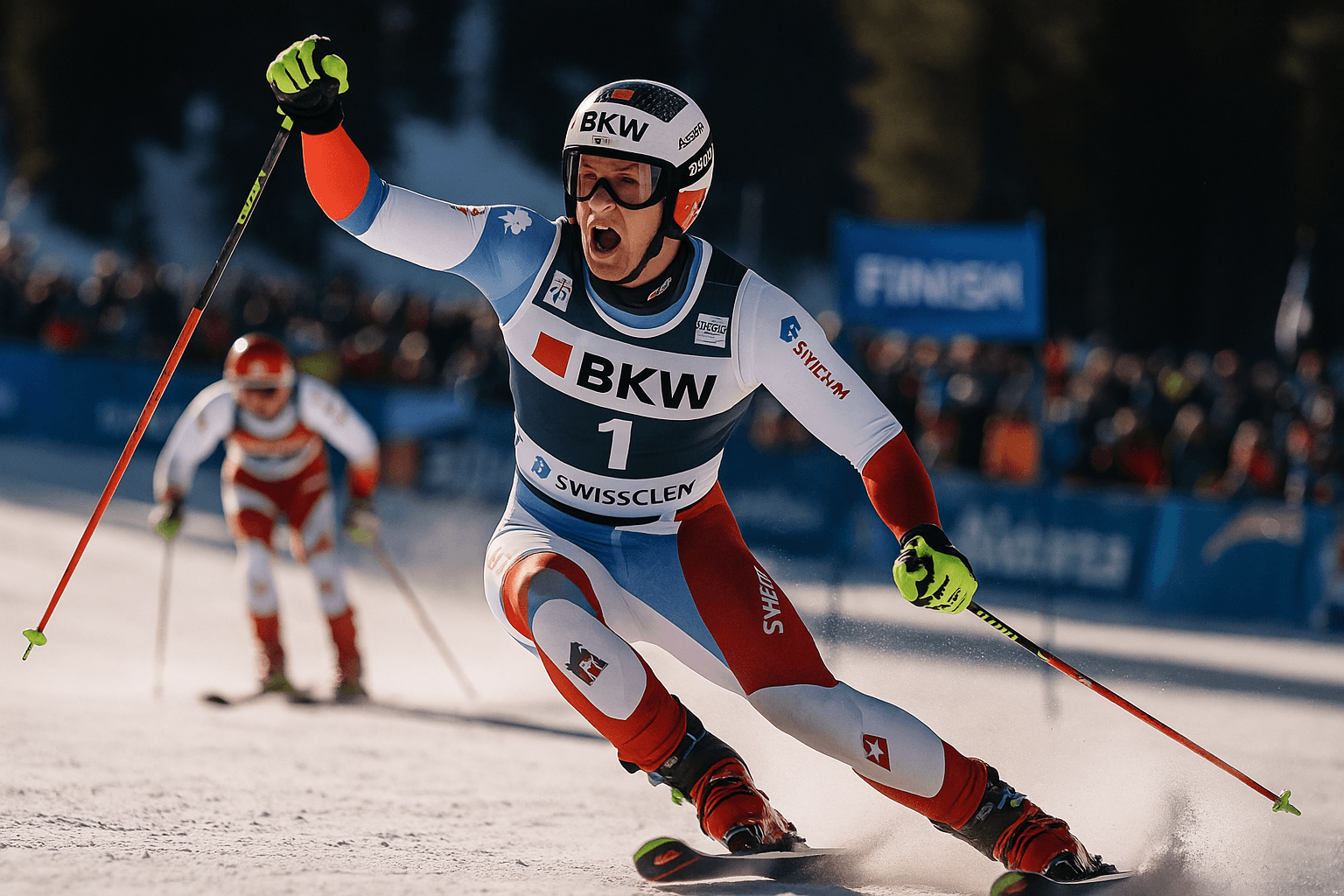
Marco Odermatt of Switzerland took the Super G at Copper Mountain on November 27, delivering a statement performance that underscored his early season dominance. The victory deepens his momentum as he defends multiple titles and positions himself as a leading contender for the 2026 Winter Olympics.

Marco Odermatt extended his early season authority in alpine skiing with a victory in the Super G at Copper Mountain, Colorado on November 27. The four time overall World Cup champion produced a composed run to edge out Austria s top racers in a closely contested field, reinforcing his status as the man to beat as the circuit moves toward the Olympic season.
The result matters beyond a single race win. Odermatt has built a pattern of early season consistency that not only yields immediate World Cup points but also shapes the narratives sponsors, broadcasters and national federations use to allocate resources and attention. A strong opening victory in a speed discipline gives him both confidence and leverage as he defends titles he has held in recent campaigns, and it further cements his role as Switzerland s sporting flagship heading into the 2026 Winter Games.
Athletically, the race highlighted Odermatt s versatility. Super G demands a blend of speed and technical precision, and on a day when margins were small he found the combination that separated him from Austria s contingent. Austria remains the most formidable rival in men s alpine skiing, deep in talent at all levels, and the tightness of the finish at Copper Mountain underlines how even elite margins can decide outcomes. For spectators and the sport s ecosystem, that sustained rivalry is a durable selling point that drives television ratings and fan interest across Europe and North America.
The win also has local and commercial resonance. Copper Mountain returned to the World Cup stage as a season opener, offering the U S market a showcase event that attracts international attention. Hosting high level races in American venues helps broaden the sport s footprint outside its traditional Alpine heartlands and provides domestic sponsors and resort operators with tangible return on investment. Early season results at prominent North American stops can translate into ticket sales, hospitality partnerships and longer term development programs for young U S athletes inspired by seeing top competitors live.
There are broader social implications as well. Elite winter sports are increasingly tied to conversations about climate, access and inclusion. High profile events draw scrutiny on sustainability practices at venues and on the cost barriers that shape who can enter the sport. A compelling star like Odermatt brings viewers in, but the sport s future growth will depend on how federations and hosts balance elite spectacle with grassroots access and environmental stewardship.
With the 2026 Winter Olympics on the horizon, every early season victory recalibrates expectations. Odermatt s Copper Mountain triumph is a performance indicator and a commercial touchstone. It signals to competitors that he remains the benchmark, to sponsors that his stock is high, and to fans that the next winter will be contested against a familiar and formidable figure. As the World Cup circuit unfolds, his run in Colorado will be remembered as another chapter in a campaign that is already shaping the storylines of the winter season.
This article was produced by Prism’s automated news system from verified source data, official records, and press releases, then run through automated quality and moderation checks before publishing. The system is built and supervised by the people who set the standards it runs under. Read our full AI policy.
Did this article answer your question?
.jpg&w=1920&q=75)