Oil and Gas Prices May Stay High Long After Iran Conflict Ends
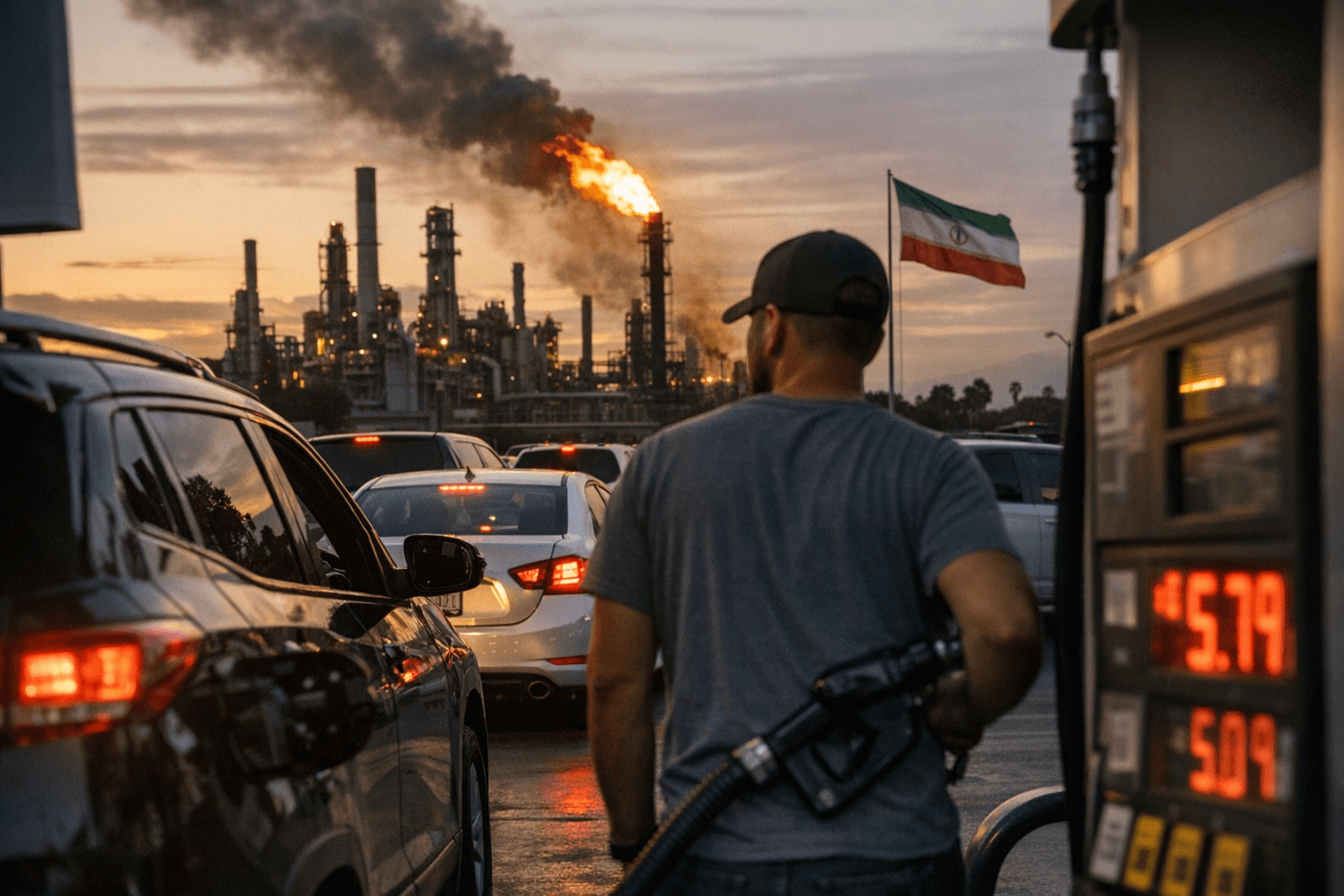
California drivers paid $5.79 a gallon Monday as Brent crude neared $120 a barrel — and Iran's foreign minister warned of "many surprises in store" even if fighting stops.

California drivers paid $5.79 a gallon for gasoline Monday, the highest in the nation, while the rest of the country hit a national average of $3.95 per gallon, up $1.02 from a month ago, according to AAA. The Iran war that began February 28 has driven that price spike, and economists and energy officials on both sides of the conflict are signaling it will not reverse quickly once the shooting stops.
Brent crude surged past $100 a barrel on March 8, reaching $126 per barrel at its peak before pulling back. As of Sunday, Brent was hovering around $111 a barrel, up roughly 55% from levels just before U.S. strikes on Iran began. Even a moment of optimism — when President Trump told reporters the war was "very complete, pretty much" — only briefly knocked prices down. Brent crude fell to $88.80 following those comments before markets reasserted their anxiety about the Strait of Hormuz, where the core problem remains unresolved.
The disruption traces to February 28, when joint U.S. and Israeli strikes on Iran triggered retaliatory missile and drone attacks on Gulf states, while Iran's Islamic Revolutionary Guard Corps issued warnings prohibiting vessel passage through the strait. Tanker traffic dropped by approximately 70%, with over 150 ships anchoring outside the strait to avoid the risks. The waterway carries enormous weight in global energy: just 21 miles wide at its narrowest, the Strait of Hormuz facilitates transit of around 20 million barrels of oil per day, representing roughly 20% of global seaborne oil trade.
Diesel, which ties directly to freight and supply chains, hit a national average of $5.28 a gallon, up $1.69 over the same period, according to AAA data cited by Fox Business. That number carries inflationary consequences well beyond the gas station: when trucking costs rise, so do the prices of nearly everything those trucks carry.
White House press secretary Karoline Leavitt called the price surge "temporary" and said "this operation will result in lower gas prices in the long term." Energy Secretary Chris Wright put a tighter time frame on it, saying price perturbations would last "weeks, not months" as tanker traffic remained snarled. Vice President JD Vance, speaking at a manufacturing facility in Auburn Hills, Michigan, called the increases "a temporary blip" and added, "Frankly, they're not even as high as they were in certain parts of the Biden administration."
National Economic Council Director Kevin Hassett was more candid about the administration's priorities. "It would hurt consumers, and we would have to think about if that continued, what we would have to do about that, but that's like really the last of our concerns right now," he told CNBC.
Iranian officials are explicitly using the pump-price pressure as strategic leverage. Foreign Minister Seyed Abbas Araghchi posted on X: "9 days into Operation Epic Mistake, oil prices have doubled while all commodities are skyrocketing. We know the U.S. is plotting against our oil and nuclear sites in hopes of containing huge inflationary shock. Iran is fully prepared. And we, too, have many surprises in store." Revolutionary Guard spokesperson Ali Mohammad Naini was blunter still: "Iran will determine when the war ends."
The IRGC went further, warning it would "not allow the export of a single litre of oil from the region," and an IRGC spokesperson told reporters to "expect oil at $200 per barrel."
Even if the Strait of Hormuz situation is resolved, market analysts expect an enhanced risk premium to remain in oil prices, as other Middle Eastern nations have shut in production, facilities across the region are damaged, and it will take time to restore output to previous levels. That timeline gets extended the more damage is done to oil and gas operations. One Iranian attack took out 17% of Qatar's liquefied natural gas export capacity, damage that QatarEnergy's CEO told Reuters could take three to five years to fully repair.
The International Energy Agency moved to release 400 million barrels of oil from emergency reserves to cushion the shock, but analysts noted the limits of that intervention. At global consumption rates, 400 million barrels covers just four days of demand, or about 20 days of typical Hormuz flows.
The national average of $3.95 per gallon is $1.02 higher than a month ago, with AAA attributing the increase to the Iran situation combined with seasonal factors. Among the ten most expensive markets, California leads at $5.79, followed by Washington at $5.27, Hawaii at $5.23, Oregon at $4.85, and Nevada at $4.80. The least-affected states cluster in the Plains: Oklahoma and Kansas remain below $3.30 per gallon.
President Trump issued a deadline for Iran to reopen the strait, and energy market expert John Kilduff of Again Capital told corporate CFOs on a recent call that traders see roughly two weeks as the threshold before oil prices spike even more sharply and the global economy must prepare for energy shortages in Asia and a pullback in industrial activity. The administration has promised relief. Tehran has promised surprises. The gap between those two positions is where American gas prices will live for some time to come.
This article was produced by Prism’s automated news system from verified source data, official records, and press releases, then run through automated quality and moderation checks before publishing. The system is built and supervised by the people who set the standards it runs under. Read our full AI policy.
Did this article answer your question?