Oil Jumps, Stocks Slide as Iran Conflict Hits One-Month Mark
Brent crude topped $101 a barrel while the S&P 500 shed 1.74% as Houthi missiles and a near-shut Strait of Hormuz marked one costly month of war.

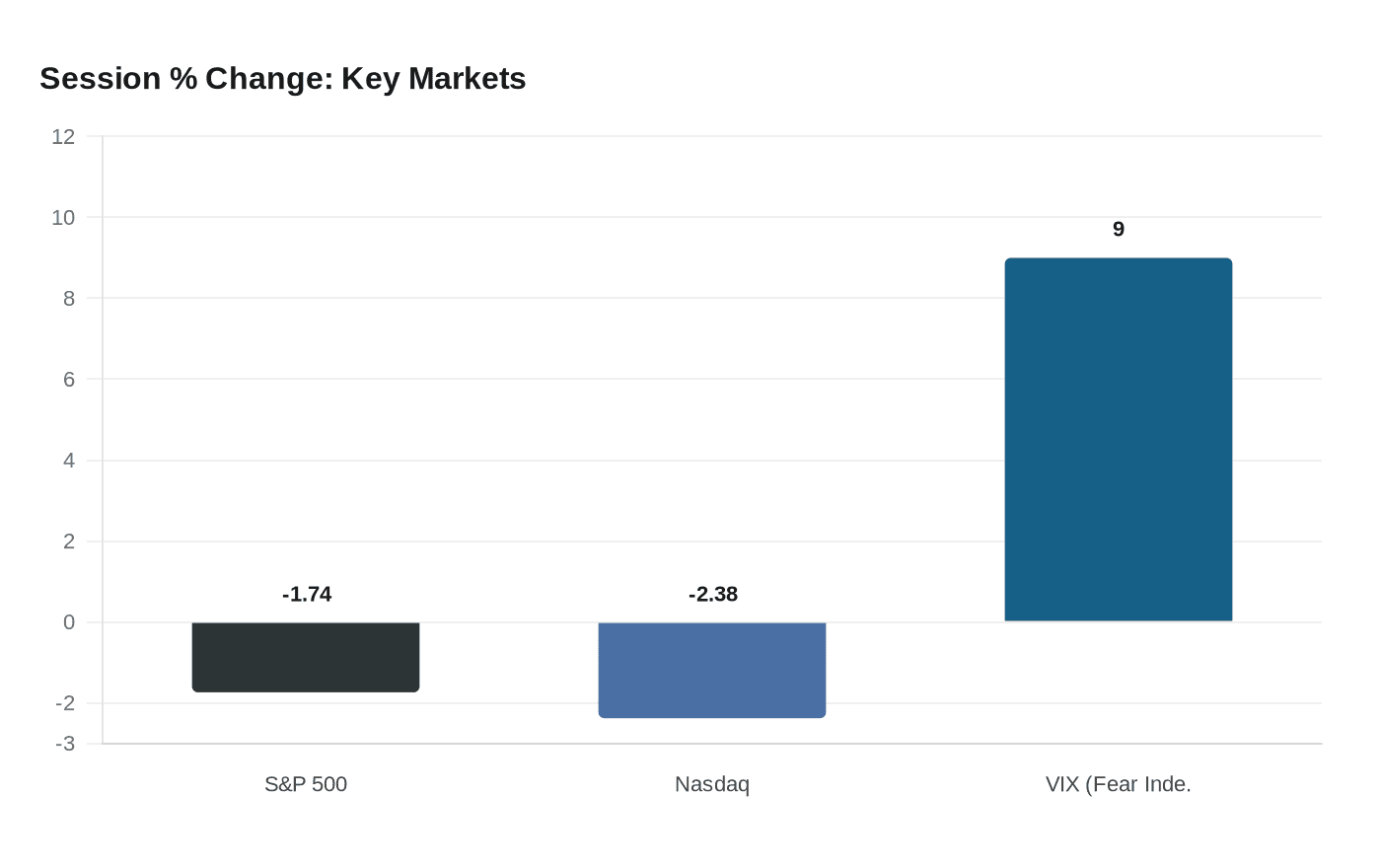
One month into the Iran conflict, the bill arrived Monday. Brent crude crossed $101 a barrel, WTI surged to $96.76, and the S&P 500 dropped 1.74% to 6,477.16. For drivers, the math is unambiguous: the rough industry rule holds that every $10 rise in crude adds about 24 cents to a gallon of gasoline at the pump, meaning this month's runup is already reshaping budgets from filling stations to airline fuel desks to quarterly 401(k) statements.
The Dow Jones Industrial Average fell 469 points and the Nasdaq Composite slid 2.38%, marking one of the sharpest single-session selloffs in recent months. The Cboe Volatility Index jumped nearly 9% to 29.88, a reading analysts associate with genuine market stress rather than routine repositioning. The 10-year Treasury yield climbed to 4.46%, compressing borrowing conditions for homeowners and businesses simultaneously. Wall Street's losses spread quickly, with Europe's main markets falling in afternoon trading and losses rolling across Asia. The dollar rose against its main rivals.
The catalyst for Monday's moves was a weekend of escalation: Iran-backed Houthi militants launched ballistic missiles at Israel, and 3,500 additional U.S. troops arrived in the Middle East as the conflict hit its one-month mark. Markets had shown some resilience earlier in the week after President Donald Trump announced that strikes targeting Iran's energy infrastructure would be postponed and that the two sides were in peace talks. Tehran then rejected Washington's bid to wind down the fighting, erasing that tentative relief.
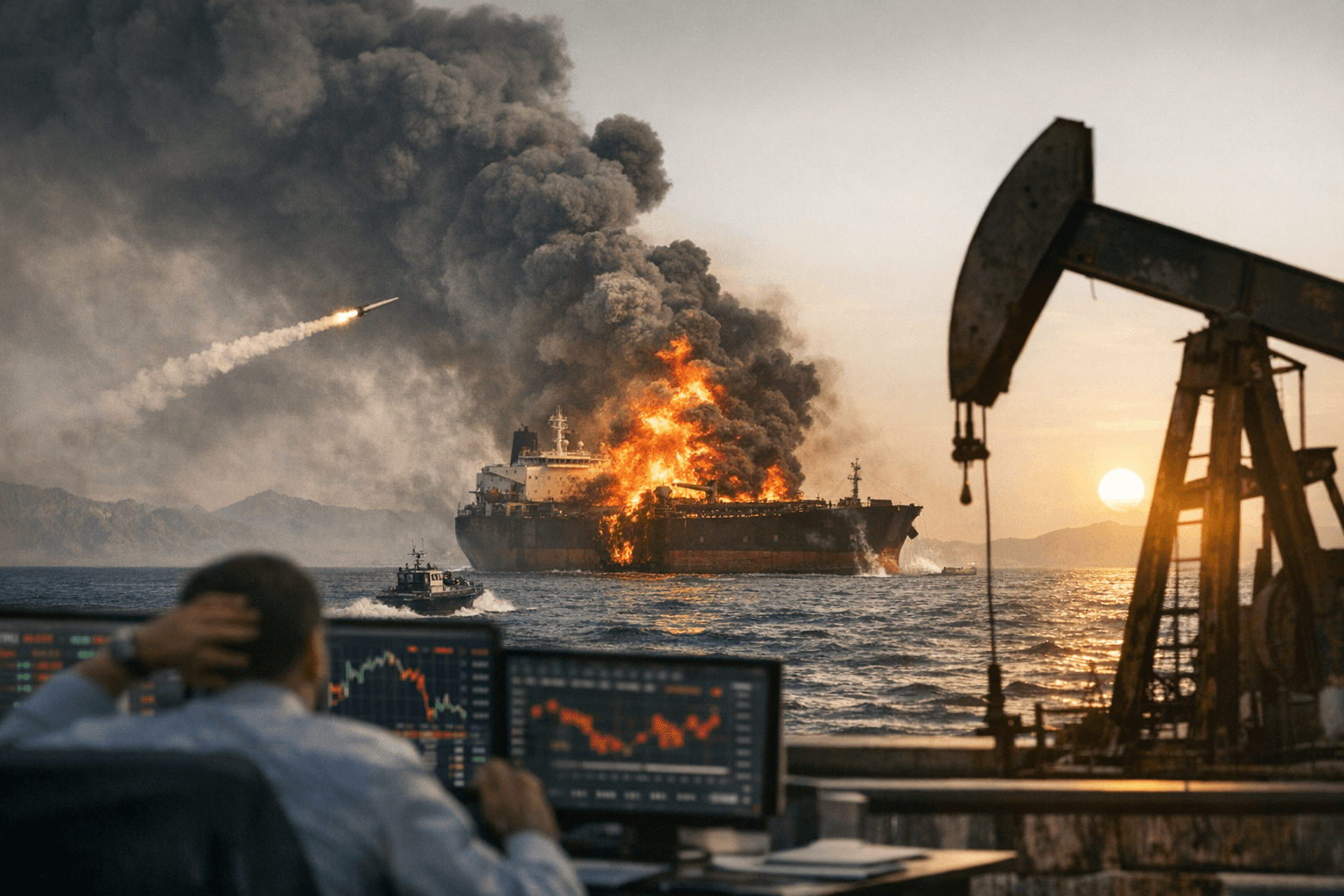
The geographic source of the war risk premium is the Strait of Hormuz. The virtual closure of the strait, through which around 20 percent of the world's oil and liquefied natural gas normally passes, has cast a shadow over market sentiment since the conflict began. Insurance costs for tankers attempting the passage have risen sharply, rerouting crude onto longer, costlier paths. Investors are hoping officials can reach a deal that would reopen the strait to normal shipping, but no agreement has materialized.
"When the oil price surges, the market playbook stays the same: stocks and bonds sell off," said Kathleen Brooks, research director at XTB. Joshua Mahony, chief market analyst at Scope Markets, was equally direct: "The market rollercoaster continues." Jim Reid of Deutsche Bank framed the diplomatic fog in pointed terms, warning that conflicting messages from Washington and Tehran were "raising questions about whether there is really an off-ramp to the conflict in the days ahead."
The energy shock is creating a familiar but painful bind for the Federal Reserve. Rising oil prices push inflation higher, yet slowing growth typically calls for rate cuts, a combination that makes decisive policy action difficult. With WTI within reach of $100 and 10-year yields at 4.46%, the arithmetic of a prolonged conflict is hardening into a structural challenge that extends well beyond this week's market moves.
This article was produced by Prism’s automated news system from verified source data, official records, and press releases, then run through automated quality and moderation checks before publishing. The system is built and supervised by the people who set the standards it runs under. Read our full AI policy.
Did this article answer your question?

