Oil prices spike as Iran and Israel exchange fresh strikes
Brent crude surged to $97.83 after Iran and Israel traded strikes, as traders bet the fight could spill into the Strait of Hormuz and lift fuel costs.
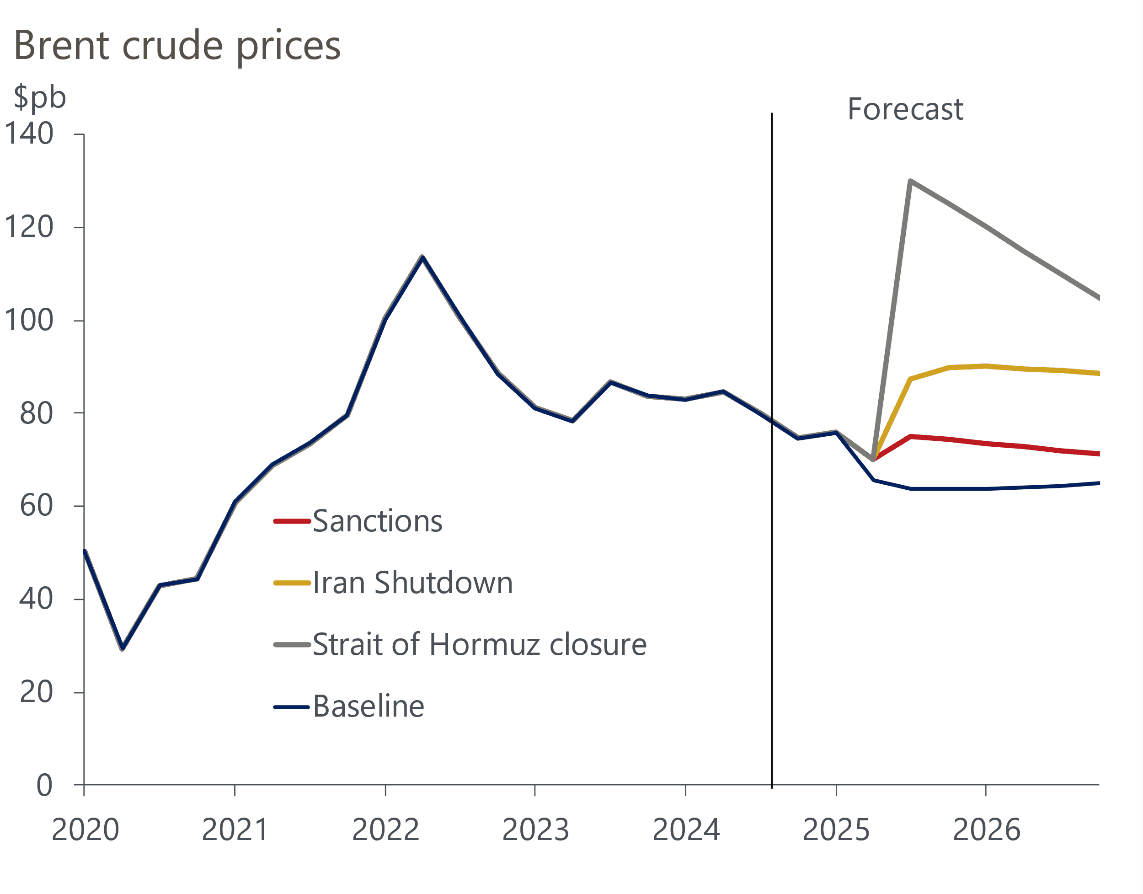
A fresh exchange of fire between Iran and Israel jolted energy markets, sending oil sharply higher and rattling investors over whether a fragile cease-fire in the Middle East could hold. Brent crude jumped as much as 5.1% to $97.83 a barrel, while West Texas Intermediate climbed to near $95, a move that quickly raised the prospect of higher gasoline, airline and shipping costs if the conflict deepened.
The latest escalation began after Iran fired ballistic missiles at Israeli targets, prompting Israel to strike military targets in western and central Iran. Iranian state media reported explosions in Tehran, and Iranian officials closed airspace around Imam Khomeini International Airport after the attack. The retaliation came despite President Donald Trump’s reported call for Prime Minister Benjamin Netanyahu to hold back, underscoring how quickly a two-month truce had started to unravel.
For consumers, the danger lies less in the missiles themselves than in the routes and systems that keep fuel moving. Traders immediately focused on the Strait of Hormuz, the narrow waterway through which a large share of the world’s oil flows. Any sustained threat there could lift crude for longer than a one-day panic, feeding through to diesel, jet fuel and, eventually, the prices households see at the pump and in airfare.

Markets were already acting on that risk. Reuters reporting said investors moved into safe havens such as gold and the dollar as stocks sold off, a sign that traders were not treating the strikes as a contained episode. The reaction echoed the market shock seen after Israel attacked Iran in June 2025, when investors also rushed to price in possible supply disruptions and a wider regional war.
What happens next will determine whether this is a brief spike or a broader economic problem. If the fighting stays limited to military targets, oil may give back some of its gains. If it expands to shipping lanes, energy infrastructure or another round of direct strikes, the price shock could settle in, pushing up transportation costs and inflation expectations well beyond the Middle East.
This article was produced by Prism’s automated news system from verified source data, official records, and press releases, then run through automated quality and moderation checks before publishing. The system is built and supervised by the people who set the standards it runs under. Read our full AI policy.
Did this article answer your question?