Oksana Masters earns 20th Paralympic medal, leads U.S. one-two
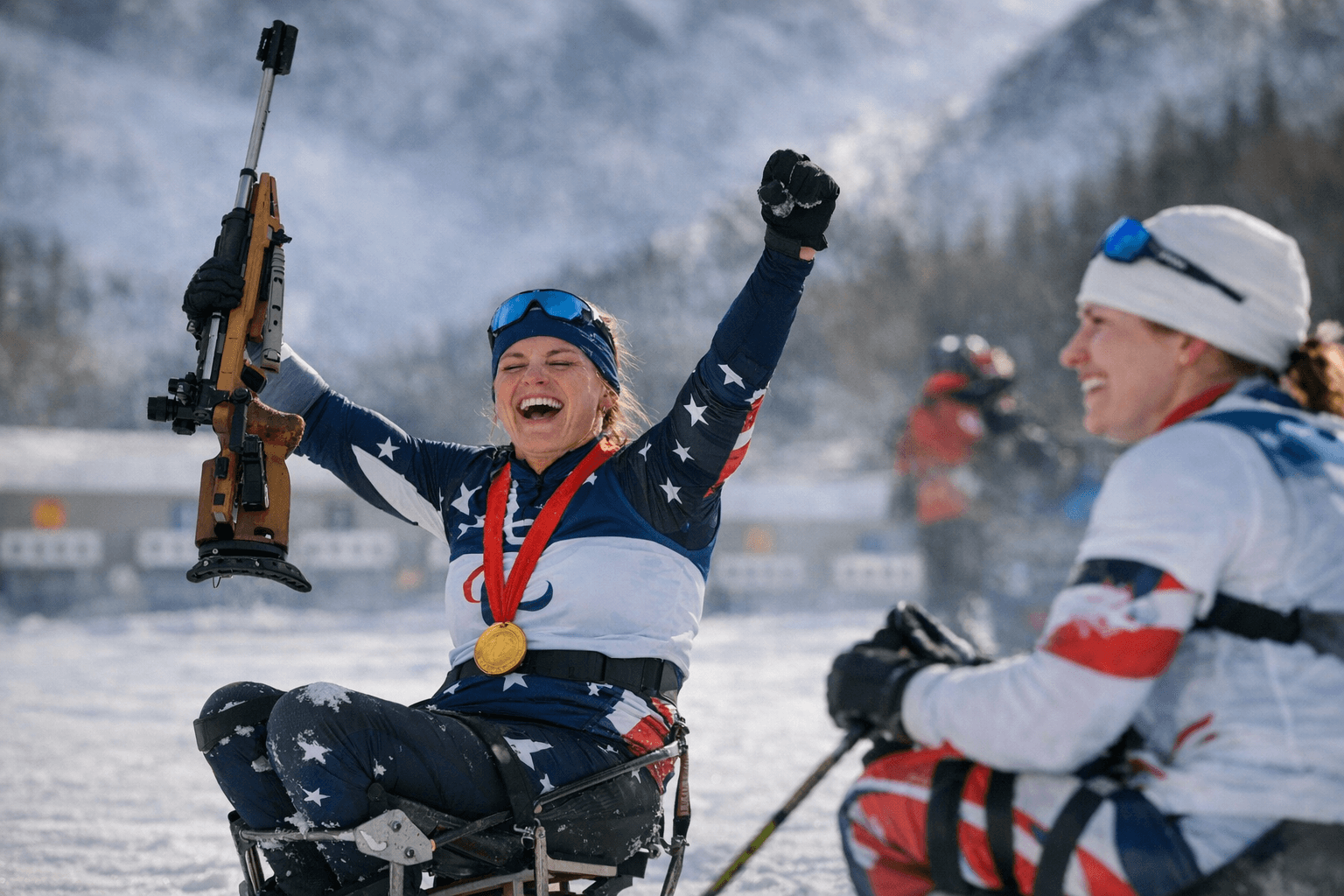
Oksana Masters won gold in the women's sitting biathlon sprint at Milano Cortina, bringing her Paralympic tally to 20 as teammate Kendall Gretsch took silver.

Oksana Masters captured the gold in the women’s sitting biathlon sprint at Milano Cortina 2026, raising her career Paralympic medal total to 20 and powering a U.S. one-two as Kendall Gretsch finished second. The victory on March 7 extended Masters’ status as the most decorated U.S. Winter Paralympian and underscored Team USA’s depth in Para biathlon.
Masters, 36, added the gold to a career that spans winter and summer sports and seven Paralympic Games. CBC reported that the medal haul breaks down to 15 Winter Games medals and five Summer Games medals, and that the Milano Cortina win was her sixth Winter Paralympic gold, alongside four Summer Paralympic victories. Masters has also been credited as the first American to win seven medals in seven events at a single Paralympics, achieving that feat in Beijing in 2022.
The result carried extra drama because Masters arrived at the Games recovering from a difficult season that included surgery, a bone infection and a concussion. After the race she expressed surprise at her own triumph, saying, "Oh my gosh, my emotions are just pure shock. I did not expect this. All I was hoping was just to have a good time in the shooting range," she said. "I did not expect a podium finish to be honest, let alone a gold," CBC reported.
Masters’ biography amplifies the symbolic reach of the win. Born in Ukraine in 1989 and raised in orphanages before being adopted and brought to the United States in 1997, she underwent amputations of her left leg at age nine and her right leg at age 14. Those personal details, along with a public profile that includes a memoir titled The Hard Parts and international honors such as the 2020 Laureus World Sportsperson of the Year with a Disability award, have made Masters a standard-bearer for adaptive sport.
From a sporting standpoint, Masters’ gold reveals two immediate trends. First, it confirms the United States as a force in the sitting disciplines of Para biathlon, with Kendall Gretsch’s silver suggesting a pipeline of elite performers rather than a single standout. Second, Masters’ multi-sport career, with top performances in para nordic skiing, para cycling and para rowing across Winter and Summer Games, highlights elite athletes’ growing ability to translate conditioning and technical skills across disciplines. That versatility strengthens the marketability of Paralympic athletes to sponsors and broadcasters seeking athletes with narrative arcs that span seasons and formats.
Culturally, Masters’ victory speaks to the increasing mainstream recognition of Paralympic achievement. Her social reach, noted in profiles that list more than 68,000 Instagram followers, her back-to-back Summer Paralympic time trial and road race golds in Tokyo 2021 and Paris 2024, and a steady flow of Team USA media assets, show how sustained performance can create visible stars whose stories resonate beyond specialized audiences.
The social implication is also concrete: Masters’ comeback from significant medical setbacks models how improved medical care, athlete support and adaptive equipment can extend elite careers. For national teams and sports federations, the payoff is measurable both on the medal table and in commercial attention.
Masters’ win will now focus attention on verifying official medal totals and the full podium details from Milano Cortina organizers, while Team USA will look to translate the one-two result into broader momentum across remaining events. The victory reinforces Masters’ legacy as a once-in-a-generation Paralympian whose achievements reshape expectations for what adaptive athletes can accomplish.
Know something we missed? Have a correction or additional information?
Submit a Tip