Old cellphone photos help solve Iowa teen’s no-body murder case
Old cellphone photos pulled from a forgotten phone helped investigators trace Jade Colvin to a rural Decorah farm and secure a murder conviction years later.
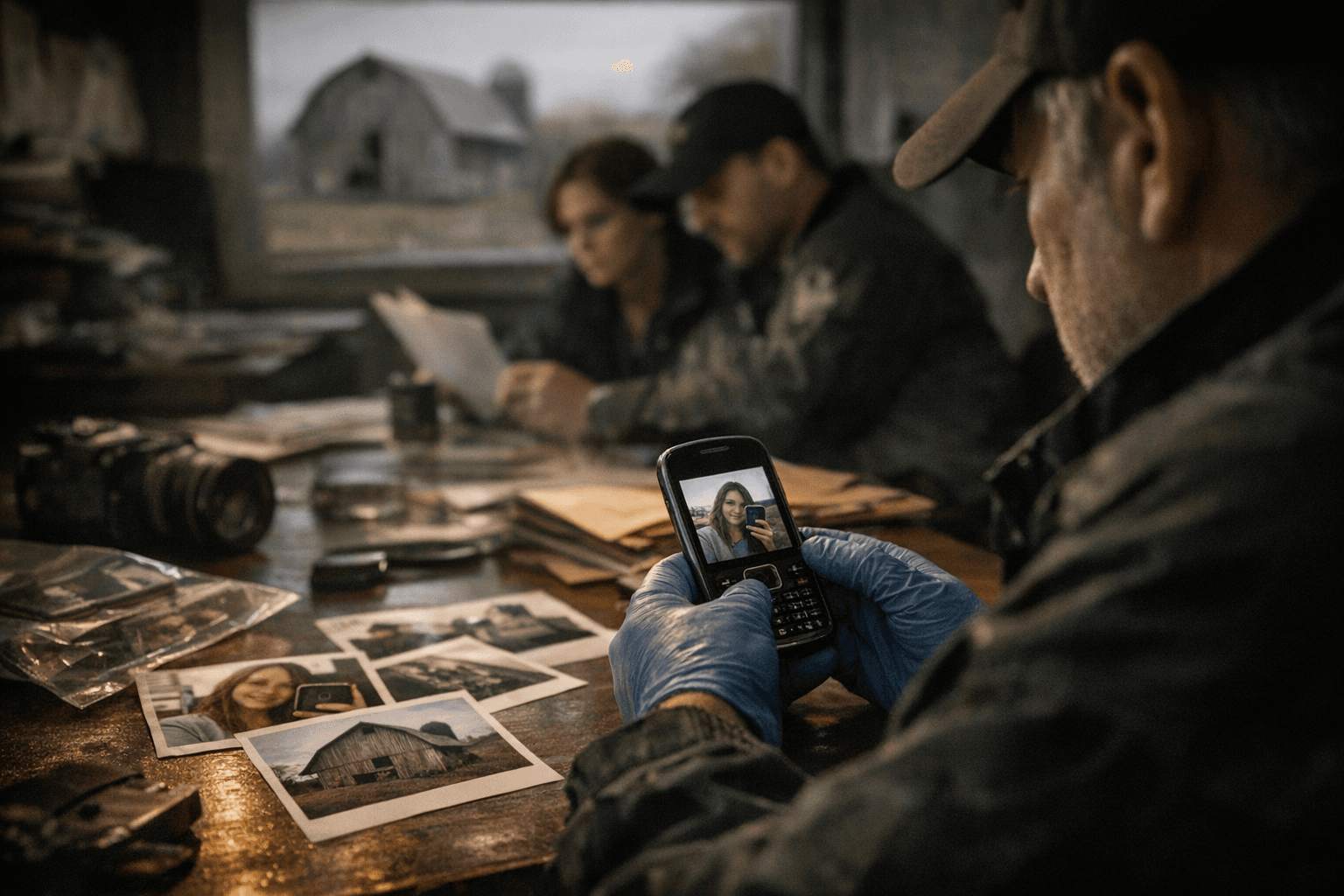
Old cellphone photos became a key in a case that had no body, no grave and no easy answer. Investigators used images recovered from an old phone to help reconstruct the movements of Jade Colvin, the 14-year-old Iowa girl who disappeared from rural Decorah in 2017.
Jade was last seen at Walmart in Decorah on March 29, 2017, in the presence of James Bachmurski, Sr., who owned the farm where she had been staying briefly with him and her mother, LaDawn Colvin. The Iowa Attorney General’s Office said Jade stopped responding to texts and social media early on March 30, 2017, the day she went missing from the rural Decorah property.
The investigation stretched across agencies and years. Winneshiek County sheriff’s investigators, working with the Iowa Division of Criminal Investigation after the case was initiated by the U.S. Marshals Service, spent two years piecing together what happened to Jade. The old cellphone photos helped fill gaps in that timeline, giving investigators another layer of digital evidence in a disappearance that had otherwise gone cold.
The case later drew wider attention through CBS News and a “48 Hours” episode titled “Jade Colvin Is Missing,” underscoring how missing-person cases can be revived when digital traces, public interest and sustained law enforcement work converge. In a rural setting where a teenager can vanish between a store stop and a farm road, investigators had to build the case from fragments: a last sighting, messages that suddenly stopped, and images preserved on an overlooked device.
A Winneshiek County jury convicted Bachmurski of second-degree murder on Sept. 2, 2025. He was sentenced to 50 years in prison, with 35 years mandatory before parole eligibility. Jade’s body has never been recovered, leaving the most basic question unanswered even after the verdict.
The case also reflects the scale of the missing-person challenge in Iowa. A 2025 presentation from the Iowa Department of Public Safety reported 568 missing adults and 2,924 missing juveniles in the state that year. The department also noted that Suzanne’s Law requires law enforcement to notify the National Crime Information Center when a person under 21 is reported missing, a rule meant to keep early searches from stalling out.
For Iowa, Jade Colvin’s case became more than a local prosecution. It showed how old cellphone photos, interagency coordination and renewed public attention can break open a disappearance that once seemed impossible to solve, even when the victim is still missing.
Sources:
Know something we missed? Have a correction or additional information?
Submit a Tip