OpenAI board chaos exposes fragile AI leadership and succession planning
OpenAI’s 2023 board revolt showed that in AI, control of leadership is really control of the model, the deal flow, and the pace of commercialization.
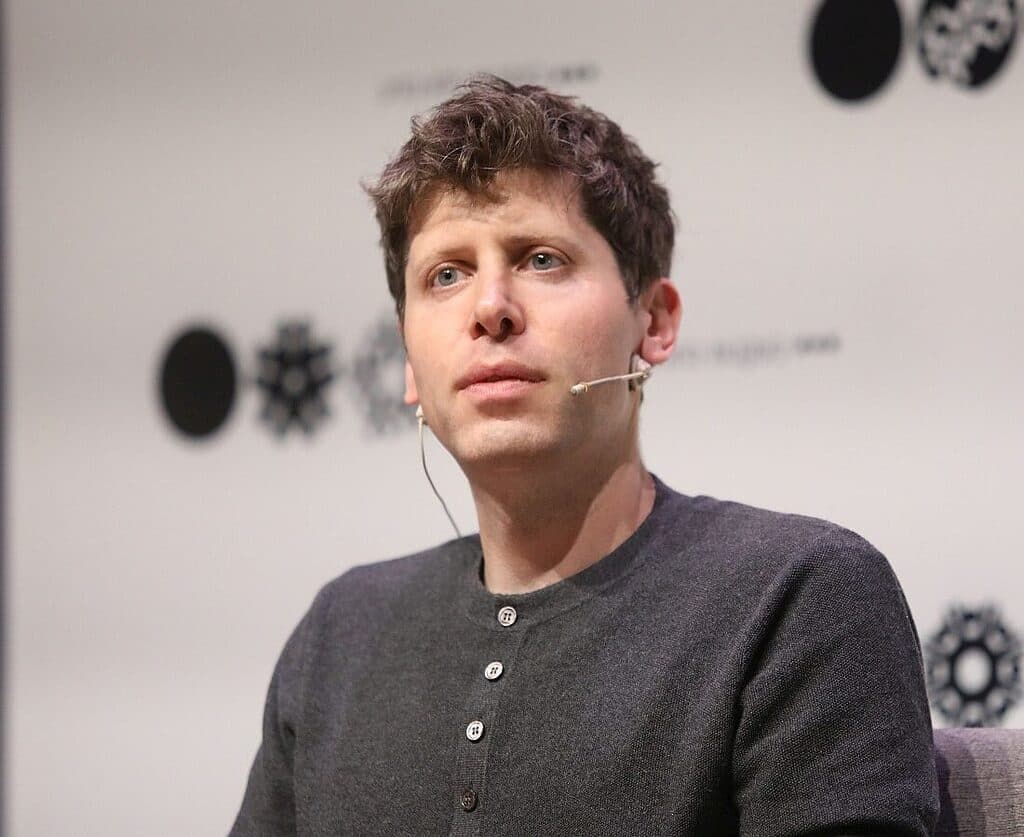
OpenAI's boardroom revolt did more than unseat a CEO. It exposed how little margin for error exists when a company sits at the center of the generative AI boom and its governance is still being improvised in public.
A succession plan that collapsed in real time
The rupture began when OpenAI's board announced on November 17, 2023, that Sam Altman would step down as CEO. The board said Altman was not consistently candid in his communications, a problem it argued had hindered its ability to carry out oversight. That wording mattered. It signaled that the conflict was not just about performance or strategy, but about whether the board believed it could trust the person steering one of the most influential companies in AI.
Mira Murati, then OpenAI's technology chief, was named interim CEO the same day, and the company said it was beginning a search for a permanent successor. In a more conventional company, that sequence would have suggested a managed transition. At OpenAI, it triggered a scramble that showed how fragile succession planning can be when a firm is both a product company and a geopolitical object in the tech economy.
Why the shock spread so fast
The episode ricocheted through Silicon Valley because OpenAI was not just another startup changing leadership. It had become a strategic partner for Microsoft, sat at the center of the generative AI boom, and was shaping the pace at which AI moved from lab ambition to commercial infrastructure. That made the board's move feel less like an internal personnel decision and more like a stress test for the whole industry.
The chaos unfolded over a few days, and that speed mattered as much as the outcome. Employees, investors, and outside observers watched a company that had spent years projecting technical momentum suddenly reveal how little clarity it had around who held ultimate authority. In AI, that is not a cosmetic issue. If a board can remove a founder in a single announcement and then reverse course days later, every stakeholder has to reassess where power actually sits.

The return of Altman, and the price of restoring order
By November 22, 2023, OpenAI said it had reached an agreement in principle for Altman to return as CEO. The company also announced a new board structure that included Bret Taylor as chair, along with Larry Summers and Adam D'Angelo. The message was unmistakable: the company was not simply bringing back its founder, it was rebuilding the governance architecture around him.
That compromise ended the immediate crisis, but it did not erase what the crisis revealed. A board that had asserted its independence days earlier was now replaced, and the new lineup blended corporate governance experience, policy credibility, and tech-sector fluency. For the market, the restoration of Altman likely reduced the near-term risk of defections or strategic drift. For the industry, it underscored a hard truth: when a company becomes central to AI deployment, continuity often beats process, and boards are pressured to sacrifice clean governance for operational stability.
What the episode says about power in AI
The OpenAI episode is best understood as a struggle over leverage. In AI companies, that leverage does not sit in a single place. It can reside in the models themselves, in the cloud infrastructure that trains and serves them, in the chips needed to power them, or in the distribution channels that put the tools in front of users. OpenAI's crisis suggested that the board believed leadership discipline was part of that leverage, because the people making the calls also shape safety decisions, product timing, and commercial partnerships.
That is why the board's concern about Altman's candor mattered so much. A founder who controls the story, the roadmap, and the external relationships can accumulate influence faster than a governance structure can adapt. The result is a recurring mismatch: investors may want speed and scale, while directors are supposed to check risk, and the company may depend on a narrow leadership core to manage both. In AI, where a delayed product launch or an aggressive rollout can shift billions of dollars in market value and influence how the technology spreads, that mismatch becomes a system-level risk.
Safety, commercialization, and the board's impossible job
The crisis also spotlighted the central tension in AI governance: boards are being asked to oversee both safety and commercialization at the same time. OpenAI's board was supposed to supervise a company that was racing to turn frontier models into products while also managing concerns about how those models were developed and deployed. Those are not easy goals to balance, especially when the company is under pressure from partners, users, and rivals all at once.
The result was a power struggle that revealed how thin the line is between oversight and disruption. If a board moves too slowly, it risks being captured by the founder. If it moves too aggressively, it can destabilize the company and damage the very ecosystem it is meant to protect. OpenAI's 2023 crisis became a cautionary tale because it showed that even the most prominent AI company had not solved that dilemma in a durable way.
The warning in Murati's later testimony
The story did not end in 2023. Reuters reported on May 6, 2026, that former OpenAI technology chief Mira Murati testified that Altman sowed distrust among top executives and created persistent chaos. That testimony gave the earlier board fight a longer shadow. It suggested that the governance crisis was not a one-off rupture, but part of a deeper struggle over whether the company's leadership culture could support stable decision-making at AI scale.
For investors and directors, that is the more important lesson. The real vulnerability in AI may not be a lack of technical talent or funding. It may be the absence of succession systems strong enough to survive the concentration of power around a few founders and a few breakthrough products. OpenAI's board chaos showed that when leadership and strategy are fused too tightly, the most consequential question is not who runs the company next. It is who controls the future of the technology itself.
This article was produced by Prism’s automated news system from verified source data, official records, and press releases, then run through automated quality and moderation checks before publishing. The system is built and supervised by the people who set the standards it runs under. Read our full AI policy.
Did this article answer your question?

