OpenAI Offers Private Equity Firms Guaranteed Returns to Distribute Enterprise AI
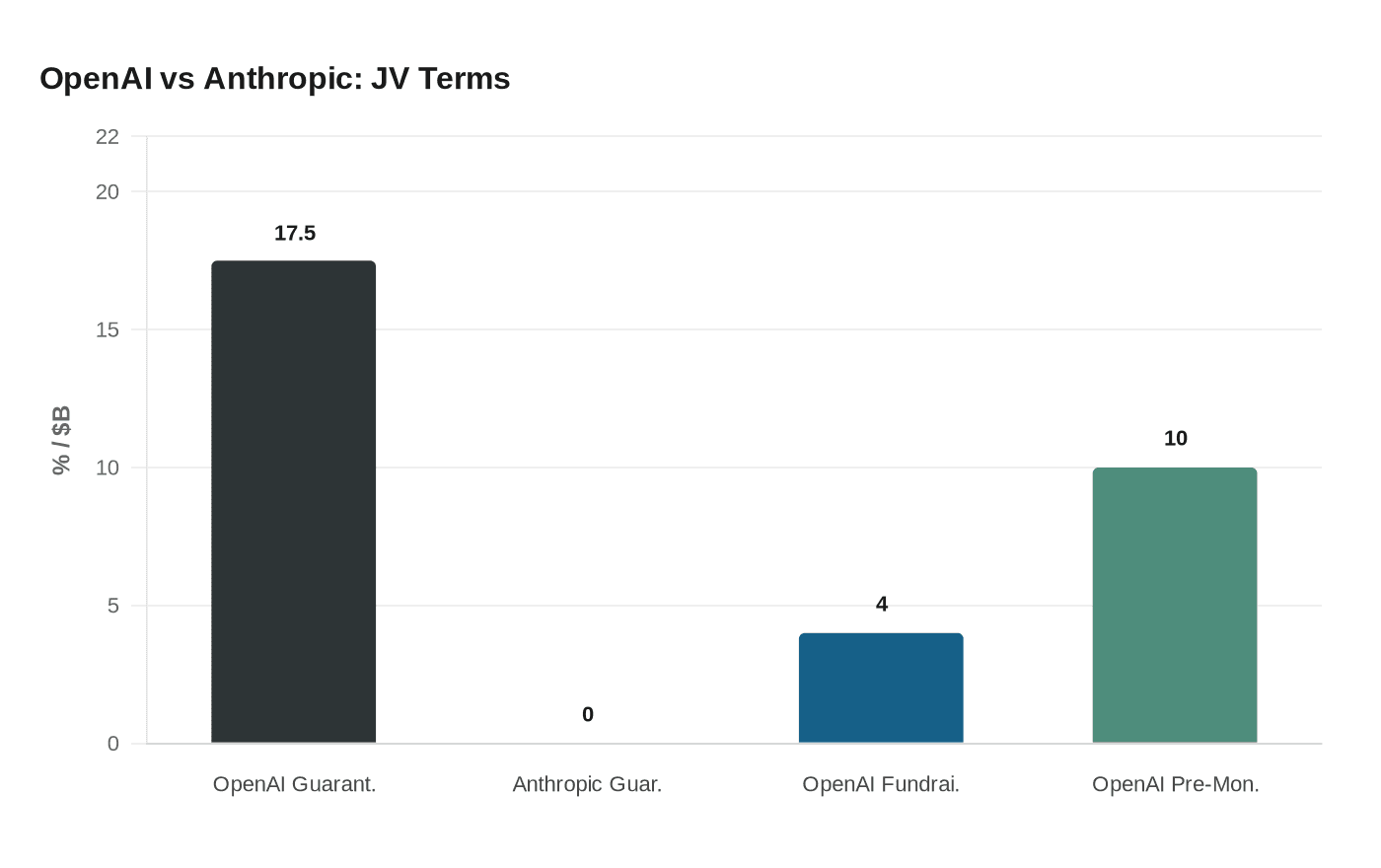
OpenAI is offering private equity firms a guaranteed 17.5% minimum return, well above typical preferred instruments, to win distribution partners for its enterprise AI push over rival Anthropic.
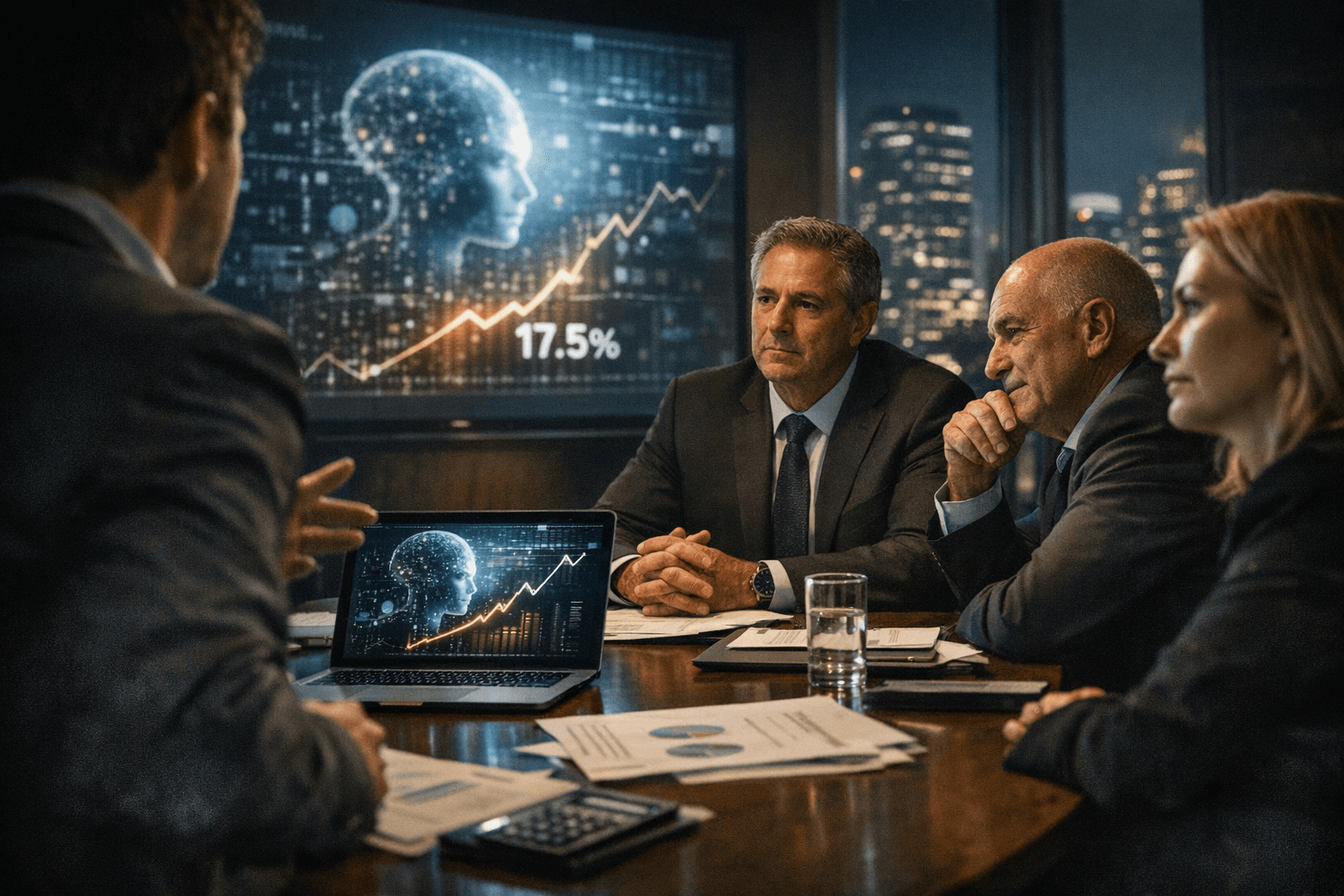
OpenAI put a number on its desperation to catch Anthropic in enterprise AI: a guaranteed minimum return of 17.5%. That figure, significantly higher than typical preferred instruments according to people familiar with the talks, anchors an aggressive pitch the ChatGPT maker has been making to buyout firms as it seeks joint-venture partners to distribute its enterprise products across the private-equity-owned companies that control a vast swath of corporate America.
OpenAI offered private-equity firms the guaranteed minimum return of 17.5% and early access to its newest AI models as it sought to enlist investors like TPG and Advent for its joint venture, according to two people familiar with the terms and three additional sources.
Reuters had previously reported that OpenAI was in advanced talks with TPG, Bain Capital, Advent International, and Brookfield Asset Management to raise about $4 billion at a pre-money valuation of roughly $10 billion. Under the proposed arrangement, participating firms would receive preferred equity in the new venture, a senior class of ownership that gives investors priority returns over common shareholders and limits downside exposure.
The financial terms represent a deliberate escalation. OpenAI has recently doubled down on enterprise, an area where Anthropic has historically been stronger, and by comparison, Anthropic's enterprise-focused private-equity deal offered no such guaranteed returns, the sources said. Anthropic, which has gained traction among businesses, is pursuing a similar strategy and has been courting private equity firms including Blackstone, Hellman & Friedman, and Permira for its own enterprise-focused venture.
The prize both companies are chasing is straightforward: OpenAI and Anthropic are competing for partnerships with buyout firms that would allow them to quickly roll out their AI tools to potentially hundreds of private, established companies owned by buyout firms, which would boost adoption of their models and encourage customer stickiness at scale.
The PE distribution push runs alongside OpenAI's Frontier program, the enterprise platform it unveiled in February. On February 23, OpenAI announced multi-year partnerships with McKinsey, Boston Consulting Group, Accenture, and Capgemini, forming what it calls Frontier Alliances to help enterprises deploy AI agents at scale. The consulting firms work alongside OpenAI's forward-deployed engineers, who are embedded directly within different businesses. The PE joint-venture structure would extend Frontier's reach further, pushing distribution through firms whose portfolio companies may lack the procurement relationships or implementation capacity to adopt enterprise AI on their own.
Fidji Simo, CEO of Applications at OpenAI, framed the company's ambitions in an emailed statement: "As demand for AI continues to skyrocket, we want to help our customers deploy these technologies in all the ways that help them create impact."
Not everyone in the buyout world is convinced. Thoma Bravo, one of the world's largest software-focused buyout firms, decided not to participate after internal discussions led by managing partner Orlando Bravo, who raised questions about the long-term profit profile of the joint ventures and noted that many of the firm's portfolio companies are already deploying AI tools. Some private-equity investors also questioned the partnerships, arguing that large firms already have direct access to OpenAI and Anthropic without committing capital.
The skepticism has not slowed either AI company's recruitment efforts. The two companies are battling for more lucrative business customers as they race to position themselves for potential public listings as early as this year. For OpenAI, closing even a handful of major PE partners before any IPO roadshow would signal a credible enterprise revenue pipeline to prospective public-market investors. The 17.5% guarantee is the price of that narrative. Whether the venture's actual returns can meet that floor is a question neither OpenAI nor its would-be partners have yet answered publicly.
This article was produced by Prism’s automated news system from verified source data, official records, and press releases, then run through automated quality and moderation checks before publishing. The system is built and supervised by the people who set the standards it runs under. Read our full AI policy.
Did this article answer your question?

