OpenAI to Buy Neptune.ai, Bringing Training Observability Tools In House
OpenAI announces an agreement to acquire Neptune, a company that builds experiment tracking and model training observability tools, a move that could sharpen OpenAI’s internal tooling and speed model iteration. The deal, which Reuters reported on Dec. 4 and which The Information says may be under $400 million in stock, raises questions for Neptune customers who may need to migrate if the standalone service is absorbed.

OpenAI announces on Dec. 4 that it has reached an agreement to acquire Neptune, a provider of experiment tracking and model training observability tools used to monitor, compare and debug machine learning runs. Reuters first reported the agreement, while The Information reported the transaction could be structured as stock and may be valued at under $400 million, a figure that OpenAI and Neptune have not confirmed.
Neptune’s software helps research and engineering teams record metrics, manage training artifacts and reproduce experiments across distributed compute. OpenAI already uses Neptune internally to monitor and debug training runs, according to reporting, and the acquisition is aimed at integrating that tooling more deeply into OpenAI’s research stack to accelerate iteration on large scale models.
The move illustrates a wider trend among leading AI firms to bring key software infrastructure in house as they scale frontier model training. Observability and experiment management are no longer auxiliary tools, they are operational engines for teams running costly, large scale jobs. For OpenAI, owning the instrumentation layer could shorten feedback loops, make debugging at scale more efficient and help the company push model architectures and training recipes faster into production.
Neptune’s customer base includes teams in large pharmaceutical firms, hardware companies and enterprise machine learning groups. Those clients rely on Neptune’s hosted service for shared experiment records, audit trails and collaborative workflows. Industry reporting notes that if Neptune’s standalone offering is subsumed into OpenAI’s platform, some customers may face migration decisions. Enterprises concerned about vendor neutrality, data governance and portability will be watching closely to determine whether their workflows can continue under a new ownership structure.
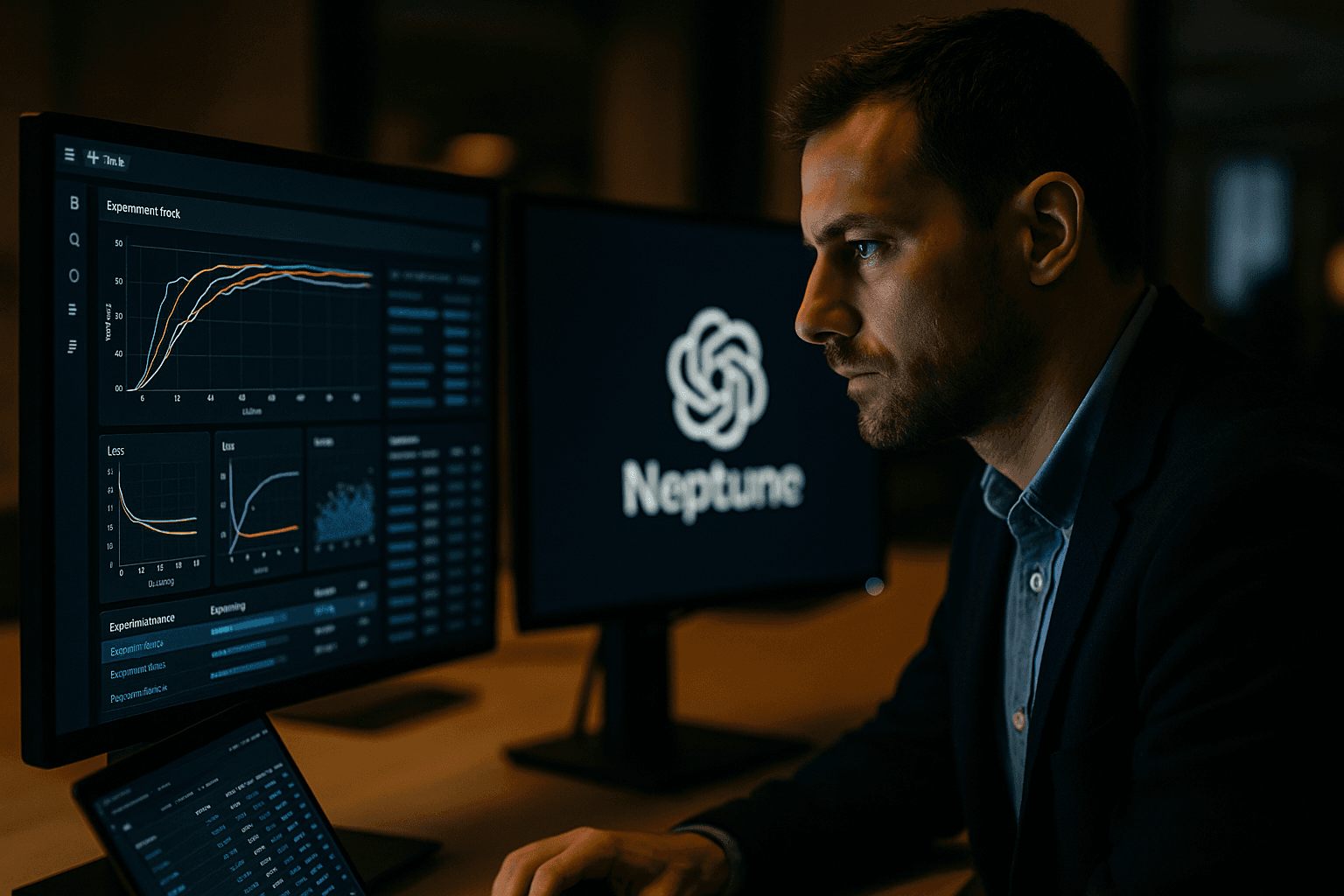
Beyond operational benefits, the acquisition raises questions about competition and ecosystem health. Centralizing observability tooling inside a single dominant model developer can strengthen that developer’s competitive advantage by tightening integration across training pipelines, model management and deployment. At the same time, consolidation can reduce the availability of independent, interoperable tooling that many organizations rely on for reproducibility, compliance and vendor diversification.
Technical communities that prize reproducible research and transparent model development may welcome improvements in tooling quality, while also voicing concerns about access. For regulated sectors such as drug discovery, where provenance of model results matters for safety and approval, continuity of service and clear contracting terms will be critical.
OpenAI and Neptune have not publicly disclosed financial terms or the timeline for integration. Reuters framed the transaction as part of continued vertical integration among major AI firms as they build the infrastructure needed to train ever larger models. For customers and competitors alike, the acquisition highlights a strategic gamble: owning the plumbing of model development can yield faster progress and tighter product control, but it also concentrates power over essential software that underpins the rapidly expanding AI ecosystem.
This article was produced by Prism’s automated news system from verified source data, official records, and press releases, then run through automated quality and moderation checks before publishing. The system is built and supervised by the people who set the standards it runs under. Read our full AI policy.
Did this article answer your question?