OpenAI weighs legal action as Apple AI partnership strains
OpenAI is weighing legal action as its Apple pact frays, putting ChatGPT’s place inside Siri and other iPhone tools at risk.
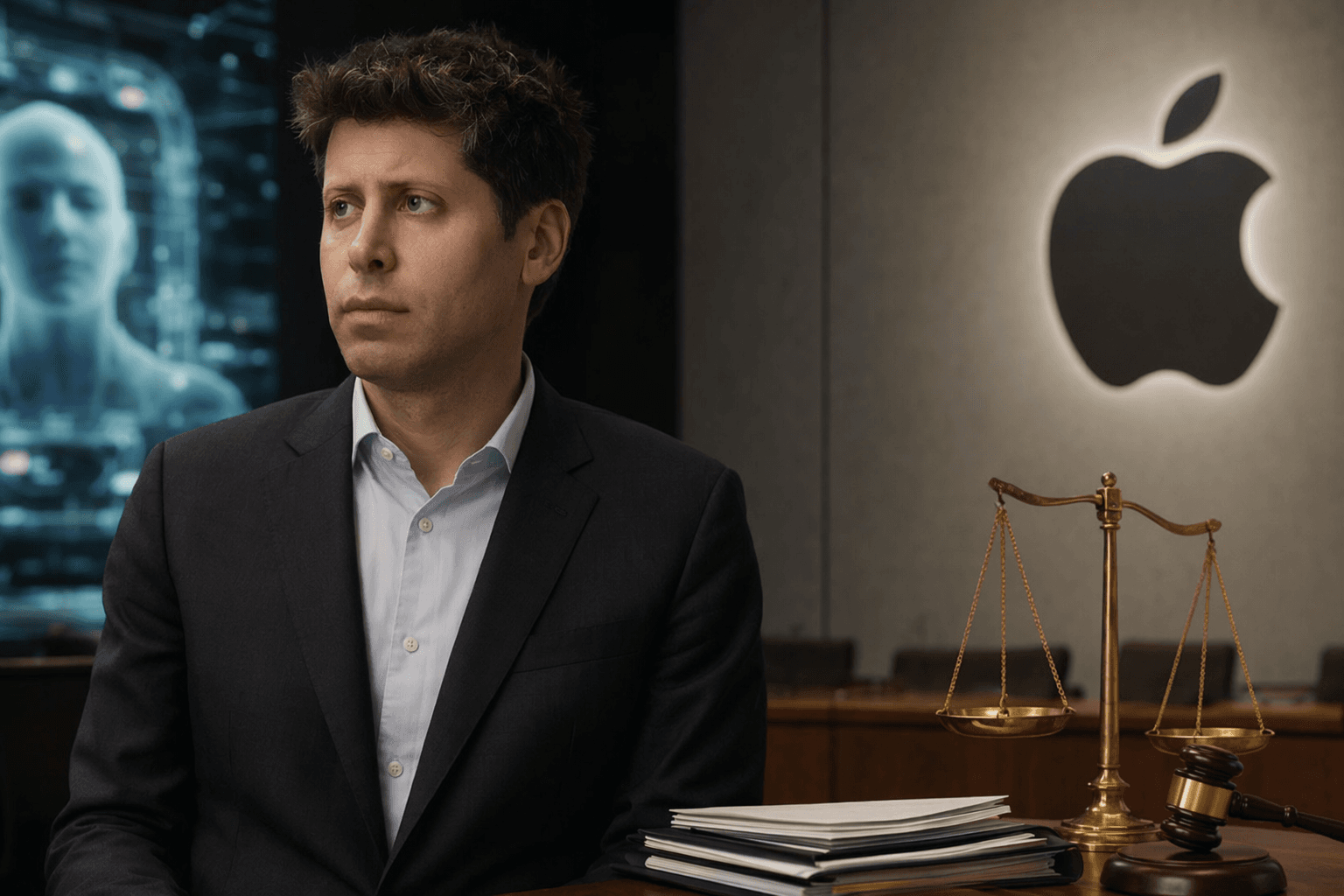
OpenAI is working with an outside law firm on options involving Apple as its two-year-old partnership with the iPhone maker strains, a sign that a deal once pitched as mutually beneficial has become a fight over leverage, distribution and control. OpenAI now believes it has not received the expected benefits from the arrangement, and the prospect of legal action raises the stakes for how consumers reach ChatGPT inside Apple’s default AI surfaces.
The relationship began on June 10, 2024, when Apple announced at WWDC that it would integrate ChatGPT into iOS, iPadOS and macOS, including Siri and Writing Tools, with privacy protections built in. OpenAI said the integration would be powered by GPT-4o and that users could access it for free or connect a paid ChatGPT account. At the same event, Apple unveiled Apple Intelligence, its own generative-AI system, deeply embedded across iOS 18, iPadOS 18, macOS Sequoia, watchOS 11 and tvOS 18. That dual-track strategy made Apple both OpenAI’s distribution partner and its most important gatekeeper.
Apple’s support materials now describe ChatGPT as available through Apple Intelligence for Siri, Writing Tools, Image Playground, visual intelligence and Shortcuts, with availability varying by device, language and region. That setup gives ChatGPT prominent placement inside Apple’s ecosystem, but it also leaves OpenAI dependent on Apple’s design choices, account prompts and default settings on devices that shape daily digital habits for hundreds of millions of users.

The legal backdrop has only sharpened the tension. In August 2025, xAI and X Corp. sued Apple and OpenAI in federal court in Texas, accusing the companies of anticompetitive collusion over the ChatGPT integration. The case, filed in Fort Worth in the Northern District of Texas, cast the Apple deal as more than a product feature, turning it into a flashpoint in the battle over who controls generative-AI access on consumer devices. OpenAI has separately described Elon Musk’s litigation posture as part of a broader campaign against the company.

What began with Sam Altman, Tim Cook, Eddy Cue, John Giannandrea and Craig Federighi framing a consumer-friendly AI partnership now looks like a familiar Silicon Valley rupture. The money is significant, but the larger prize is distribution: the first place users see an assistant, the default ecosystem that routes their requests, and the ability to turn a technical integration into lasting power. A breakup would not just alter one deal. It would underscore how quickly AI partnerships can harden into platform wars.
This article was produced by Prism’s automated news system from verified source data, official records, and press releases, then run through automated quality and moderation checks before publishing. The system is built and supervised by the people who set the standards it runs under. Read our full AI policy.
Did this article answer your question?