Orion Capsule Returns to Earth, Enduring Planned 6-Minute Blackout
During Artemis II's six minutes of radio silence, plasma engulfed the Orion capsule at Mach 33, leaving mission control with no telemetry and astronauts flying home alone.
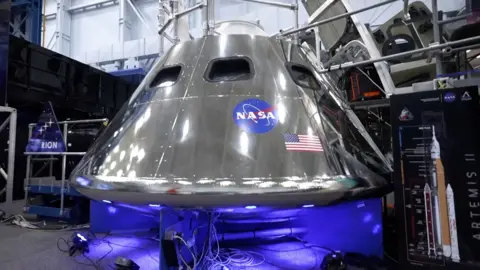
At 7:53 p.m. EDT on Friday, the Orion spacecraft carrying four astronauts crossed 400,000 feet above Earth's surface and disappeared. Not from radar, not from cameras, but from every radio frequency that mission controllers at NASA's Johnson Space Center depended on. For six minutes, the capsule the crew had named "Integrity" was entirely on its own.
The friction and compression of the atmosphere as Orion fell created a plasma bubble that engulfed the spacecraft, blocking radio signals in either direction. That plasma sheath, glowing at temperatures that reached 5,000 degrees Fahrenheit on the heat shield's outer surface, is the same phenomenon that makes reentry both physically survivable and communicatively impossible. During the blackout phase, engineers on the ground were unable to receive telemetry or send commands, meaning the spacecraft operated entirely autonomously.
What viewers watching NASA's livestream witnessed was spectacle: a streak of ionized fire arcing across the Pacific sky. What mission controllers experienced was silence and inference, waiting for the plasma to thin and signals to return. Mission control had to wait until communications were restored to confirm everything was proceeding as expected, meaning the astronauts were alone during the harshest part of the trajectory.
Flight Director Rick Henfling told reporters that once the six-minute blackout ended, Orion would be at about 150,000 feet, still falling quickly. The capsule had been traveling at Mach 33, a blistering speed not seen since NASA's Apollo moonshots of the 1960s and 1970s, and the crew was absorbing forces of up to 3.9 Gs in the planned entry profile. Orion's onboard maneuvering thrusters ensured the capsule maintained the orientation needed to keep the heat shield pointed toward Earth, while the computer flew the crew home.
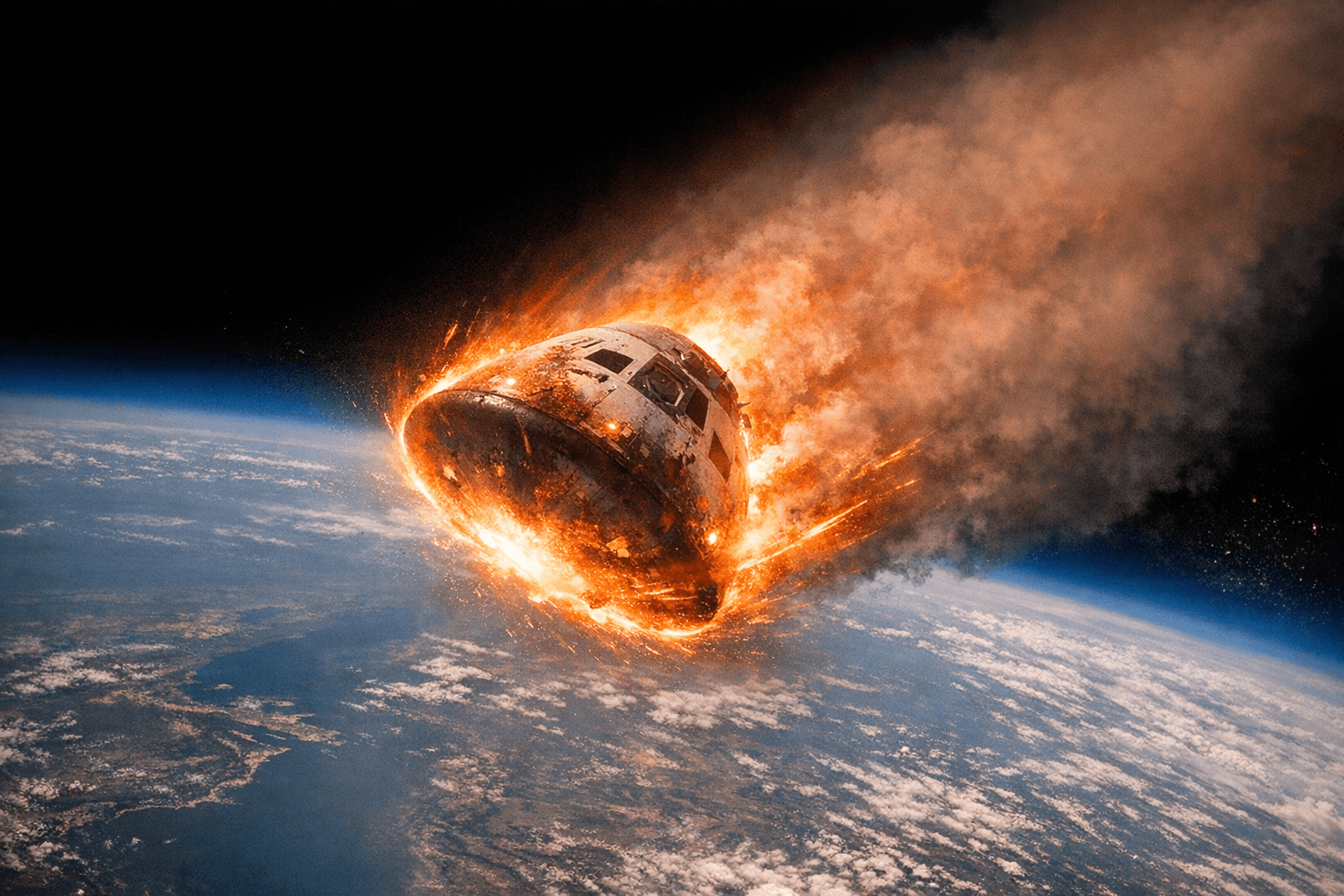
The heat shield itself was the mission's sharpest anxiety. During the uncrewed Artemis I test flight in 2022, more than 100 locations on the heat shield had cracked and broken off, which it was not supposed to do. Engineers determined that gases generated inside the heat shield's ablative outer Avcoat material were not able to vent and dissipate as expected, causing the damage. NASA's response was to redesign the entry trajectory itself: rather than hitting the atmosphere head-on, Orion performed a "lofted" reentry, dipping briefly into the atmosphere before rising again for a final descent, similar to a stone skipping once across a pond before sinking, with the flight path designed to reduce heat stress on the heat shield.
Commander Reid Wiseman, Pilot Victor Glover, and Mission Specialists Christina Koch and Canadian Space Agency astronaut Jeremy Hansen splashed down at 8:07 p.m. EDT in the Pacific Ocean off the coast of California, completing a nearly 10-day, 694,481-mile journey around the Moon. Recovery teams from the USS John P. Murtha moved in as helicopters lifted each crew member one by one from the water, and an announcement of "Integrity incoming" rang out across the ship's flight deck as the first aircraft touched down.
The successful return carries direct weight for what comes next. NASA ordered a different heat shield design for downstream Artemis missions after identifying the Avcoat material's failure to vent internal gases as the root cause of Artemis I's damage. Artemis II demonstrated that a modified skip trajectory could get a crew home safely. But with Artemis III targeting an actual lunar landing, mission engineers will need every lesson from Friday's six minutes of silence before sending astronauts back to the surface of the Moon.
This article was produced by Prism’s automated news system from verified source data, official records, and press releases, then run through automated quality and moderation checks before publishing. The system is built and supervised by the people who set the standards it runs under. Read our full AI policy.
Did this article answer your question?