Pablove Black Reflects on Studio One, Working with Reggae Greats
Pablove Black, aka Paul Dixon, recounts his Studio One apprenticeship and duties as musical coordinator in a roughly 75-minute Reggae Vibes interview published March 4, 2026.
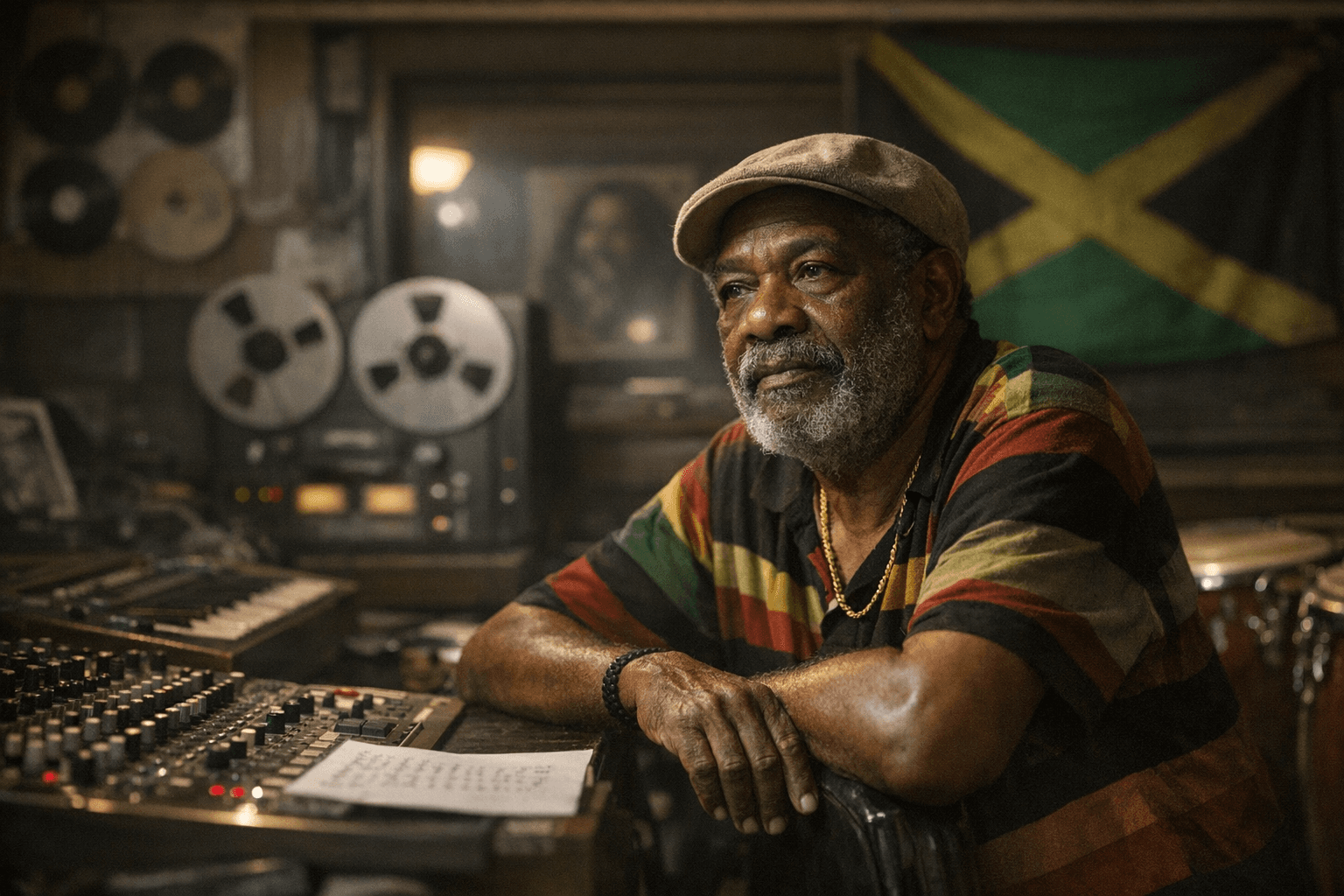
Pablove Black, the veteran Jamaican multi-instrumentalist also known as Paul Dixon, lays out his Studio One apprenticeship and wide-ranging duties in a Reggae Vibes interview Part 1 published March 4, 2026. The transcript runs roughly 75 minutes and finds Pablove describing Studio One as the training that prepared him for arranging, conducting and touring.
At Coxsone Dodd’s Studio One, Pablove says he performed in Coxsone’s studio band and took on what he calls overall musical coordination. He lists concrete duties that included talent scouting, composing, arranging and auditioning artists. “So it’s overall musical coordination,” he said, and added, “I had to do auditions sometimes.”
Pablove ties that coordination to hands-on studio work and vocal arrangement practice. “Well that was the training, you know? That’s when I started to work with the Twelve Tribes band now,” he told Reggae Vibes, and he recalled harmony work with other singers. “I had the experience now because I used to do harmony—chorus things. Me and Sister Enid [would sing chorus] on Johnny Osbourne songs.”
The interview preserves Pablove’s account of conducting and arranging in session settings. On horn arrangements and session leadership he said, “I had to do conducting—if there is a horn section there, you know?” That quotation underscores the hands-on role he played beyond keyboards, arranging parts and directing session players at Studio One during what the interview frames as reggae’s golden age.
Pablove’s instrumental credits are broad in the interview material and supporting notes: virtuoso keyboard work plus organ, piano, steel drums, melodica and other instruments. The summary material calls him a master multi-instrumentalist and one-man-band, a description that aligns with his studio responsibilities and the arranging and conducting duties he describes in the Reggae Vibes transcript.
The interview also traces a career arc. Reggae Vibes references a prior jamaicans.com interview in which Pablove said he worked nonstop for several years at Studio One before he began touring with Jimmy Cliff. The Part 1 transcript repeats that sequence and notes he continued to do some work for Coxsone into the 1980s “until Downbeat moved his operations to Brooklyn, New York,” a phrasing present in the material that the interview does not further define.
Musical output drew praise in the conversation. The interviewer singled out tracks and an album containing “Shaolin Disciple” and “Soul Ride,” calling it “such a cool album” and saying of “Soul Ride,” “the frequencies are so high, that tune, it feels like your soul is really going on a ride. It’s really amazing. And I would encourage everyone: you have to go and listen to that album.” The transcript excerpt does not supply the album title or release details.
Part 1 of the Reggae Vibes interview captures these session-level memories and several verbatim lines from Pablove, while an accompanying excerpt includes a truncated fragment reading “capturing Pablove’s reflections on his e.” Taken together, the material maps Studio One’s practical training role for Pablove Black and shows how that training fed his arranging, conducting and touring work with artists like Jimmy Cliff as he moved through the 1970s and into the 1980s.
Know something we missed? Have a correction or additional information?
Submit a Tip