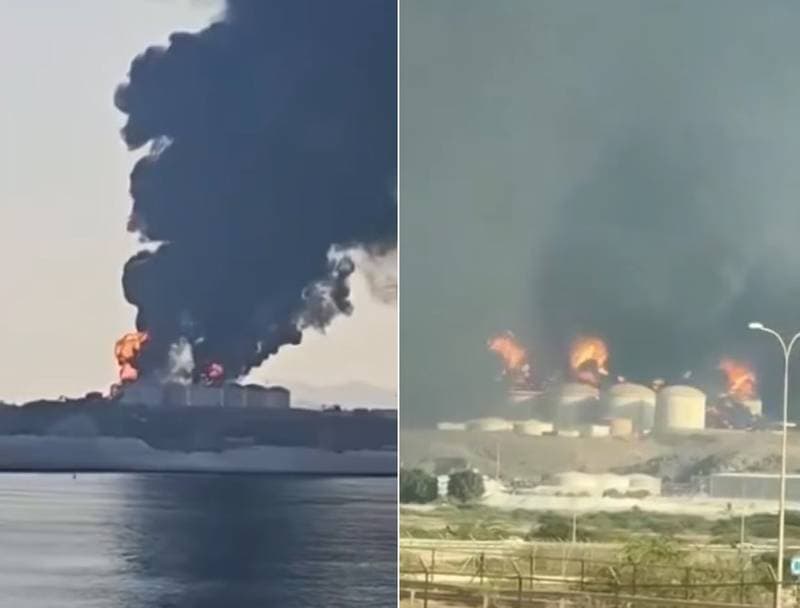
Pakistan Hosts Saudi, Turkish, Egyptian Ministers for Iran-US War Talks
Pakistan opened two-day war talks in Islamabad on Sunday with Saudi, Turkish and Egyptian ministers after secretly relaying a US 15-point peace framework to Tehran.
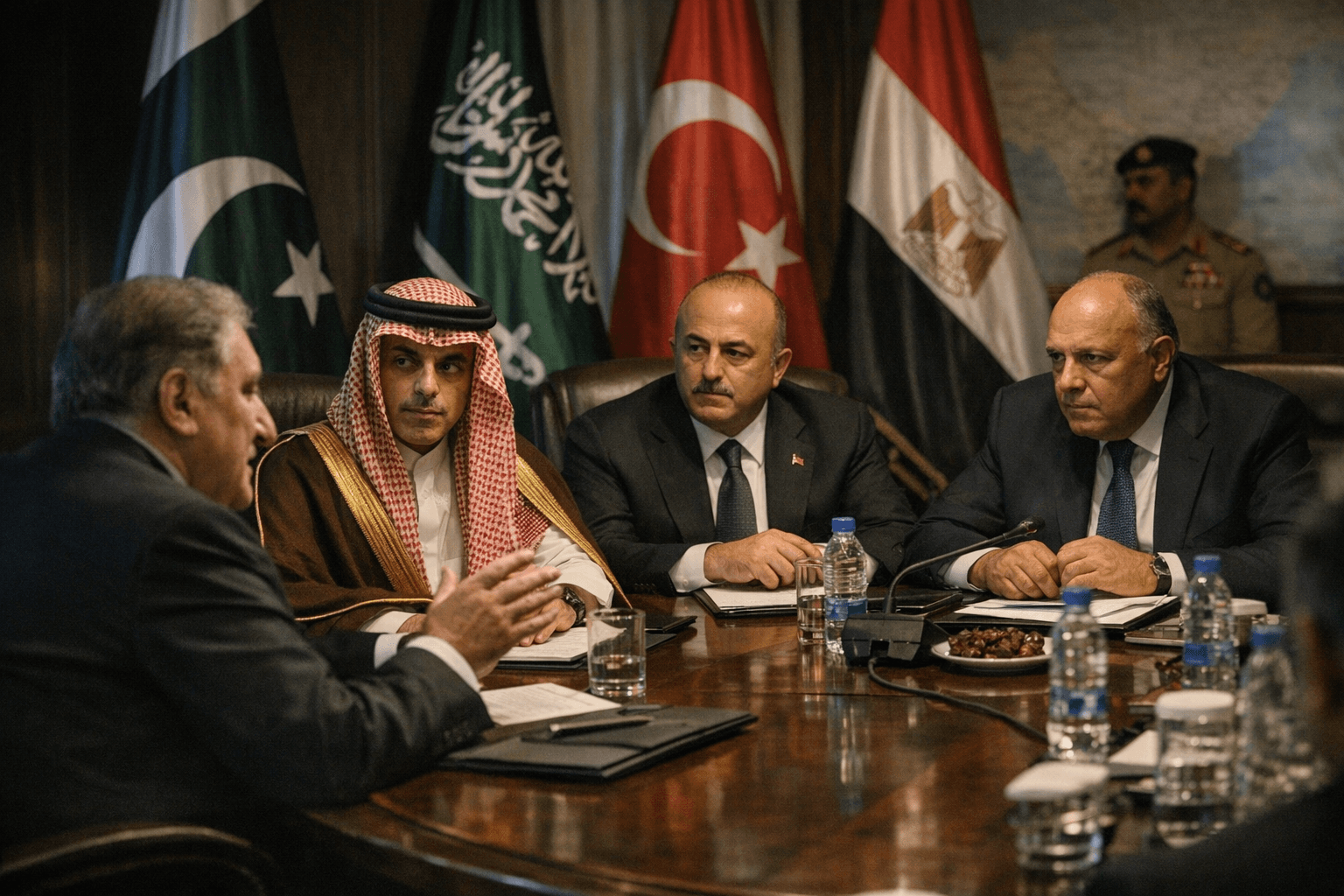
While Iran was firing what Israeli military officials counted as its tenth wave of missiles toward southern Israel in a single day, foreign ministers from Saudi Arabia, Turkey and Egypt landed in Islamabad on Sunday to begin two days of talks that Pakistan hopes can end a month-old war now threatening to choke one of the world's most critical oil corridors.
Pakistani Foreign Minister Ishaq Dar led the discussions, which are scheduled to run through Monday. The visiting ministers also met Prime Minister Shehbaz Sharif, who framed Pakistan's hosting role as a bid to forge a unified regional response to fighting that has spread well beyond its origin. "Subject to concurrence by the US and Iran, Pakistan stands ready and honoured to be the host to facilitate meaningful and conclusive talks for a comprehensive settlement of the ongoing conflict," Sharif wrote on X ahead of the summit.
Pakistan's elevation to central mediator came after it quietly relayed a White House proposal to Tehran through back channels. US special envoy Steve Witkoff confirmed this week that the Trump administration had sent a 15-point peace framework to Iran via Pakistan, a disclosure that cemented Islamabad's position as the pivotal go-between in a conflict that began when the US and Israel launched military operations on Feb. 28. Sharif said on Saturday that he had spoken by phone with Iranian President Masoud Pezeshkian for an hour, informing him of Pakistan's ongoing outreach to Washington and Gulf partners.
Turkish Foreign Minister Hakan Fidan spelled out what the four-nation gathering was designed to accomplish. "We would discuss where the negotiations in this war are heading and how these four countries assess the situation and what can be done," he told broadcaster A Haber on Friday, adding that the group would seek to establish a concrete mechanism aimed at de-escalation.
Significant uncertainty shadowed the talks from the start. It was not immediately clear who, if anyone, would represent Tehran in Islamabad. According to CNN reporting, Iranian officials signaled that any negotiation led by Witkoff or senior Trump adviser Jared Kushner would be unlikely to succeed, "citing a deep deficit of trust following the collapse of earlier negotiations before the outbreak of hostilities." There is speculation that Vice President JD Vance could lead the US side, though no official American delegation to the Islamabad meetings was confirmed. Representatives involved in ongoing backchannel diplomacy between Iran and the United States were also expected to be part of the discussions, though their identities were not disclosed.
Pakistan's Ministry of Foreign Affairs spokesperson Tahir Andrabi acknowledged the sensitivity surrounding the proceedings, noting that "diplomacy and negotiations often require that certain matters be advanced with discretion" and urging journalists to await official announcements before drawing conclusions.
The backdrop to Sunday's meeting was relentlessly kinetic. Houthi rebels from Yemen have broadened the fighting, and Houthi missile launches at Israel, combined with Iranian strikes, have caused injuries and infrastructure damage across the Gulf. Airstrikes hit Iran as Iranian missiles and drones targeted Tel Aviv and other sites across the region. On Monday, President Donald Trump extended his deadline for Iran to reopen the Strait of Hormuz, saying the US would hold off striking Iranian power plants for five additional days to allow envoys to open talks with what he called a "respected" Iranian leader. Iranian officials responded by characterizing the extension as a retreat, saying Trump had backed down "following Iran's firm warning."
The Jakarta Post noted that all four nations gathered in Islamabad are acutely vulnerable to any sustained closure of the Strait of Hormuz, through which a significant share of global energy trade flows. Pakistan has conveyed a US proposal for ending the war to Tehran and offered its territory as a negotiating venue; Iranian officials have indicated that any formal talks could take place in either Pakistan or Turkey, leaving Islamabad with a plausible path to hosting the first direct negotiations if the current round of ministerial consultations produces a workable framework.
Sources:
Know something we missed? Have a correction or additional information?
Submit a Tip