Palestinian-American kids in New Jersey find refuge in soccer amid war
On a New Jersey field, Palestinian-American kids turn wartime grief into play, finding belonging in a soccer academy built around heritage and community.
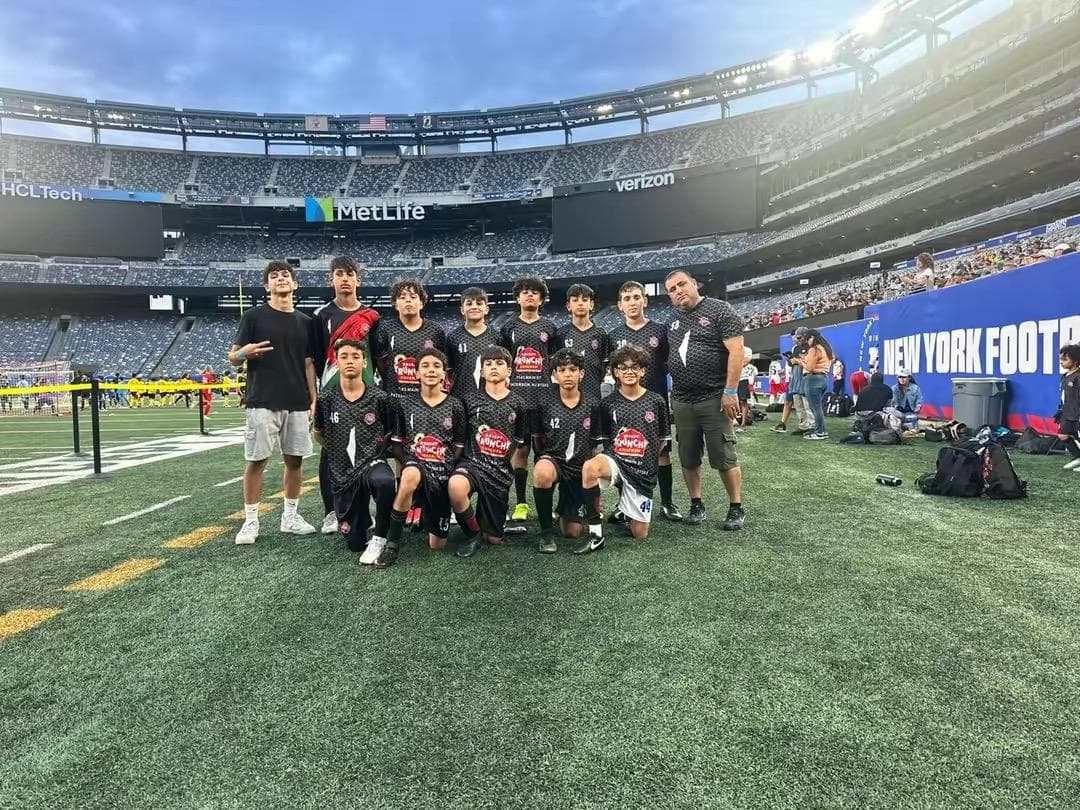
Palestinian-American children in New Jersey are finding something rare in a season of global tension: a place to run, laugh, and focus on the ball. At Frank D. Zaccaria Memorial Park in Woodland Park, about a dozen miles from World Cup games at New York/New Jersey Stadium, the Palestino Soccer Academy gives young players a brief break from the emotional weight carried home by many families.
A field that carries more than a game
The academy began about three years before June 2026, according to coach Omar Abdulaziz, as a response to two needs at once: teaching children about soccer’s place in Palestinian culture and helping kids cope with the impact of the war in Gaza. Abdulaziz said the team could hear the players’ frustration and see that some were emotionally unwell, a reality that made the pitch feel less like a sports site and more like a needed public space for recovery.
That role matters in a state with a sizable Palestinian-American community and a strong network of institutions built to preserve identity across generations. The Palestino Soccer Academy is tied to the Palestinian American Community Center in Clifton, New Jersey, where the mission is to sustain and strengthen ties to Palestinian heritage while empowering the community. In practice, that means soccer is not treated as a side activity. It is part of how children learn who they are, where they come from, and how to stay connected when events overseas dominate family conversations.
Abdulaziz and the meaning of refuge
Abdulaziz brings his own migration story to the work. He moved from the West Bank to Puerto Rico as a teenager in the 1980s, and that cross-border experience shapes how he talks about the game’s value. For the children on his field, soccer is not framed as a distraction from identity. It is presented as a way to live inside it without being overwhelmed by the news cycle, the conflict, or the grief that can follow families across oceans.
The academy now serves children of all backgrounds, broadening its reach beyond one community while still remaining rooted in Palestinian experience. That expansion matters in a region where youth sports can either separate children by neighborhood or bring them into the same drills, the same passing patterns, and the same shared discipline. On this field, the game gives players a moment to disconnect, a moment of tranquility, and a moment to detach from suffering that remains very real outside the park gates.
How the program is built
The Palestinian American Community Center’s soccer program is designed for children ages 5 to 16, and its structure reflects both development and inclusion. Weekly training gives younger players repetition and older players a routine, while league play adds competition and the pressure that comes with measured progress. Girls’ soccer is part of the offer as well, an important detail in a community program that is trying to build access as much as identity.
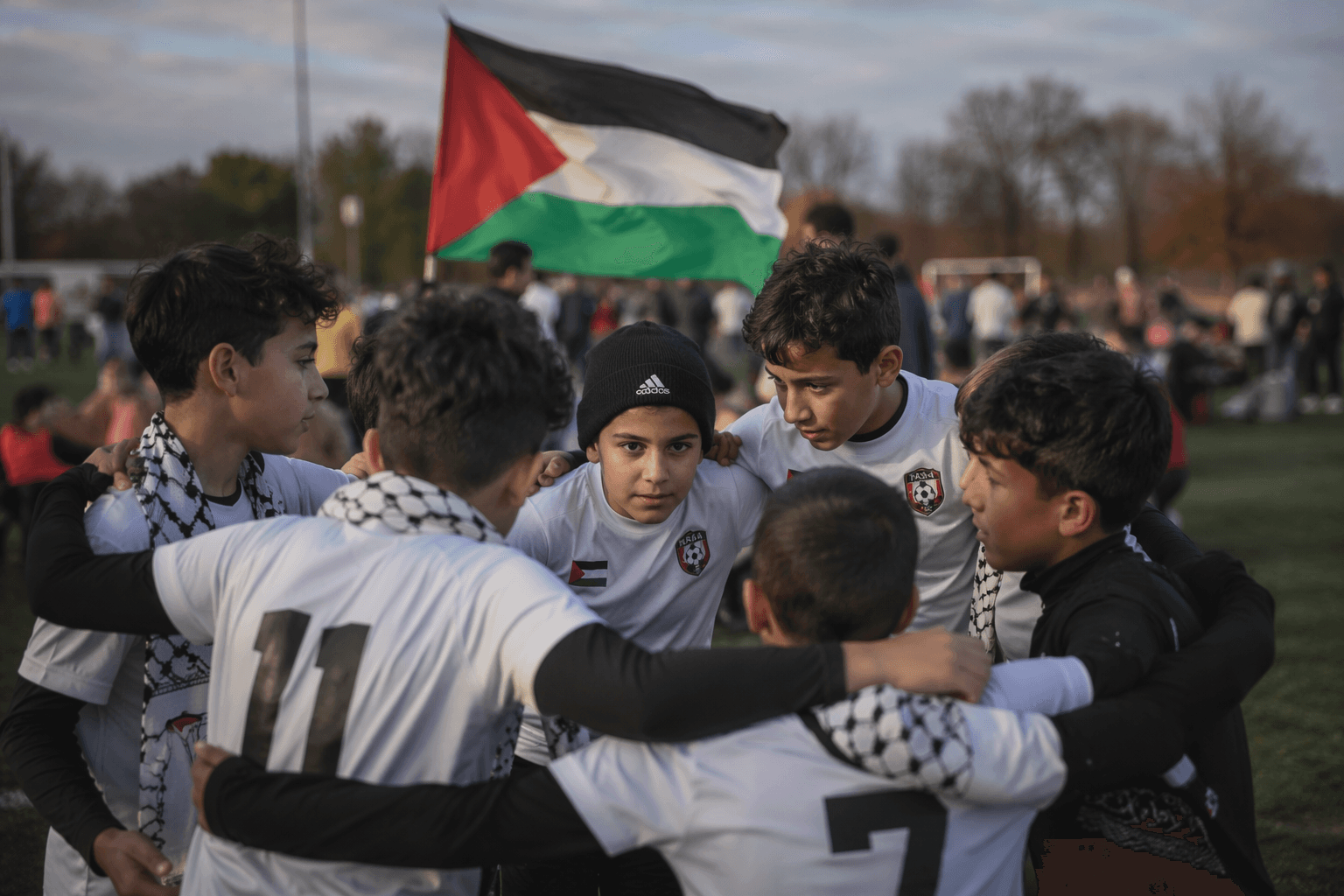
The academy’s setup also shows how local institutions adapt when a cultural program becomes a support system. This is not a one-off clinic or a symbolic gathering. It is an organized youth pipeline, with instruction, competition, and space for children who want both athletic growth and a deeper link to Palestinian heritage. The result is a club that looks outward toward the broader youth-soccer scene in New Jersey while remaining anchored in the needs of Palestinian-American families.
World Cup excitement, but with a different emotional register
The timing gives the story an especially sharp edge. The 2026 World Cup in the New York/New Jersey area has become a catalyst for youth-soccer attention and community programming across the region, but for Palestinian families the tournament lands against a much harsher backdrop. The Palestinian national soccer team did not qualify for the World Cup, and in Gaza, training and playing soccer has been made impossible.
That contrast turns a global sporting event into a reminder of absence. In New Jersey, children are taking part in drills, scrimmages, and league matches while families continue to process a war that has closed off ordinary athletic life for Palestinians elsewhere. The academy stands in that gap, giving children a place to learn the game while the larger story of the game in Palestine remains stalled by conflict.
Grief that stays close to home
For many Palestinian-American families in New Jersey, the emotional burden is not abstract. It is sharpened by personal loss, including the death of 14-year-old Amer Rabee, a Palestinian-American from New Jersey who was shot and killed in the West Bank on April 6, 2025. His killing deepened the weight felt by families already living with the strain of distance, memory, and repeated headlines from overseas.
That is why the soccer field matters beyond the scoreboard. It offers children structure when the world feels unstable, and it lets parents see a familiar game doing unfamiliar work: holding community together under pressure. In Woodland Park and Clifton, the academy shows how sports can become cultural glue, a place where heritage is taught through movement and belonging is built through repetition.
The Palestino Soccer Academy does not erase war, and it does not pretend that a drill line can solve the grief carried by Palestinian-American families. What it does offer is something smaller and more immediate, and in this moment, equally necessary: a field where children can be children, even while the war remains part of the air they breathe.
This article was produced by Prism’s automated news system from verified source data, official records, and press releases, then run through automated quality and moderation checks before publishing. The system is built and supervised by the people who set the standards it runs under. Read our full AI policy.
Know something we missed? Have a correction or additional information?
Submit a Tip