Paramount Skydance Raises Breakup Fee To Five Billion, Signals Resolve
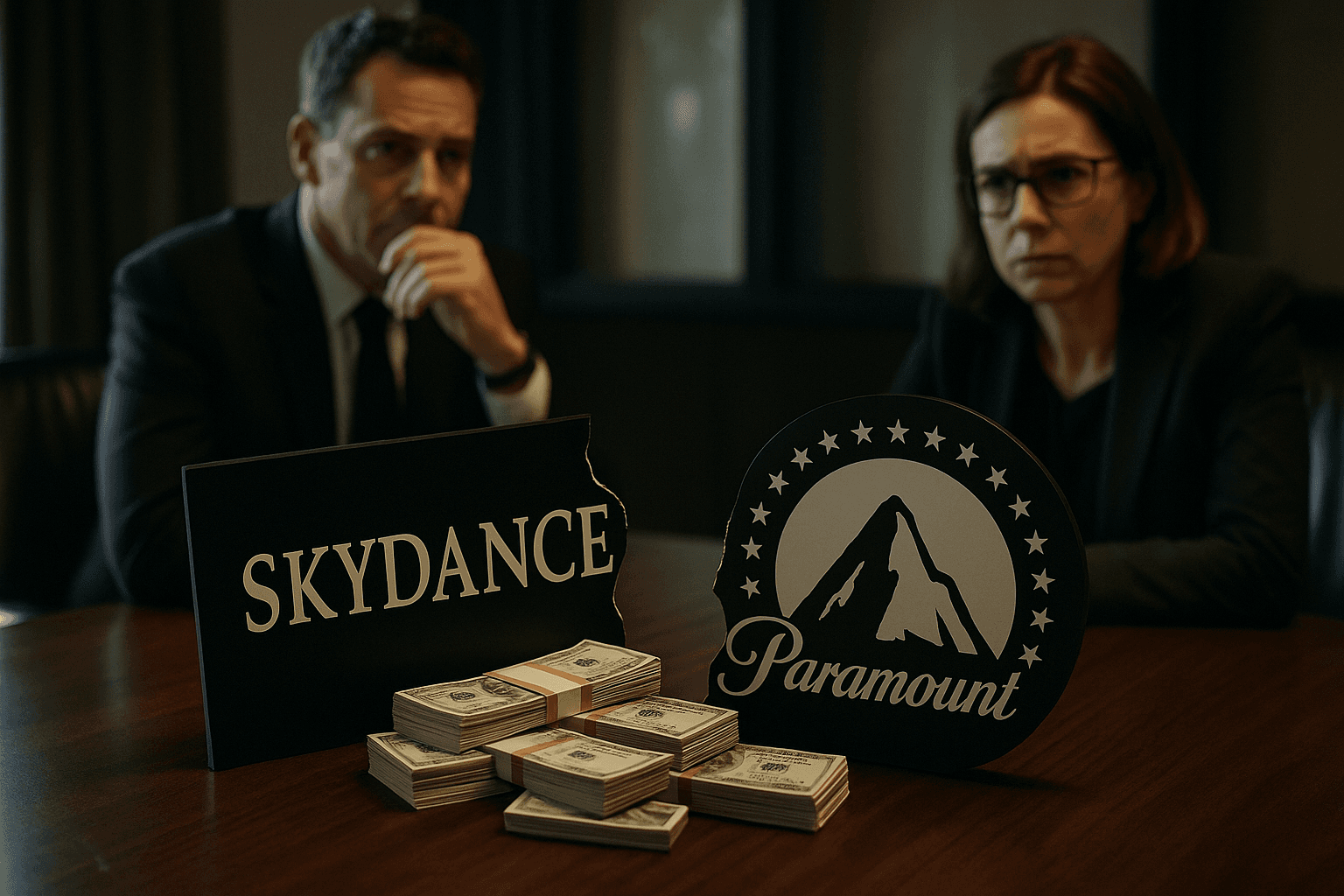
Paramount Skydance raised the proposed breakup fee for its bid for Warner Bros. Discovery to five billion dollars from 2.1 billion, a move that Bloomberg and Reuters reported on December 3, 2025. The dramatic increase matters because it signals confidence that the deal can clear regulatory scrutiny and reshapes the terms of a fierce auction for legacy studio and streaming assets.

Paramount Skydance dramatically increased the financial stakes in its pursuit of Warner Bros. Discovery when it raised the proposed breakup fee to five billion dollars from 2.1 billion, according to reporting by Bloomberg and Reuters on December 3, 2025. The higher fee was included in a revised proposal and is designed to compensate Warner Bros. Discovery if a transaction is agreed and later collapses. The step highlights how aggressive bidders are rewriting the rule book in a fast moving auction for one of Hollywood's largest studios and streaming portfolios.
The jump in the fee is more than a negotiating tactic. It serves as a public signal of Paramount Skydance's belief that the offer can survive antitrust review and other closing risks. A larger breakup fee raises the cost of walking away for the acquirer and transfers a portion of regulatory and financing risk onto the bidder. For Warner Bros. Discovery, the increase enhances tangible value for shareholders even if regulators prove to be an insurmountable obstacle.
Industry executives and dealmakers have been watching the auction for signs that bidders expect a bruising regulatory environment. Regulators in the United States and Europe have recently scrutinized media consolidation more closely, especially where content libraries and streaming scale are concentrated. By attaching a sizable penalty to a failed deal, Paramount Skydance is effectively buying reassurance for WBD and its shareholders, while telegraphing to regulators and competitors that it has the conviction and funds to press forward.
The move also reflects broader trends reshaping entertainment. As streaming economics have normalized after the subscriber wars of the early 2020s, buyers and sellers are recalibrating how they value content libraries, live sports rights, and global distribution networks. High breakup fees and complex deal protections have become tools for managing the legal and political uncertainty that accompanies large media transactions. The presence of a deep pocketed bidder willing to assume more risk could accelerate consolidation among studios and platforms, with implications for competition and creative ecosystems.
Culturally, consolidation at this scale affects more than quarterly results. A deal that combines major production houses and streaming services would reshape what audiences see, how content is funded, and which voices get amplified. Critics of concentration warn that fewer corporate owners mean narrower gatekeepers for which projects reach scale. Proponents argue that scale can deliver the investment needed for big budgets, global distribution, and technological innovation.
Socially, the contest underscores the stakes for employees, creators, and local economies built around production. A transaction that survives its regulatory gauntlet could preserve jobs through investment and global reach, or it could prompt restructuring that trims redundancy. Communities that rely on studio activity will be watching both the commercial rationales and the cultural consequences.
As the auction unfolds, the enlarged breakup fee will be parsed by other bidders, regulators, and shareholders as a measure of how the industry is managing risk in an era of high stakes mergers. Paramount Skydance has raised the ante, and the consequences will ripple through corporate boardrooms, creative communities, and viewers worldwide.
This article was produced by Prism’s automated news system from verified source data, official records, and press releases, then run through automated quality and moderation checks before publishing. The system is built and supervised by the people who set the standards it runs under. Read our full AI policy.
Did this article answer your question?