Parents turn to DeepSeek and Doubao as China moves to regulate chatbots
Parents and teachers are using DeepSeek, Doubao and Google’s Gemini for homework help as Alibaba rolls out Qwen3.5 and Beijing drafts new rules on emotional AI.
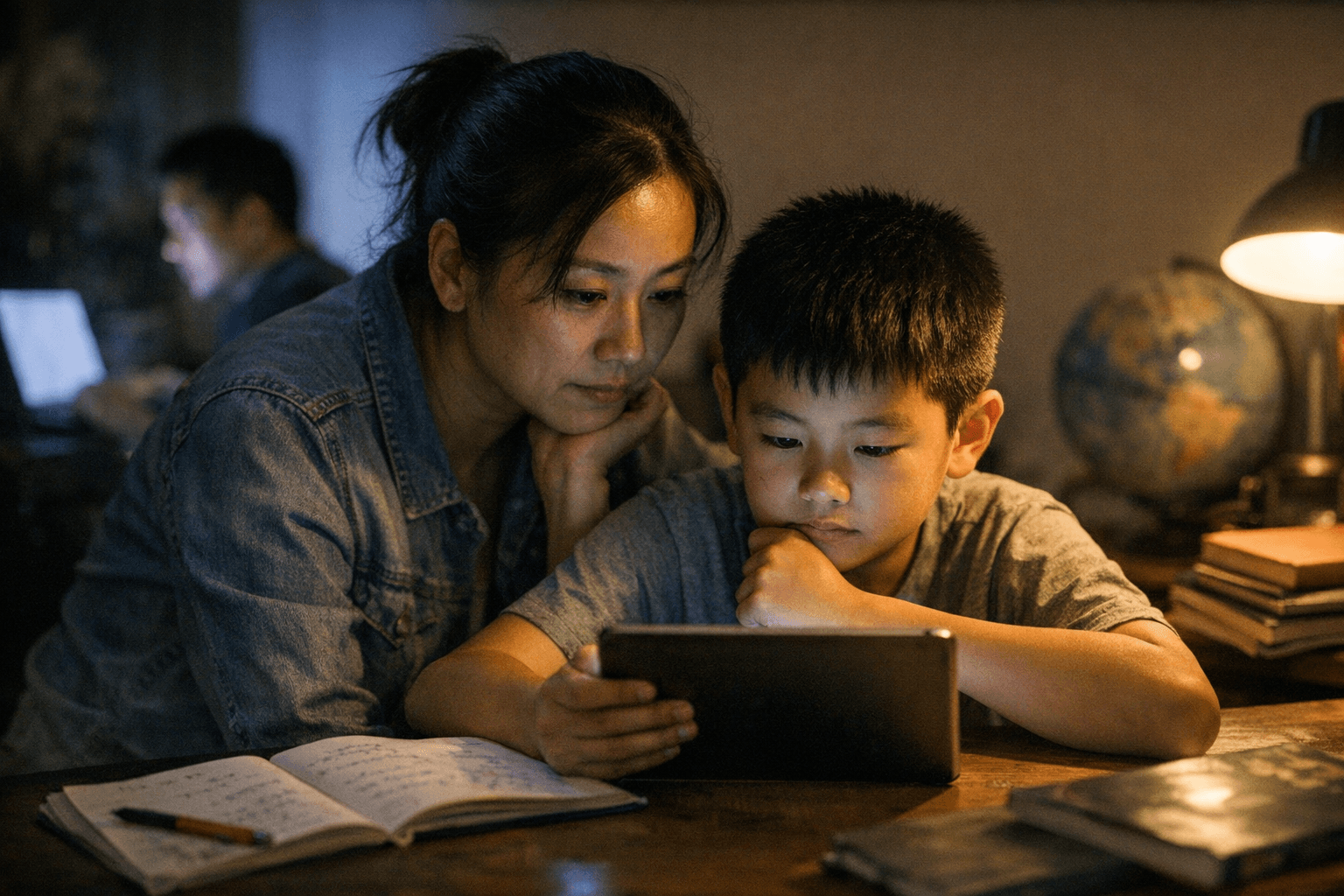
Parents in China are using homegrown chatbots like DeepSeek and Doubao as well as Google’s Gemini to help their children with homework and give them an academic edge, reshaping classroom practice even as regulators weigh new limits on companion A.I.
In primary classrooms in Inner Mongolia, teacher He Yanan has fed pupils’ drafts into language models to produce clearer templates for imitation. “By inputting the students’ original writing, AI can generate a more structured version for them to learn from through comparison and imitation,” she said, noting the tool helped organization, structure and confidence for sixth graders who had missed reading chances during the pandemic. In other schools, teachers are using models to animate historical figures and myths for lessons. “As the teacher makes a few clicks on the tablet, these centuries-old figures begin speaking to the children via text generated by the AI language model DeepSeek,” one classroom account described, with prompts ranging from the mythical goddess Nüwa mending the sky to the 11th-century poet Su Shi writing verses about the moon.
Not all educators share that optimism. Huang Jia, a Chinese and homeroom teacher in Foshan, Guangdong, said experience after three years of classroom use has been more mundane. “AI helps mainly with the chores, including writing news releases [for the school’s publicity] and communicating with parents, rather than teaching,” she said, reflecting a split among teachers over pedagogical benefit versus administrative convenience.
At the university level, a published study of Chinese graduate students adopted the UTAUT model with elements of the ECM to assess chatbot adoption. The authors wrote that their aim was “to explore its influence on education. The utilization of AI Chatbots in academia and higher education is relatively new and still in the exploratory stage. In this study, we adopted the UTAUT model as the foundational framework, while also incorporating elements from the ECM to further enhance our evaluation of Chinese graduate students’ attitudes and intentions towards using AI Chatbots.” The study concluded that “Satisfaction” is a cardinal determinant in the behavioral intention (BI) of postgraduate scholars’ engagement with AI chatbots for research and urged that “To amplify scholarly rigor and assimilate AI chatbots seamlessly into the pedagogical milieu of Chinese graduate students, a pivot towards user-centric methodologies is imperative.”
Across the Pacific, Michigan State University’s Khanmigo pilot applied a Socratic tutoring style to help students work through problems without handing them answers. “The program doesn’t automatically give answers but takes a Socratic approach, asking students questions and walking them through the problem-solving process. All along, it checks in to make sure students understands what they’re doing.” Students reported concrete changes in study habits: Abby McGinnis said she “found herself using ChatGPT multiple times a day just in the last several months,” and Mark Endicott “keeps ChatGPT pinned in his browser. Throughout his day, he asks the chatbot to confirm facts, generate spreadsheets and check his writing in anything from emails to reports.” The MSU pilot was expanded to about 800 students while faculty monitor outcomes.
Industry moves are moving even faster. Alibaba released a Qwen3.5 model series on the eve of the Chinese New Year, including an open-weight version and a hosted Qwen-3.5-Plus running on its Model Studio platform. The open-weight model comes with 397 billion parameters and supports 201 languages and dialects, up from the previous generation’s 82. Alibaba provided benchmark tests showing that Qwen3.5’s performance was on par with leading models from OpenAI, Anthropic and Google DeepMind, though those comparisons were self-reported and have not been independently verified.
Policy is catching up. In the final days of 2025, China released the draft version of a new regulation targeting addiction and other psychological harms from interacting with artificial intelligence companions and chatbots. The draft covers “anthropomorphic interactive AI,” defined as AI products that communicate and think in ways similar to humans, and which “engage in emotional interaction with humans.” The Cyberspace Administration of China is soliciting feedback, leaving the final scope and enforcement still to be determined.
The result is a fast-moving mix of eager adoption, experimental pedagogy and tightening oversight that is already changing how children learn, how universities teach and how firms design the next generation of conversational A.I.
This article was produced by Prism’s automated news system from verified source data, official records, and press releases, then run through automated quality and moderation checks before publishing. The system is built and supervised by the people who set the standards it runs under. Read our full AI policy.
Did this article answer your question?