PDVSA Orders Output Cuts as Storage Fills and Exports Stall
Venezuela’s state oil company asked multiple joint ventures to reduce crude output after export channels were disrupted, leaving onshore tanks near capacity and forcing greater use of costly floating storage. The move constrains production of the Orinoco basin’s extra-heavy crude, deepens fiscal pressure on Caracas, and underscores how sanctions and diluent shortages can hobble an oil-dependent economy even when global supplies are ample.
Venezuela’s state oil company, Petróleos de Venezuela SA (PDVSA), instructed several joint-venture partners on Jan. 4, 2026 to cut crude production as onshore storage approached capacity and exports were sharply disrupted. The requests affected a range of operations across the Orinoco heavy-oil belt, including Petrolera Sinovensa, the CNPC-linked venture, Chevron-linked units Petropiar and Petroboscan, and Petromonagas. Petromangas, previously run in partnership with Russian state firm Roszarubezhneft, is now reported to be operated solely by PDVSA.
Company and industry sources said the measures could include shutting down oilfields or disconnecting clusters of wells temporarily rather than permanently abandoning them. Workers at Sinovensa were preparing to disconnect as many as 10 well clusters at PDVSA’s request because of an over-accumulation of extra-heavy crude and a critical shortage of diluents, the lighter hydrocarbons required to blend Orinoco crude into a shippable mix. Sources added that some disconnected wells could be reconnected quickly if storage and sales conditions improve.
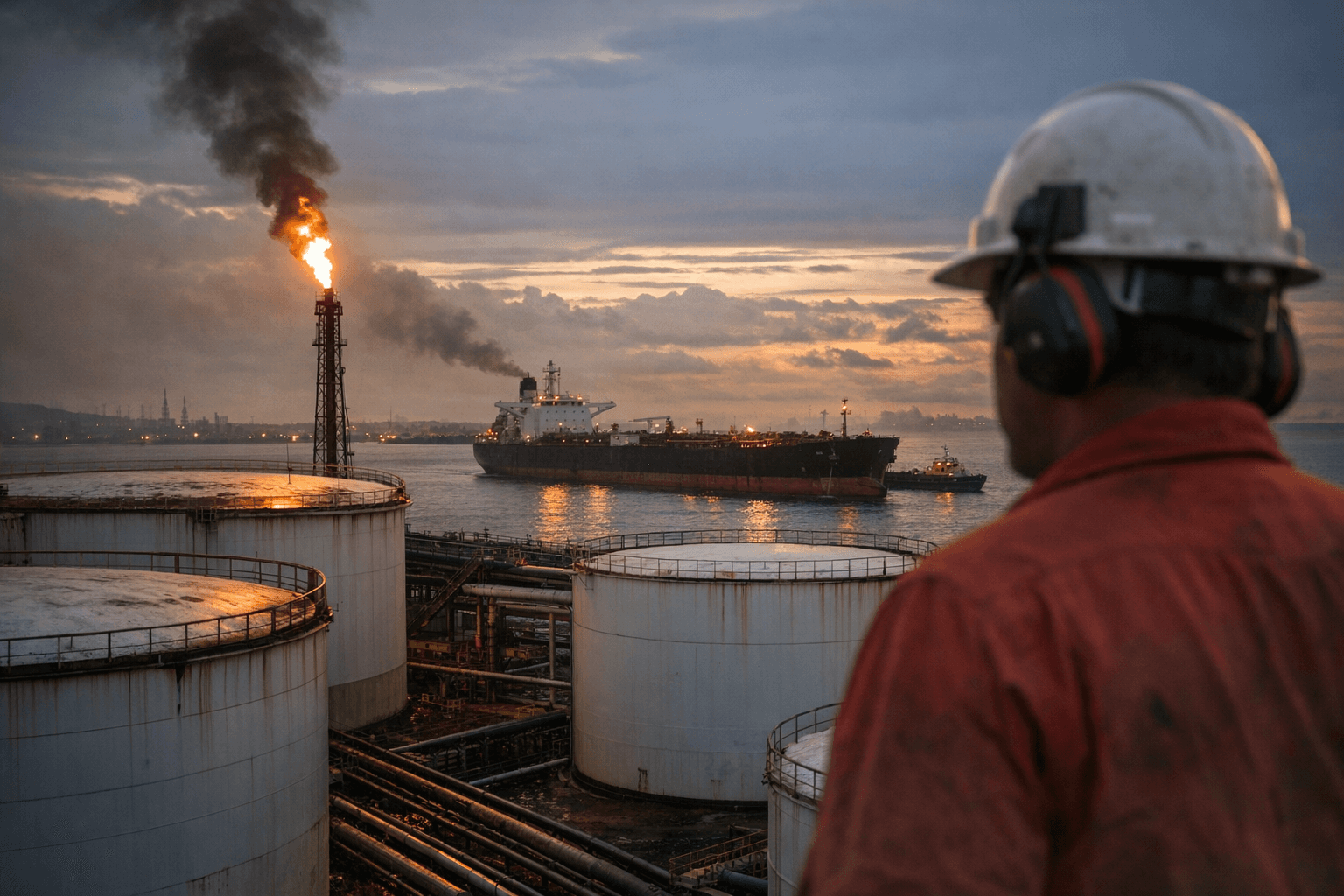
The disruptions have pushed more crude onto floating storage as the country’s onshore tanks fill, increasing logistical costs and complicating sales. Floating storage carries higher insurance and chartering expenses, ties up ships for longer periods and heightens vulnerability to inspection and seizure risk in a sanctions environment. PDVSA and China National Petroleum Corporation did not respond to requests for comment. Chevron said it continues to operate "in full compliance with all relevant laws and regulations."
The operational pause in Venezuela’s output arrives amid a U.S. export embargo and sanctions that have sharply disrupted overseas buyers, curtailing traditional sales channels. Analysts contacted by industry sources noted that global oil markets are currently well supplied and that further reductions in Venezuelan exports would likely have little immediate upward pressure on benchmark crude prices. Nonetheless, for Venezuela the economic consequences are acute: lost export volumes translate directly into reduced foreign currency receipts for a government already facing severe fiscal strain.
The immediate costs are both operational and political. On the ground, producers must manage the physical challenges of storing and blending ultra-heavy crude in a market where diluents are scarce. On the policy front, cutting production intensifies pressure on an interim government struggling to shore up support and revenue. The situation underlines a longer-term trend: years of underinvestment, infrastructure decline and sanctions have made Venezuela’s oil sector unusually sensitive to logistical shocks even when global supply is ample.
Looking ahead, the ability to resume exports will hinge on restoring reliable buyers, securing shipments of diluents and freeing up storage capacity. Until those constraints ease, PDVSA and its partners are likely to continue cycling wells offline to preserve reservoirs and minimize safety and environmental risks, a stopgap that preserves assets but deepens the near-term economic pain for a country whose budget depends heavily on oil proceeds.
This article was produced by Prism’s automated news system from verified source data, official records, and press releases, then run through automated quality and moderation checks before publishing. The system is built and supervised by the people who set the standards it runs under. Read our full AI policy.
Did this article answer your question?

