Pearl and Fine Jewellery Highlights to Watch at TEFAF Maastricht 2026
For collectors who treat jewellery like art, TEFAF Maastricht 2026 (14–19 March) promises museum-quality pearl and fine jewellery amid 276 exhibitors and a rare Boivin revival.
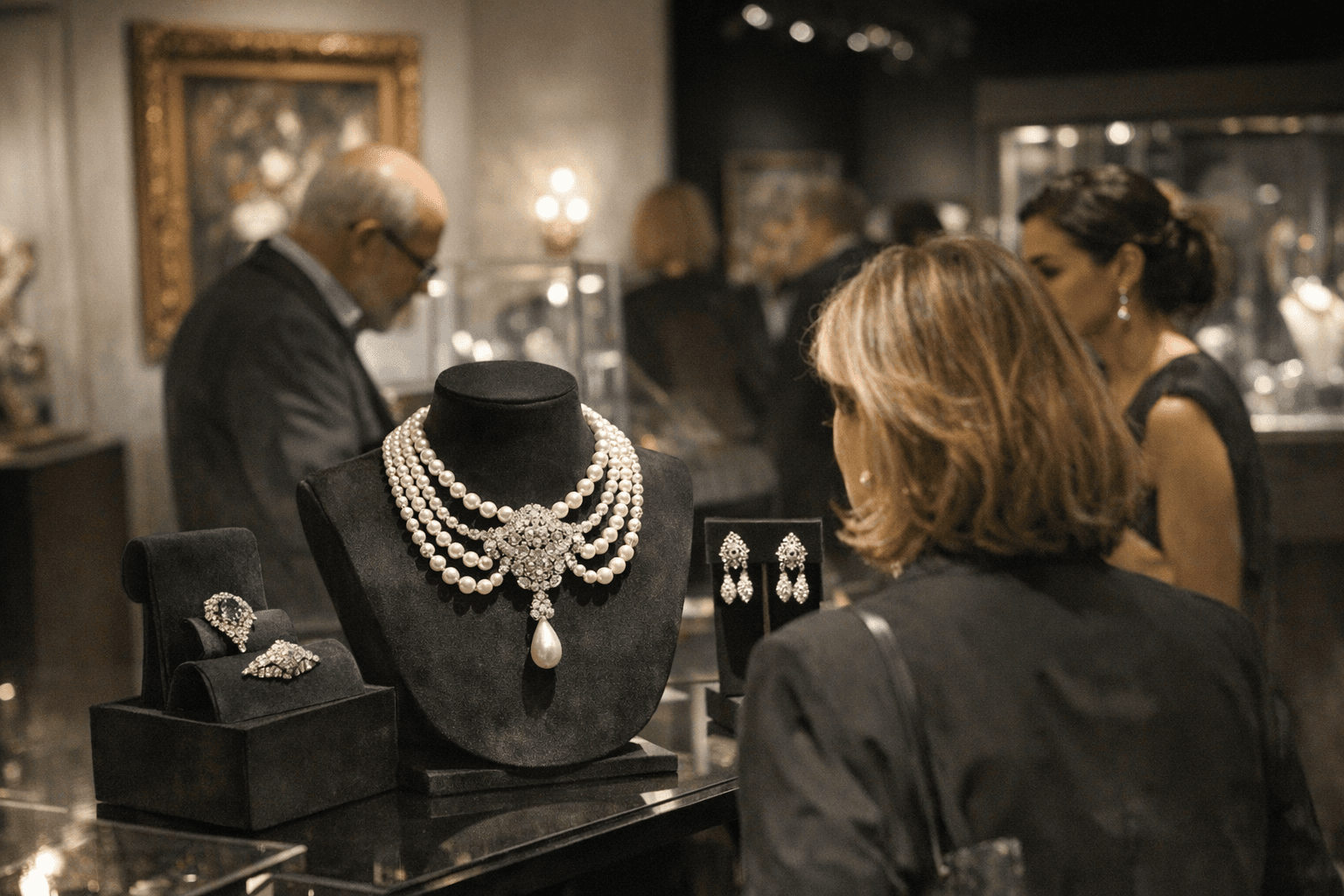
“For those who collect jewellery with the same seriousness as paintings or sculpture, March in Maastricht is unmissable.” Katerina Perez’s sentence captures why TEFAF Maastricht remains the benchmark: the fair assembles a sweep of art and design across more than 7,000 years and, this edition, will welcome 276 exhibitors from 24 countries to the MECC between 14 and 19 March, with preview days on 12–13 March.
Why TEFAF matters for pearl and fine jewellery TEFAF is pitched as a crossroads of history and discovery, and that framing matters when you are looking at pearls and other gems. Perez identifies museum-quality and collectible jewellery, antique pieces, high jewellery and contemporary design as the strands to watch; across those categories pearls have long served as a bridge between eras, appearing in city-state cameos, Belle Époque necklaces, and modern sculptural settings. With 276 exhibitors present, the fair’s scale makes comparative provenance checks possible: you can see how a heritage maison and a contemporary maker treat the same material side by side, and that context is essential when assessing natural vs. cultured pearls or historical settings.
The return of Réne Boivin: archive-driven revival One of the clearest headline moments for jewellery at TEFAF is the return of Réne Boivin, reintroduced under the stewardship of Thomas Torroni‑Levene. Torroni‑Levene’s family acquired the Boivin archives in 2019; Perez reports that “the rediscovery of thousands of original drawings, molds and workshop records forms the foundation for a carefully considered reintroduction of the house.” That archive-driven approach is precisely the kind of documentary backbone collectors need: originals, workshop records and drawings that tie designs to historic production methods help verify provenance and inform conservation. Perez’s preview indicates collectors can “expect a presentation” at the fair, though the supplied text cuts off before listing exact pieces, follow‑up with Boivin or TEFAF press will be needed to see whether the presentation includes archival originals, reinterpretations, or newly executed jewels based strictly on historical models.
New names and contemporary risk-taking Perez notes a “clutch of new names” joining the TEFAF community, bringing rare gemstones and bold contemporary statements. That juxtaposition, heritage maisons alongside fresh voices, means pearls may be treated both as heirloom objects and as experimental materials. Contemporary jewellers often recontextualize pearls with unconventional metals, asymmetrical settings, or mixed-material collages; within the TEFAF framework those experiments are presented on the same critical stage as museum-quality pieces, which invites the exact sort of provenance and materials scrutiny responsible collectors demand.
Exhibitors and jewellery specialists to watch Artsandcollections’ exhibitor list reads like a ready contact sheet for anyone hunting pearls and fine jewels at TEFAF. Names to note on the jewellery beat include Marjan Sterk Fine Art Jewellery (Netherlands), Van Cleef & Arpels (France), Wartski (United Kingdom), Adrian Sassoon Limited (UK), Cora Sheibani Ltd (UK) and VKD Jewels (Netherlands, Italy). These exhibitors span historic houses, specialist dealers in antique jewels and contemporary ateliers, precisely the mix Perez highlights. With dealers from 24 countries on the floor, there will be ample opportunity to compare documentation practices: ask each dealer for archival photographs, maintenance records, and any lab reports accompanying natural or rare pearls.
Cross-disciplinary displays that refract jewellery practice TEFAF’s breadth is one of its defining features. Surfacemag points out that the fair’s 39th edition includes masterpieces by Rembrandt, Gauguin and Monet, this high-art context raises expectations for curatorial rigour across departments. Apollo’s programming illustrates cross-disciplinary resonance: Didier’s display, titled “Gold in the Hands of the Artists,” will include 20th‑century works and jewellery by César Baldaccini, Man Ray and Max Ernst, plus a gold bangle by Michael Ayrton cast by London goldsmith John Donald. The presence of artist-made or artist-collaborative jewels reminds collectors to probe provenance not only as ownership history but as a lineage of artistic intent and maker records. Similarly, Aronson Antiquairs’ planned installation of more than 350 antique apothecary jars, presented in an 18th‑century‑style interior and being offered for sale as a whole, demonstrates TEFAF’s appetite for immersive, documentable presentations; Robert Aronson’s memory that the collection “it left a lasting impression” underscores how cataloguing and display amplify value.
Practical provenance and certification questions to bring to Maastricht TEFAF’s scale makes it the ideal place to press dealers on the evidence behind each pearl or jewel. Ground your questions in the particulars of what you see: request archival images, workshop records, and any gemological reports associated with a stone; ask whether settings are original or later replacements; and clarify whether a pearl is natural, historic cultured, or a recent cultured pearl, then ask for lab documentation to support any claim. Boivin’s archive example, thousands of drawings and molds, illustrates the difference archival material can make when verifying a revival or an original piece. With many exhibitors repeating across coverage (the Artsandcollections list even repeats some names), confirm stand assignments and documentation prior to the fair.
- TEFAF’s jewellery press kit and any “new jewels” preview images Perez mentioned TEFAF shared.
- Archive images and workshop records for the Boivin revival (acquired 2019).
- Photography and provenance notes for any artist-jewellery pieces in Didier’s “Gold in the Hands of the Artists” presentation, including the Michael Ayrton gold bangle cast by John Donald.
- Aronson Antiquairs’ documentation on the van Gelder apothecary grouping and the terms under which it is being offered as a whole.
Visuals and press materials to request before you go
To prepare informed inspections on the ground, request high-resolution images and condition reports from TEFAF and galleries in advance. Useful items to ask for include:
What TEFAF’s language tells us, and what it leaves vague TEFAF promotes itself as “bringing together 7,000 years of art history under one roof” and is “widely regarded as the world’s premier fair” in marketing copy; that sweep is part of the fair’s appeal, but some of the promotional phrasing is deliberately broad, the marketing also describes “over 260 prestigious dealers from some 20 countries,” while multiple previews report the more specific figure of “276 exhibitors from 24 countries.” For collectors who prize transparency, that discrepancy is a reminder to verify the hard details on arrival: exhibitor lists, floor plans and stand assignments will matter when you are tracking provenance or original-maker claims.
Final note: what to watch in Maastricht Perez’s framing, that TEFAF strikes a “balance between history and discovery”, is the operative injunction for anyone focused on pearls and fine jewellery. The fair’s combination of museum-level objects, archive-led revivals such as Réne Boivin, contemporary risk-takers, and cross-disciplinary installations means Maastricht will set tones for collecting in 2026: how archival evidence is used, how artist-made jewels are contextualised, and how dealers document gemstones and settings. If you care about beauty without compromise, this edition of TEFAF will be the moment to test the claims, hold the pearls up to light, and insist on the records that turn desire into a defensible acquisition.
Know something we missed? Have a correction or additional information?
Submit a Tip