Pentagon confirms three U.S. deaths as Trump warns more casualties likely
U.S. Central Command confirmed three service members killed and five seriously wounded; President Trump warned “sadly there will likely be more,” and Hezbollah has joined the widening conflict.

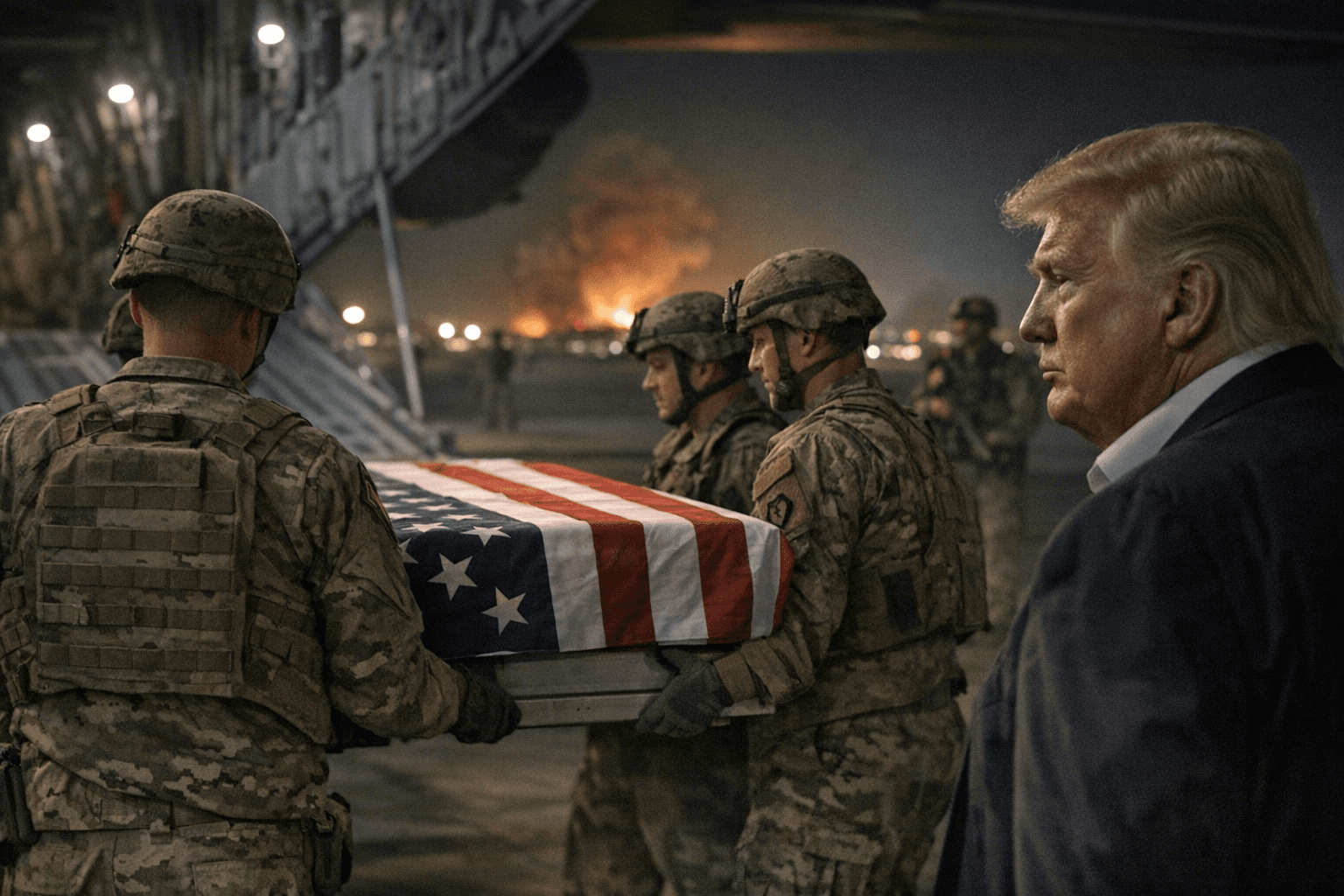
U.S. Central Command confirmed three American service members have been killed and reported five more as "seriously wounded" as U.S.-led strikes on Iran continued to set off a wider regional conflagration. President Donald Trump, in a recorded video posted on his platform and in brief remarks while boarding Air Force One, warned that more U.S. casualties are likely and framed the campaign as an all-out effort to meet its objectives.
The Pentagon statement formalized what the administration has described as the opening phase of operations, and U.S. officials said the casualties occurred among personnel based in Kuwait. The deaths are the first confirmed American combat fatalities since the U.S. began strikes late last week. The scale and pace of the military campaign remain contested: the president asserted that the barrage had hit hundreds of targets, with other statements attributing higher totals to the administration, but those numbers have not been independently verified.
In his video message the president said, "Combat operations continue in full force, and they will continue until all of our objectives are achieved. We have very strong objectives." He added plainly, "Sadly there will likely be more before it ends, that's the way it is." Trump described the mission as "righteous" and said the country would "avenge their deaths," while urging national unity: "As one nation we grieve for the true American patriots who have made the ultimate sacrifice for our nation."
The fighting has spilled beyond Iran. Israeli officials say projectiles were launched from Lebanon and air-raid sirens have sounded across northern Israel; explosions and air alerts interrupted live broadcasts in Tel Aviv. The Israeli military declared it "will operate against Hezbollah’s decision to join the campaign, and will not enable the organization to constitute a threat to the State of Israel," signaling an escalation along the Israel-Lebanon border after a U.S.-brokered ceasefire there in 2024.
Images from Tehran showed smoke plumes rising over the city after missile strikes. Reports also described blasts in Lebanon and Cyprus. Markets reacted to the instability: oil prices rose in Asian trading, a move that bears immediate consequences for fuel-dependent health systems and humanitarian operations across the region.
The human toll is already stretching medical and social resources. Military hospitals and regional emergency services face higher demand for trauma care and critical evacuation capacity. Civilian communities near strike zones risk disrupted access to routine care, dialysis, maternal services and vaccinations when health infrastructure is damaged or when ambulances and generators are grounded by fuel shortages. Refugees and displaced families, often the poorest and most medically fragile, are likely to bear disproportionate harm as supply chains and aid corridors are squeezed.
Several of the president’s most consequential claims remain unverified. He asserted that senior Iranian figures, including Iran’s Supreme Leader Ali Khamenei, were killed in the strikes; that characterization has not been independently confirmed. The administration has also offered differing counts of targets struck, ranging from "hundreds" to higher figures cited in briefings. Journalists and officials say independent assessments of damage and casualty figures are still being compiled.
Public health authorities and hospital systems are now confronting immediate operational choices: surge staffing, evacuation logistics, long-term care for injured service members and support for bereaved families. The deaths also escalate domestic political pressures on the White House, as each confirmed casualty reframes the stakes of a campaign the president says could continue for weeks.
Further confirmation from U.S. Central Command, independent verification of high-level Iranian casualties, and detailed accounting of struck targets will be central to understanding the scope of the campaign and its likely humanitarian and political fallout.
Know something we missed? Have a correction or additional information?
Submit a Tip

