People of Note blends rhythm combat and RPG storytelling on vacation-friendly scale
People of Note turns a compact RPG into the kind of vacation game that lets rhythm combat, music, and a finite story beat live-service noise.
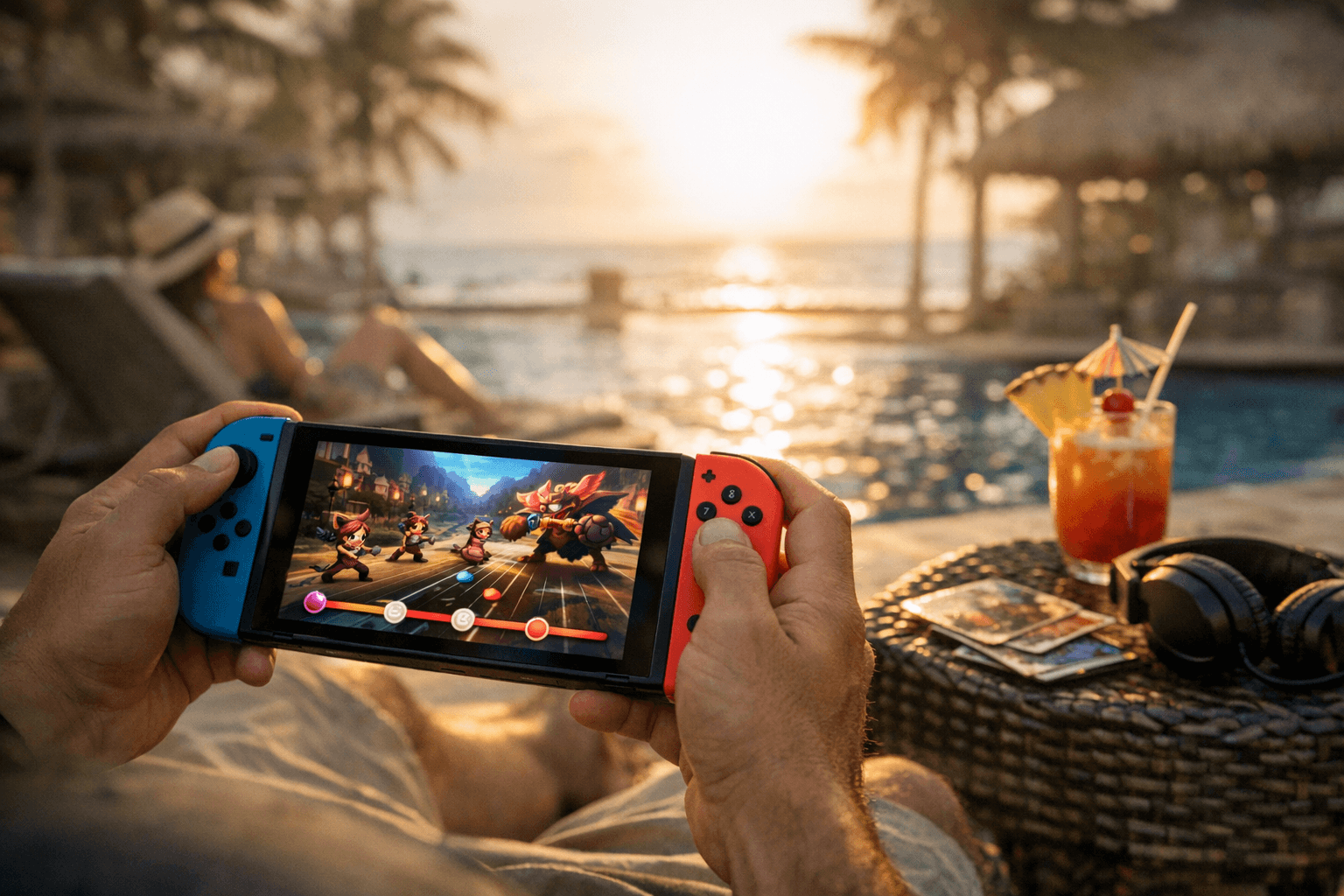
Why long-form RPGs still win the vacation slot
A trip changes the way games feel. When the goal is rest, the best choice is often not the hardest challenge or the endless live-service loop, but a self-contained world that can be carried, paused, and finished before the suitcase comes back down. That is why long-form RPGs keep showing up as the default “vacation game”: they offer enough depth to feel absorbing, but enough structure to feel complete.
That tension is clear in the choices on the table. Super Meat Boy 3D, the 3D precision platformer from Sluggerfly and Team Meat, is built for precision and punishment, which makes it a poor fit for a low-stress break even though it is coming to Nintendo Switch 2, PlayStation 5, Xbox Series X|S, and PC. Slay the Spire II is a different kind of commitment altogether: Mega Crit’s sequel to its 2019 roguelike deckbuilder entered early access on March 5, 2026, and its expanding stack of new and returning characters, enemies, allies, environments, events, relics, lore, and four-player co-op suggests a game meant to live on a hard drive for months, not just one week.
What travelers are really looking for now
The vacation-game sweet spot has shifted. Travelers are not just looking for distraction, they are looking for portability, immersion, and a finite escape that does not demand constant attention. A good trip game has to survive short play sessions, support longer late-night dives, and reward progress without turning into a second job.
That is where a game like People of Note lands so cleanly. Instead of asking for a seasonal grind or a daily checklist, it offers a complete story and a defined arc. It feels designed for players who want to sink into something substantial without making a long-term life choice about it.
Portable hardware only strengthens that appeal. With People of Note available on PlayStation 5, Xbox Series X|S, Nintendo Switch 2, and PC, the game fits the modern travel reality of swapping between a living-room setup and a handheld or laptop session. That flexibility matters as much as genre for players trying to relax in airports, hotels, or rental homes.
People of Note’s pitch is built for downtime
People of Note, from Annapurna Interactive and Iridium Studios, is a turn-based RPG musical that premiered on April 7, 2026. The game stars Cadence, an aspiring pop singer who gets shut out of the Noteworthy Song Contest and sets off through a series of music-driven locations while building a band. The setup gives the adventure a clear emotional spine: an underdog story with enough momentum to keep a short trip feeling like a full narrative journey.
The structure also keeps the pace manageable. Cadence travels through places such as the Rock City of Durandis and the EDM City of Lumina, recruiting musicians along the way. Those locations are not just flavor text; they frame the game as a tour through different sonic identities, which makes the experience feel varied without sprawling beyond the point of relaxation.
That scale is part of the point. A game does not need to be enormous to feel rewarding on the road. It needs a steady sense of movement, memorable stops, and a finish line that can realistically come into view before the trip ends.
Rhythm combat gives the RPG loop a fresher beat
People of Note stands out because it does not treat music as decoration. Annapurna Interactive describes each battle as an interactive musical performance with evolving combat conditions, real-time rhythm-based attacks, and genre-bending mashup attacks. In practice, that means the combat system is doing two jobs at once: it advances the RPG strategy layer while keeping each fight kinetic and musical.
That hybrid approach makes sense for vacation play. Turn-based combat gives players room to breathe, think, and stop without losing the thread. Rhythm-based attacks add enough tactile energy to keep the game from feeling sleepy or repetitive. The result is a structure that can absorb interruptions, which is exactly what travel asks of a game.
The cinematic musical sequences matter too. They turn combat and progression into spectacle without demanding reflex-heavy mastery. For players who want immersion more than stress, that balance is a major advantage over games built around repeated failure or perpetual optimization.
How this game compares with other big trip candidates
Seen alongside Super Meat Boy 3D and Slay the Spire II, People of Note shows why the RPG remains the most reliable vacation genre. Super Meat Boy 3D is for precision, repetition, and technical focus. Slay the Spire II promises an even larger, more layered future with its early-access roadmap and co-op additions. People of Note instead points toward closure: a story about forming a band, moving through distinct cities, and reaching a goal that is personal rather than endless.
That difference matters because a vacation game has to fit the emotional rhythm of the trip itself. Some players want challenge, but many want to leave home and still feel like they finished something. A compact RPG with a strong identity can do that better than a live-service title built around ongoing obligation.
People of Note also benefits from genre memory. Musical RPGs and turn-based systems are familiar enough to be welcoming, but here they are reworked into something that feels modern rather than nostalgic. The game uses the conventions of role-playing and turns them into a performance, which makes even routine battles feel like part of the story Cadence is trying to sing herself into.
Why finite stories feel better on the road
The broader trend is simple: after years of notifications, updates, seasonal passes, and games that ask to be checked in on forever, a lot of players are gravitating toward experiences that end on purpose. A vacation already contains enough movement, uncertainty, and stimulation. A game that offers a contained world, a clear beginning, and a real conclusion can feel almost restorative.
People of Note captures that idea with unusual precision. It is accessible across major platforms, built around a defined protagonist, and anchored by a journey through Durandis, Lumina, and other musical spaces that feel distinct without becoming overwhelming. It gives players a reason to keep going, but not a reason to stay trapped.
That is why long-form RPGs still matter in the age of live-service fatigue. They can deliver the calm of a self-contained escape and the satisfaction of forward motion at the same time. In a season of travel, that combination is hard to beat.
This article was produced by Prism’s automated news system from verified source data, official records, and press releases, then run through automated quality and moderation checks before publishing. The system is built and supervised by the people who set the standards it runs under. Read our full AI policy.
Did this article answer your question?