PepsiCo faces pressure to prove turnaround as Elliott pushes cuts, spin-offs
PepsiCo cut snack prices by nearly 15% as Elliott’s $4 billion push shifts from boardroom pressure to store shelves.
PepsiCo is no longer being judged on promises alone. Seven months after Elliott Investment Management disclosed a $4 billion stake and called for sharper focus, better operations and tighter accountability, the company is trying to show that its turnaround is producing something investors can measure: stronger sales volumes, steadier margins and more durable demand.
The stakes are clear in the numbers. PepsiCo has lagged Coca-Cola over the past five years as inflation pushed shoppers toward smaller packs and, in some categories, healthier snacks. That left the Purchase, New York, company trying to defend both market share and profitability at once, a difficult balance for a food-and-beverage giant that sells products more than one billion times a day in more than 200 countries and territories and generated nearly $92 billion in net revenue in 2024.
Management has responded with a series of moves that read like a direct answer to Elliott’s campaign. Ramon Laguarta launched a review of North America supply chains and promised aggressive cost cuts after weeks of discussion with Elliott. In December, PepsiCo said it would re-examine its North America supply chain and pursue aggressive reductions in cost, while also targeting stronger organic revenue growth, record productivity savings and improved core operating margin starting in 2026. The company said those steps followed constructive engagement with Elliott and included a focus on affordability, innovation and supply-chain and go-to-market optimization.
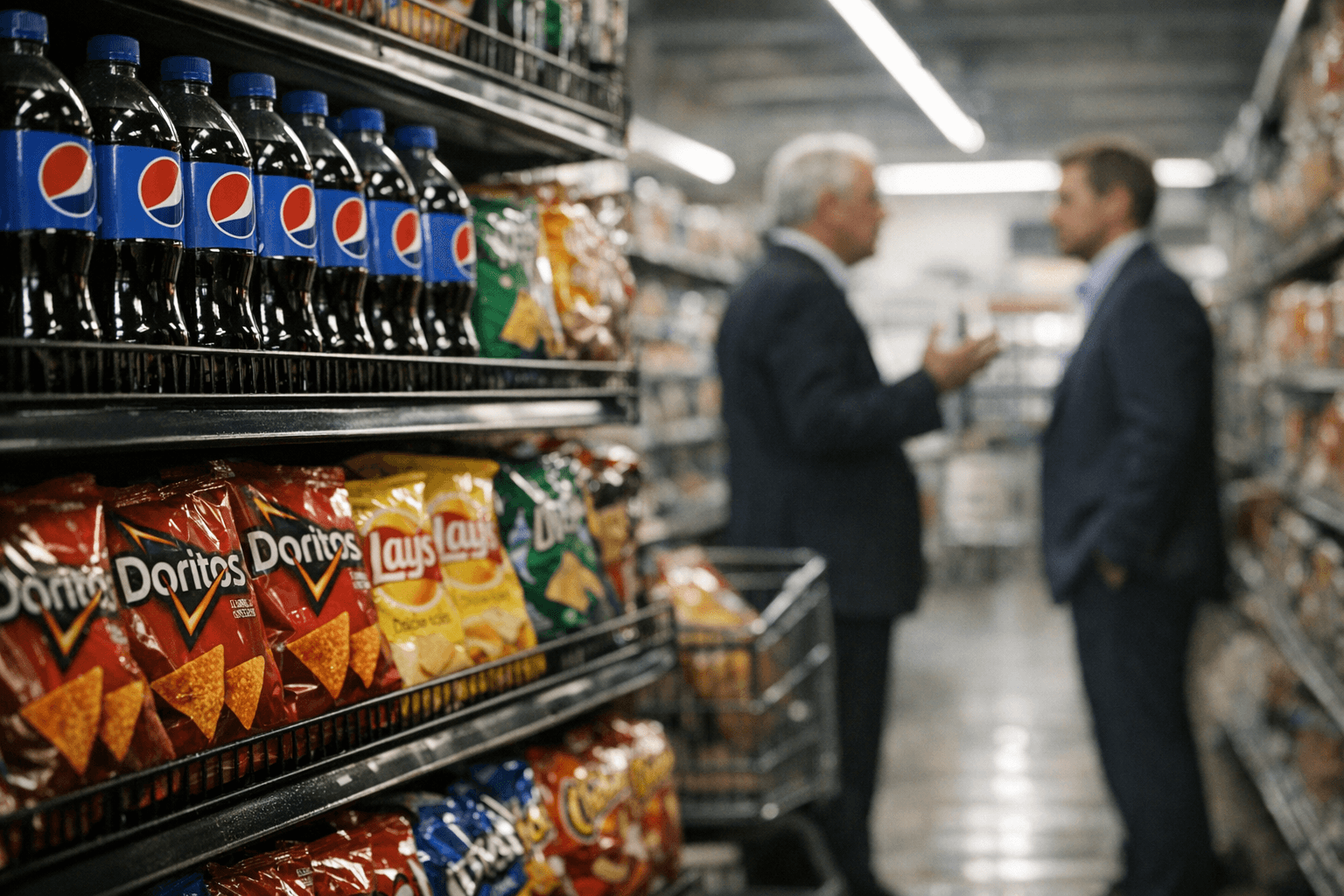
The clearest sign of pressure hitting the shelf came on Feb. 3, when PepsiCo said it would lower suggested retail prices on many snacks by up to nearly 15%. The change covered Lay’s, Doritos, Cheetos, Tostitos and other brands, with the lower prices beginning to roll out in the United States that week. PepsiCo also said Frito-Lay North America would get double-digit shelf-space growth in March and April, a sign the company wants more visibility at retail as it tries to rebuild volume.
Investors are watching whether that mix of price cuts, brand investment and cost savings can lift North America organic growth into a range that looks good enough to the market. Some see zero to 2% organic growth as acceptable, but anything short of real volume improvement would leave the turnaround looking more like narrative management than operational change. The risk is that lower prices can help traffic only if demand responds fast enough to protect revenue and margins.
PepsiCo has also turned to leadership changes to reinforce the reset. On Oct. 9, the company named Steve Schmitt, then Walmart U.S. chief financial officer, as its next finance chief, effective Nov. 10. The move, along with the supply-chain review and pricing reset, suggests Laguarta is trying to retool the business for a tougher consumer and a more demanding activist investor. The scoreboard now is simple: if volume, margins and shelf presence improve, Elliott’s pressure will look prescient. If not, PepsiCo will still be carrying the cost of proving it listened.
This article was produced by Prism’s automated news system from verified source data, official records, and press releases, then run through automated quality and moderation checks before publishing. The system is built and supervised by the people who set the standards it runs under. Read our full AI policy.
Did this article answer your question?

