Perseverance Detects Mini Lightning, First Electrical Sparks Found on Mars
NASA’s Perseverance rover recorded short electrical discharges in Mars thin, dusty atmosphere, providing the first direct evidence of electrostatic sparks on the planet. Researchers analyzing SuperCam microphone and electromagnetic data over two Martian years identified 55 small events tied to dust devils and storm fronts, a finding that changes our view of Martian chemistry and hazards for future missions.
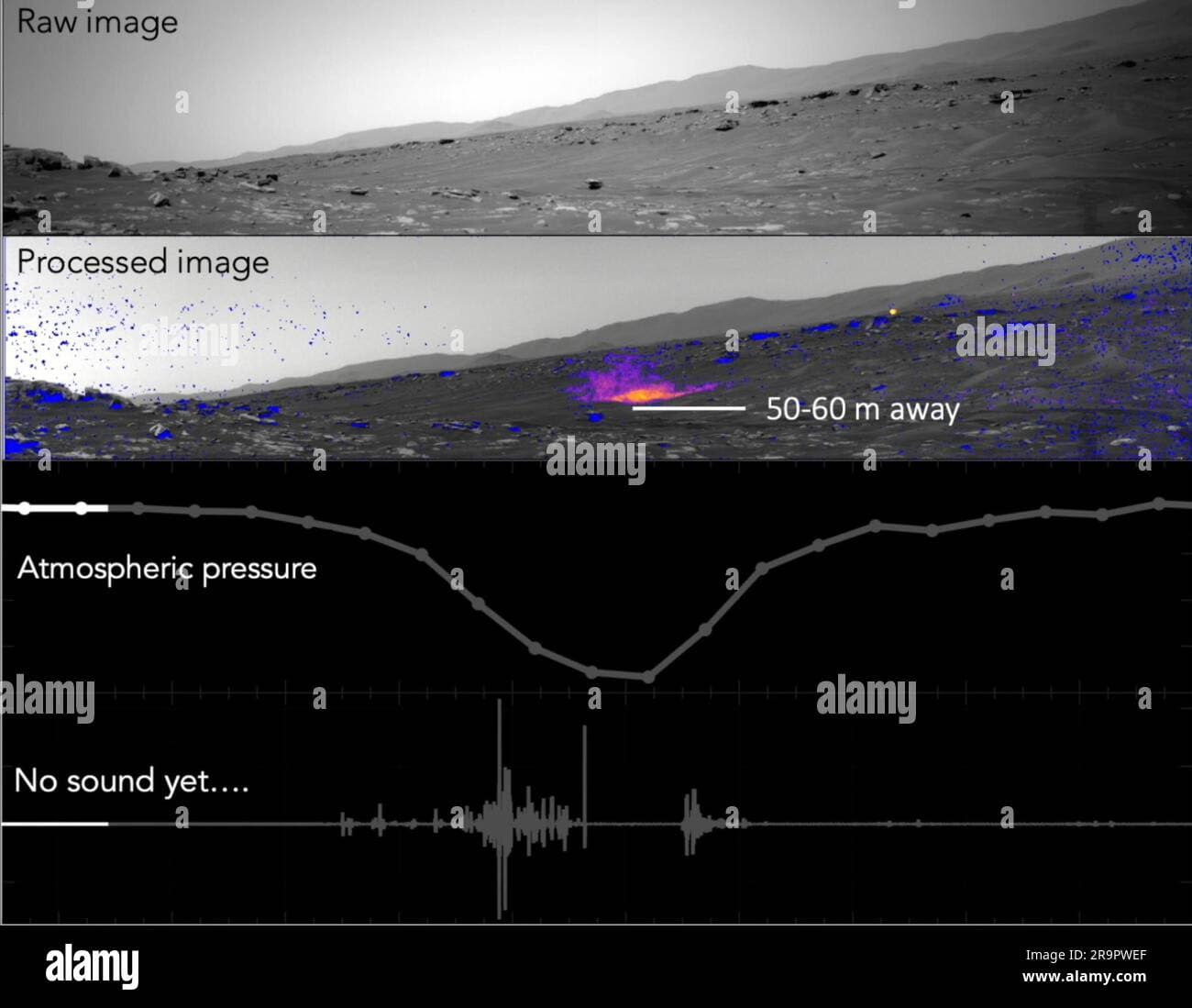
NASA’s Perseverance rover has captured the first clear evidence of electrical discharges in the Martian atmosphere, a team of scientists reported on November 26, 2025. The signals, described by researchers as mini lightning, were small triboelectric sparks produced when charged dust particles moved in the thin, wind driven air above the surface.
Scientists examined 28 hours of recordings from Perseverance’s SuperCam microphone together with electromagnetic measurements spanning two Martian years and identified 55 brief electrostatic discharges. Most of the events occurred in association with dust devils and advancing storm fronts, conditions in which moving grains of dust can rapidly build and release electrical charge. The discharges were measured at sizes ranging from millimetre to centimetre scale and were explicitly not full lightning bolts like those seen on Earth.
The team published their results in Nature, placing the discovery among the most consequential atmospheric findings yet returned from Mars. Beyond being a striking proof of a physical process long theorized to occur on the red planet, the discharges carry practical implications for ongoing robotic operations and for human exploration. Electrostatic sparks can catalyze chemical reactions in the atmosphere, alter how dust aggregates and settles, and pose a potential threat to sensitive electronics on landers and crewed systems.

On Earth, lightning plays a well known role in atmospheric chemistry, generating reactive species that participate in complex cycles. On Mars, where the atmosphere is about one percent as dense as Earth’s and composed mostly of carbon dioxide, even small triboelectric sparks may drive localized chemical transformations, the authors suggested. Changes in local chemistry could influence the interpretation of instrument readings and the assessment of habitability in future astrobiology studies.
The discovery also highlights a less acknowledged hazard of the Martian environment. Fine dust can cling to solar panels and mechanical joints and can also carry electrical charge. The newly observed discharges suggest that dust motion can sometimes release that charge violently enough to generate sparks. Designers of future missions will need to consider electrostatic effects when shielding electronics and planning human activities in dusty regions.

Perseverance’s SuperCam instrument was not designed primarily as a lightning detector, yet its microphone and electromagnetic sensing capabilities proved adequate to pick up the short, sharp signals. Researchers noted that the sounds associated with the events resembled sparks or whip crack sounds when played back at audible speeds, reinforcing the interpretation of small scale electrical sparking rather than atmospheric electrical storms of the kind seen on Jupiter or Saturn.
The findings are likely to prompt targeted observations by current and future Martian missions, including instruments that can more fully characterize the frequency, energy and chemical impact of the discharges. For now the data from Perseverance provide an unexpected window into a dynamic and electrically active process shaping the surface environment of Mars.
This article was produced by Prism’s automated news system from verified source data, official records, and press releases, then run through automated quality and moderation checks before publishing. The system is built and supervised by the people who set the standards it runs under. Read our full AI policy.
Did this article answer your question?